Interactive stations

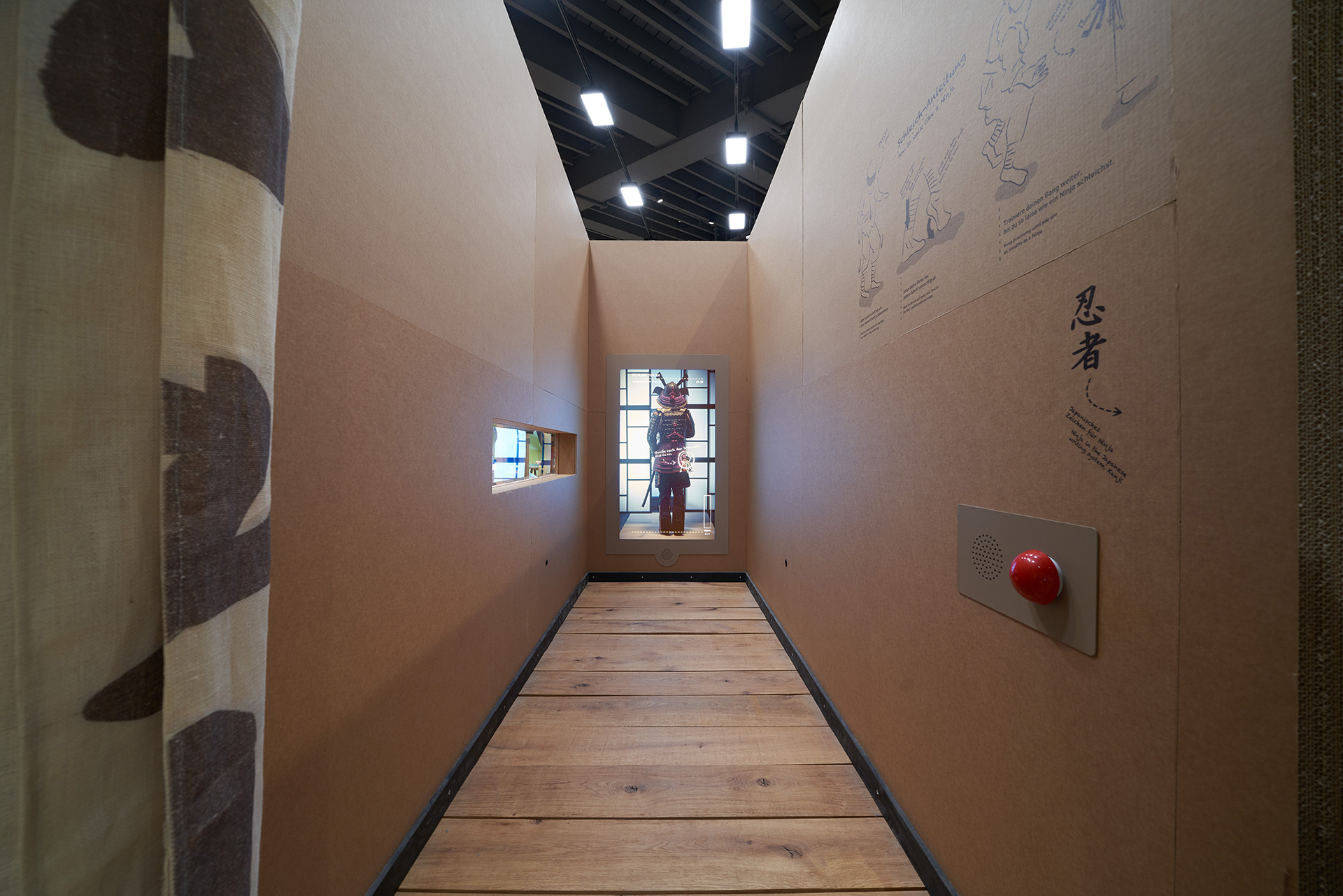
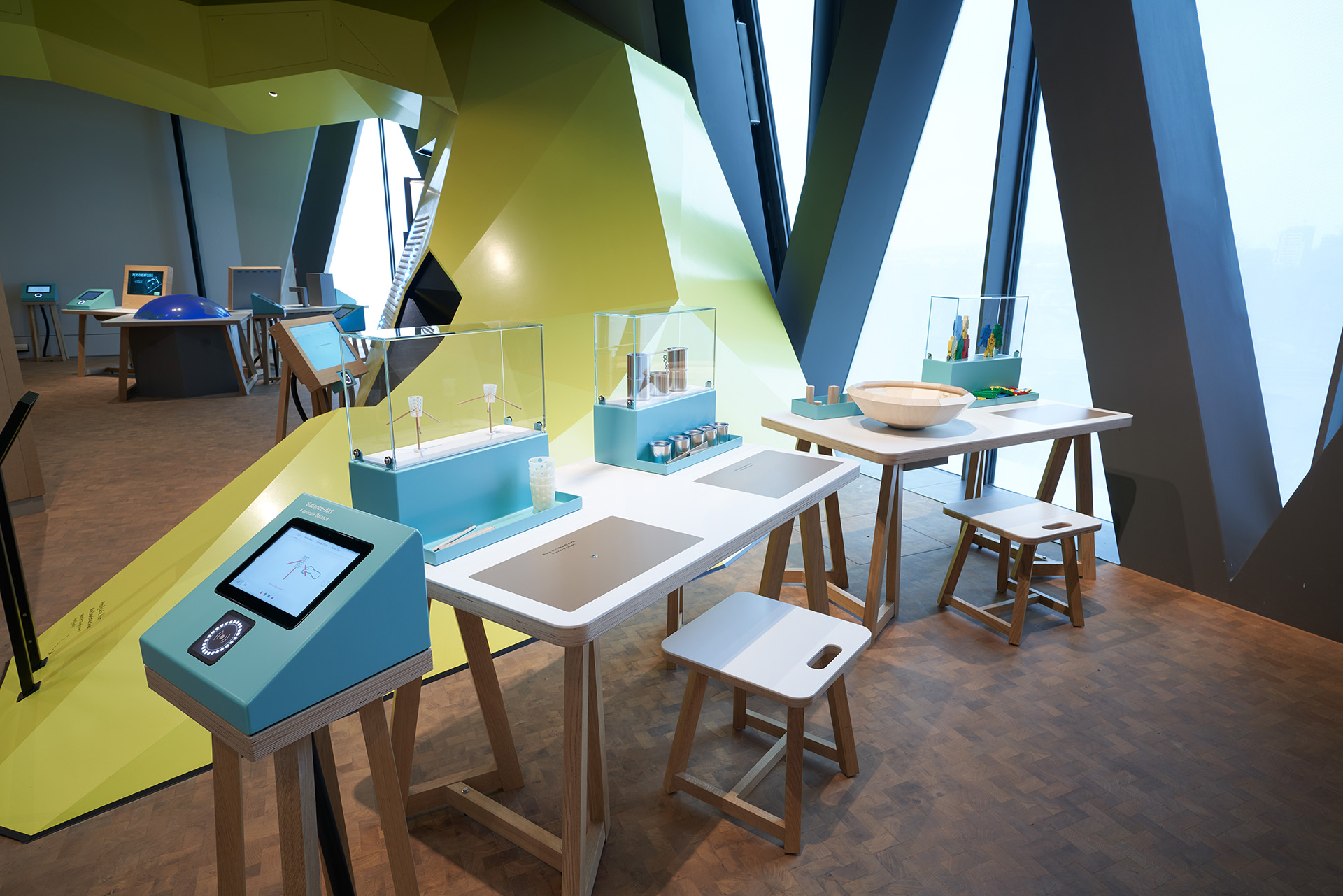
Discover the interactive stations of experimenta. Here you can find all hands-on exhibits.

131 items

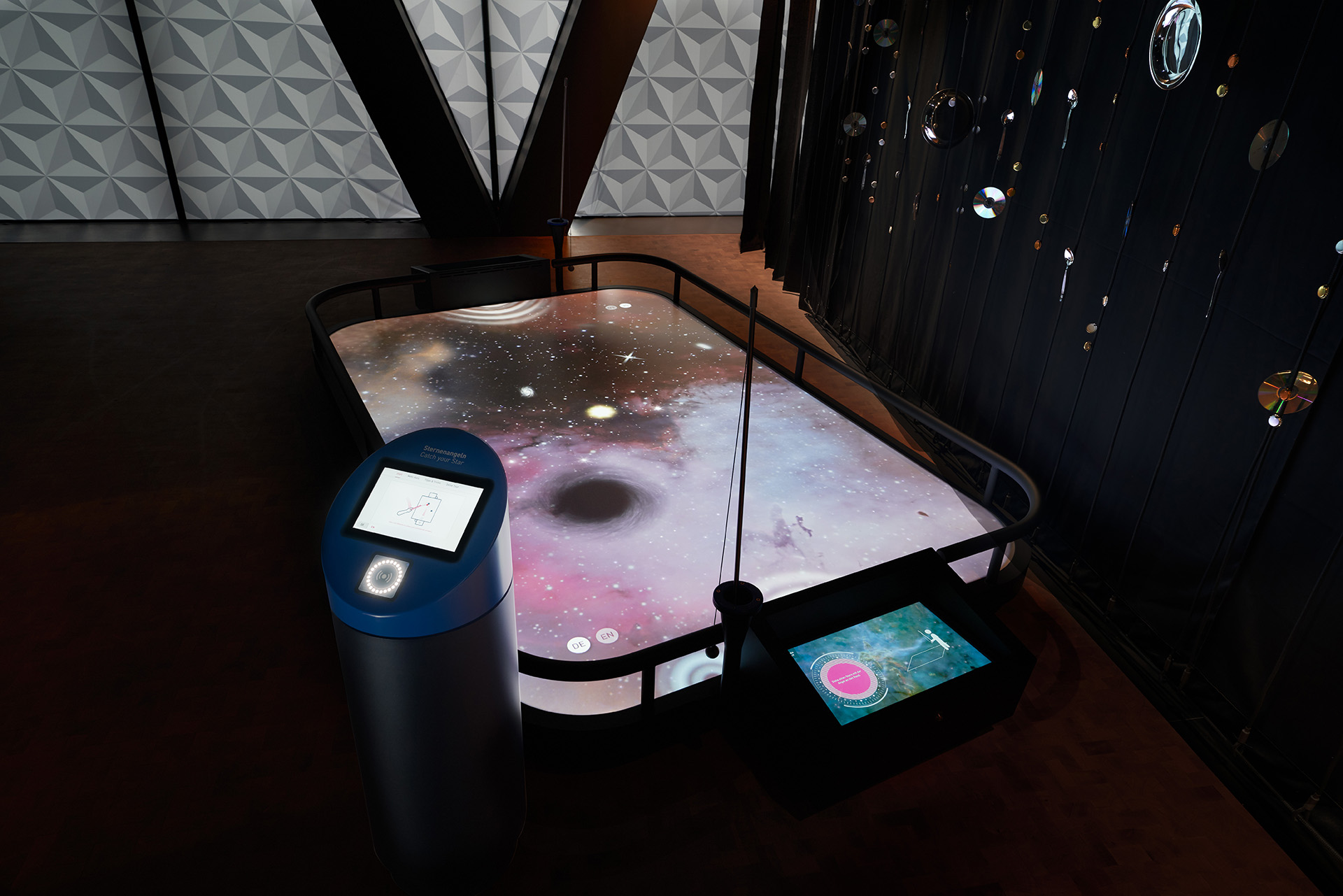
Catch your Star

Catch your Star

So many stars shine in our night sky. They are all unique and located at different distances from us. The distance is expressed as the time the light takes to travel - in light-years. Catch a star and find out more about it.

Duration:10 min
Floor:OG 1
Keywords:AstrophysicsAstronomyLight
Traces of Light

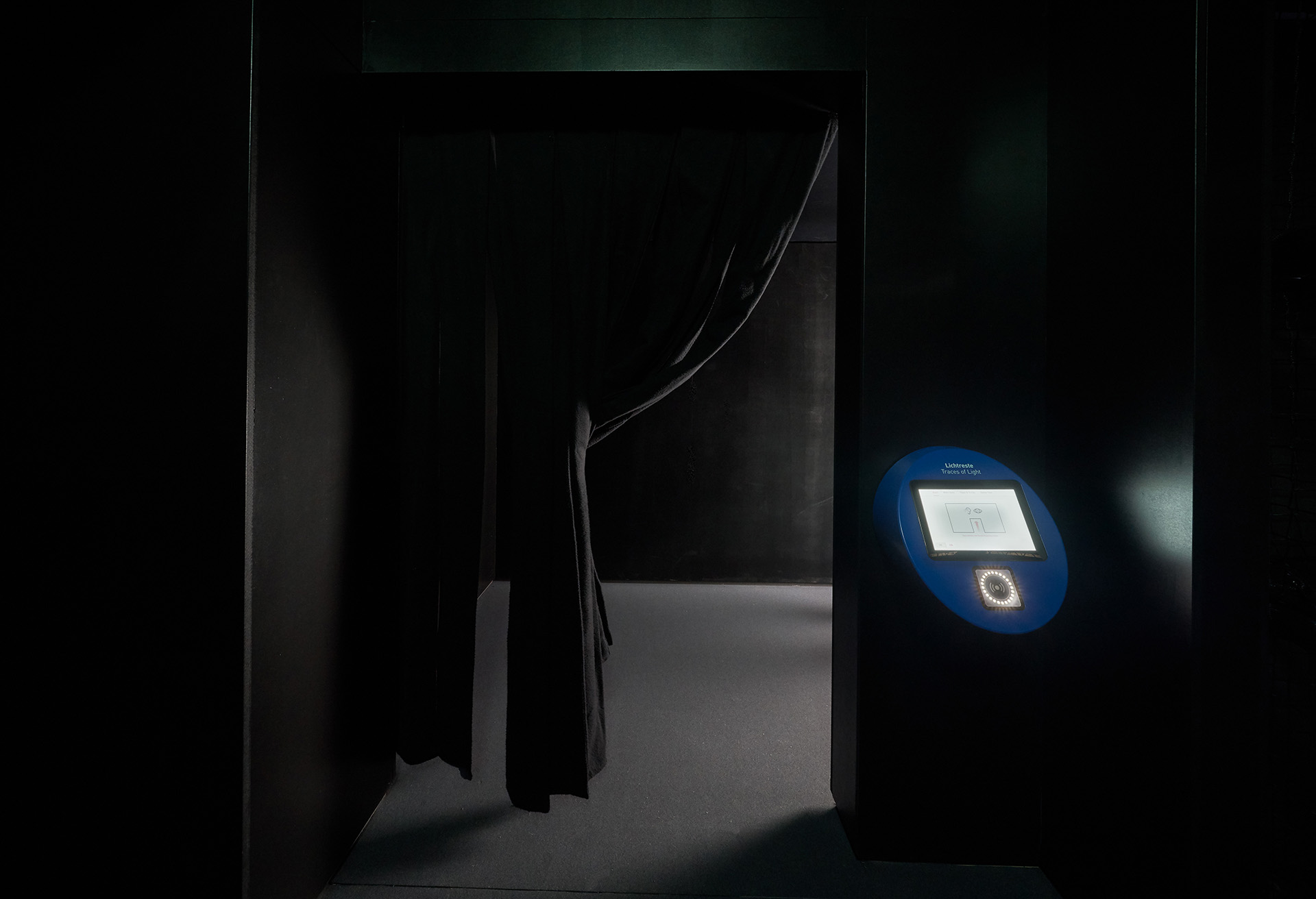
Traces of Light

There is a huge difference in the brightness of a bright sunny day and a dark night. Our eye has to adapt to lighting conditions. Learn how it is able to adjust to such different lighting conditions in a dark room.

Duration:10 min
Floor:OG 1
Keywords:LightSenses
Kingdoms of Life

Kingdoms of Life

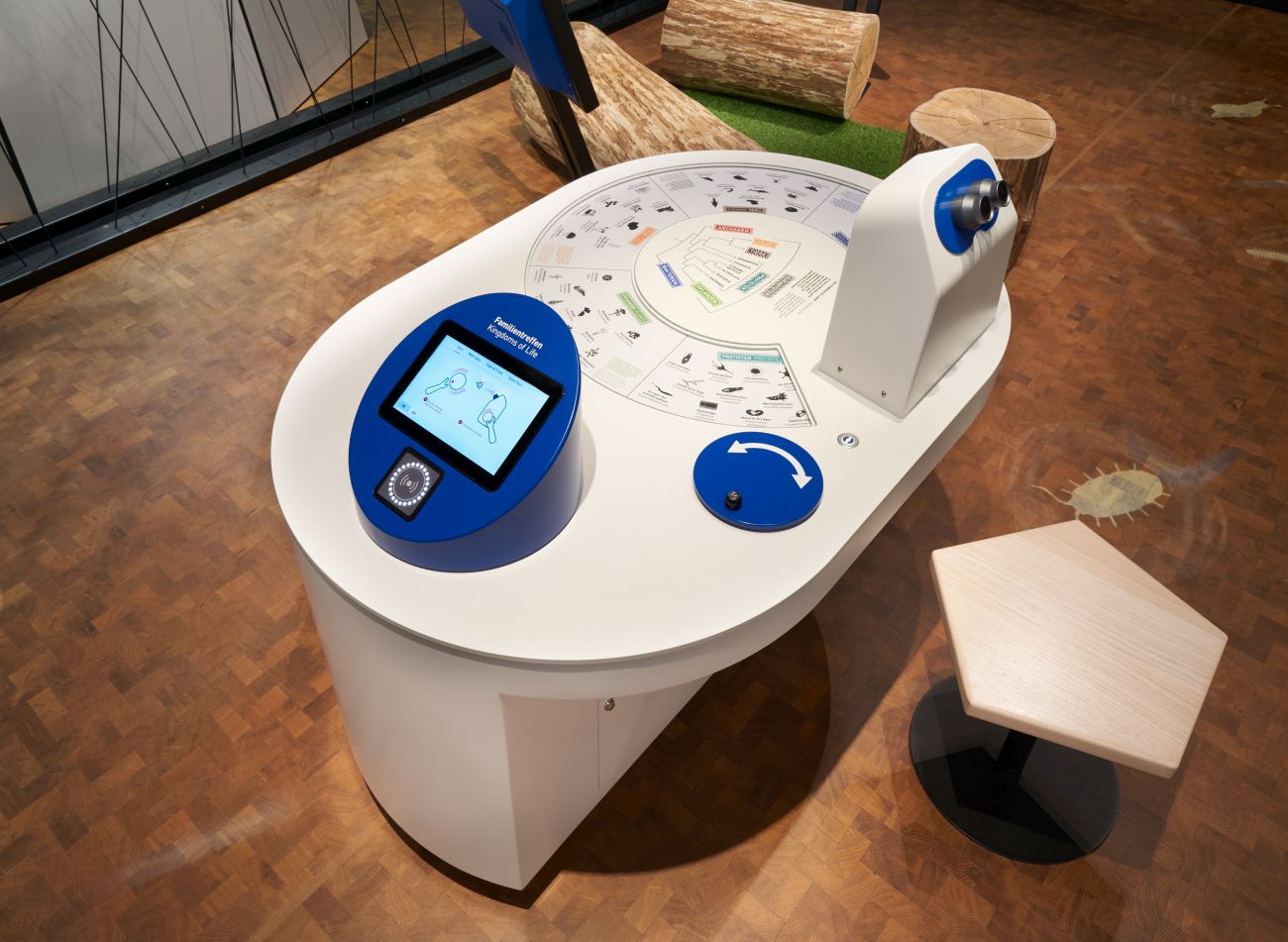
The smallest units of life are the cells. They contain an organism's genetic material, the DNA. It is assumed that all living things have a single common ancestor. Discover the things cells have in common and their differences.

Duration:15 min
Floor:OG 1
Keywords:BiologyBacteriaEvolution +3
Stages of Life

Stages of Life

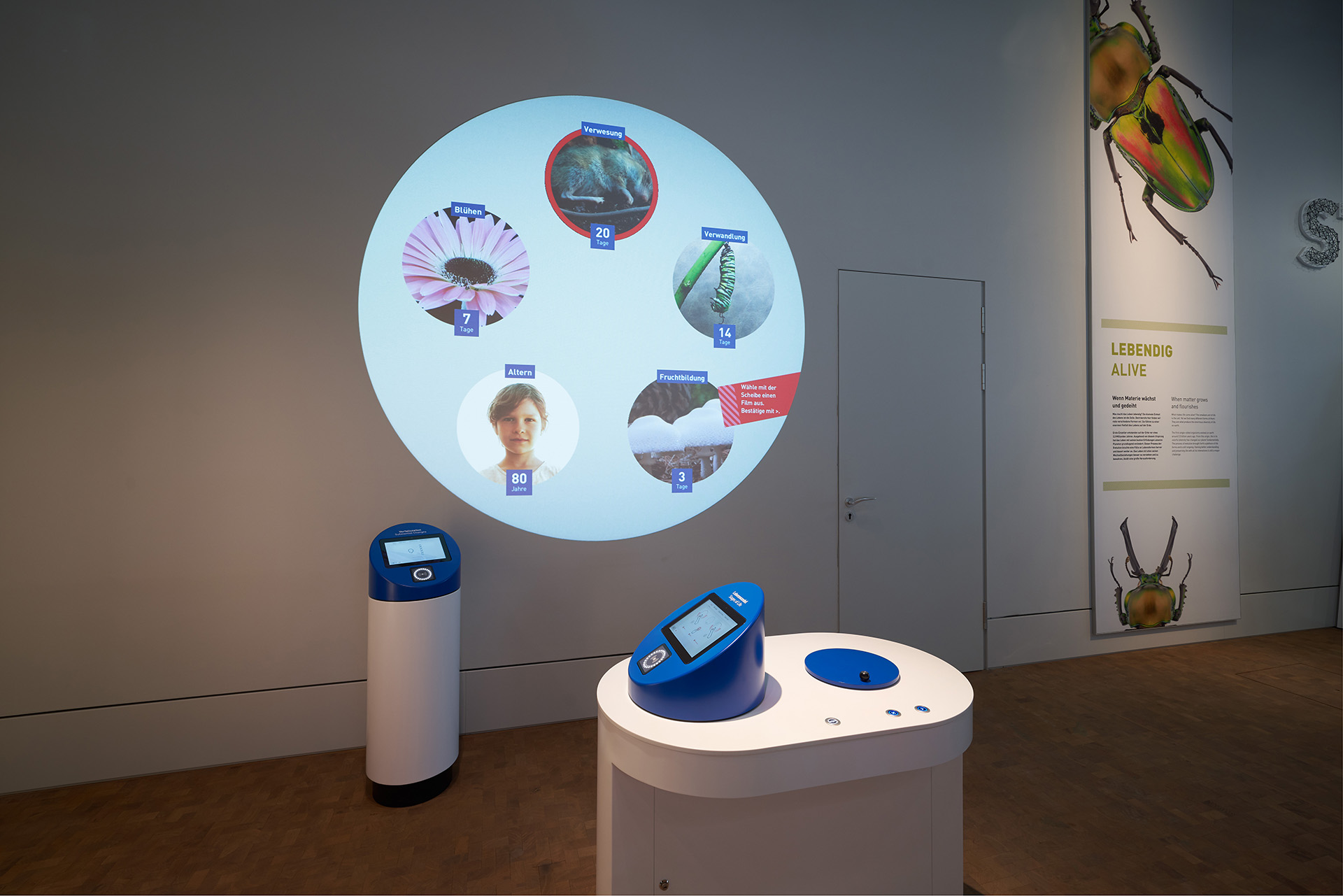
Life is development and change. We grow and age. Some plants and animals undergo impressive changes in this process. Use the time-lapse footage and run the films forward and backward to take a closer look at this change.

Duration:5 min
Floor:OG 1
Keywords:AgeingBiologyAdolescence +1
Body Analysis

Body Analysis

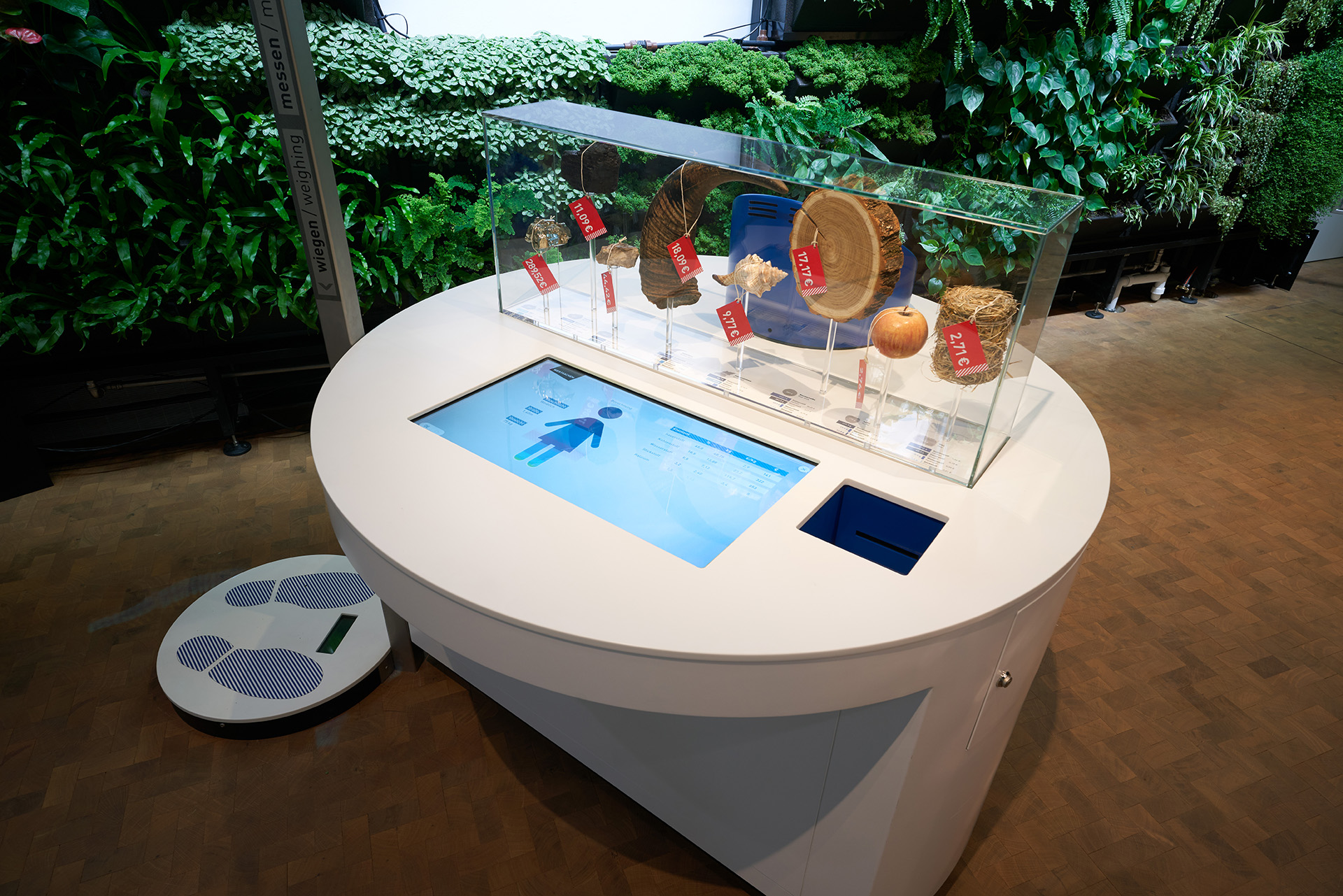
Of the many chemical elements found on Earth only very few play an important role for us quantitatively. Find out which elements they are and how the various organic objects vary in this respect.

Duration:5 min
Floor:OG 1
Keywords:Chemical elementsDataPhysique
Car Crash

Car Crash

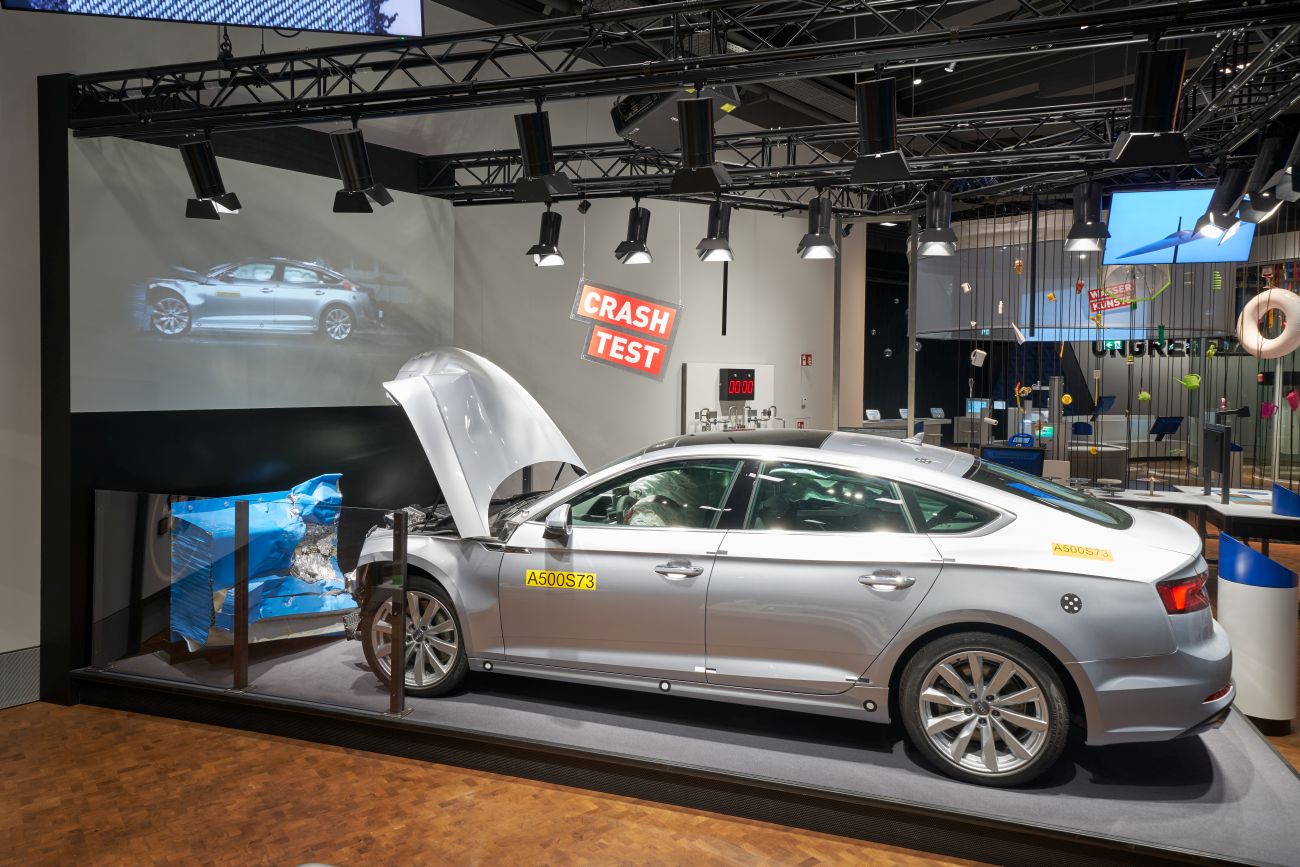
The vehicle has gone through a real crash test. The details of the crash are shown in a slow-motion film. Use the VR goggles to check whether it is possible today to simulate these real crash tests.

Duration:10 min
Floor:OG 1
Keywords:BiophysicsDesignVehicles +3
Sound Check

Sound Check

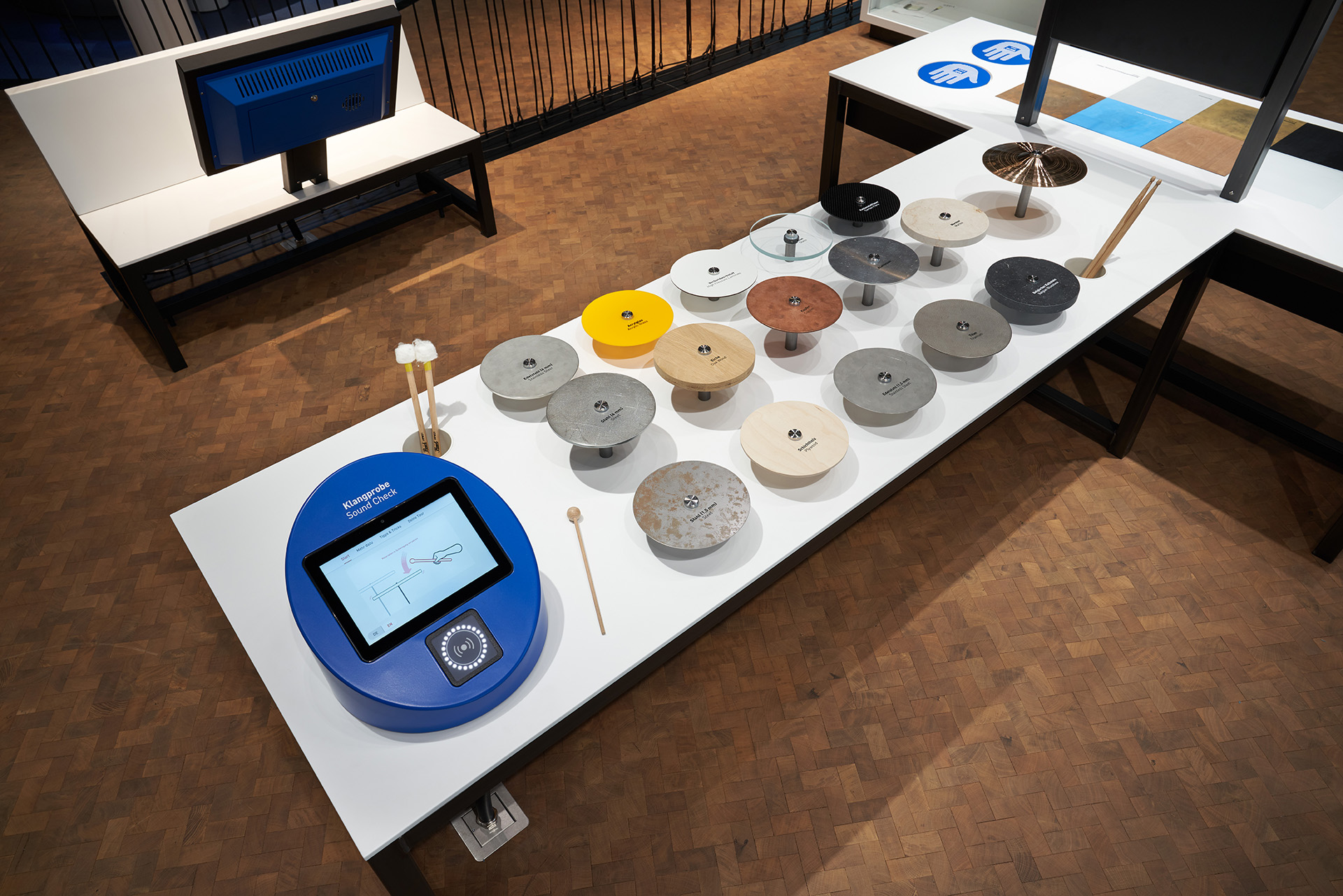
We very rapidly recognize materials by sound. We know what metal, wood or plastic sounds like. The challenge here is to listen even more closely and discover slight differences in the sounds of the materials. What do these objects really sound like?

Duration:5 min
Floor:OG 1
Keywords:PhysicsPerceptionAcoustics
A Wrinkle in Time

A Wrinkle in Time

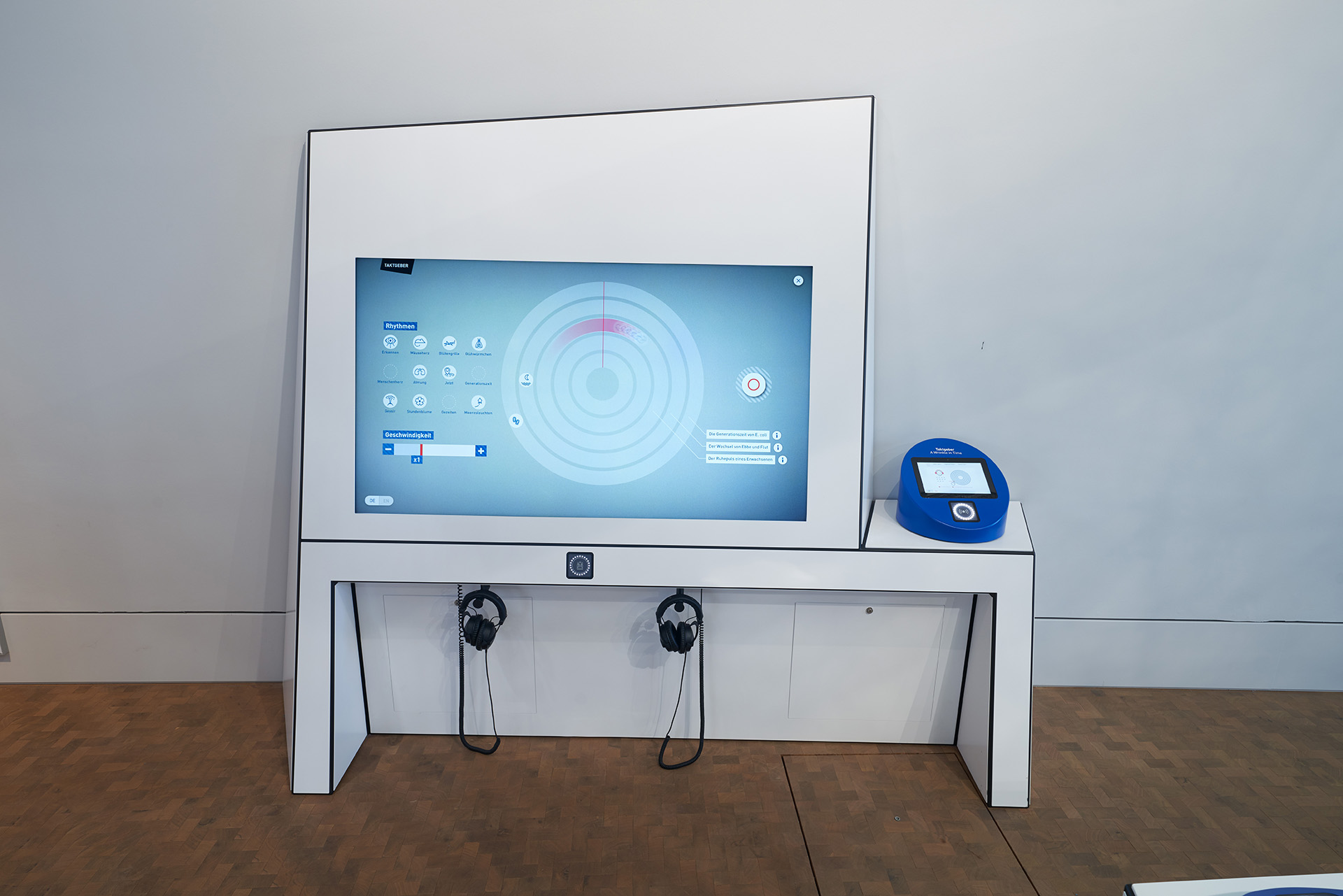
Day and night, ebb tide and high tide: There are many temporal patterns in Nature which plants and animals also follow. The beating of the heart of animals and humans is another, internal impulse. Mix these rhythms of Nature to compose a piece of music.

Duration:5 min
Floor:OG 1
Keywords:
Direct the Flow

Direct the Flow

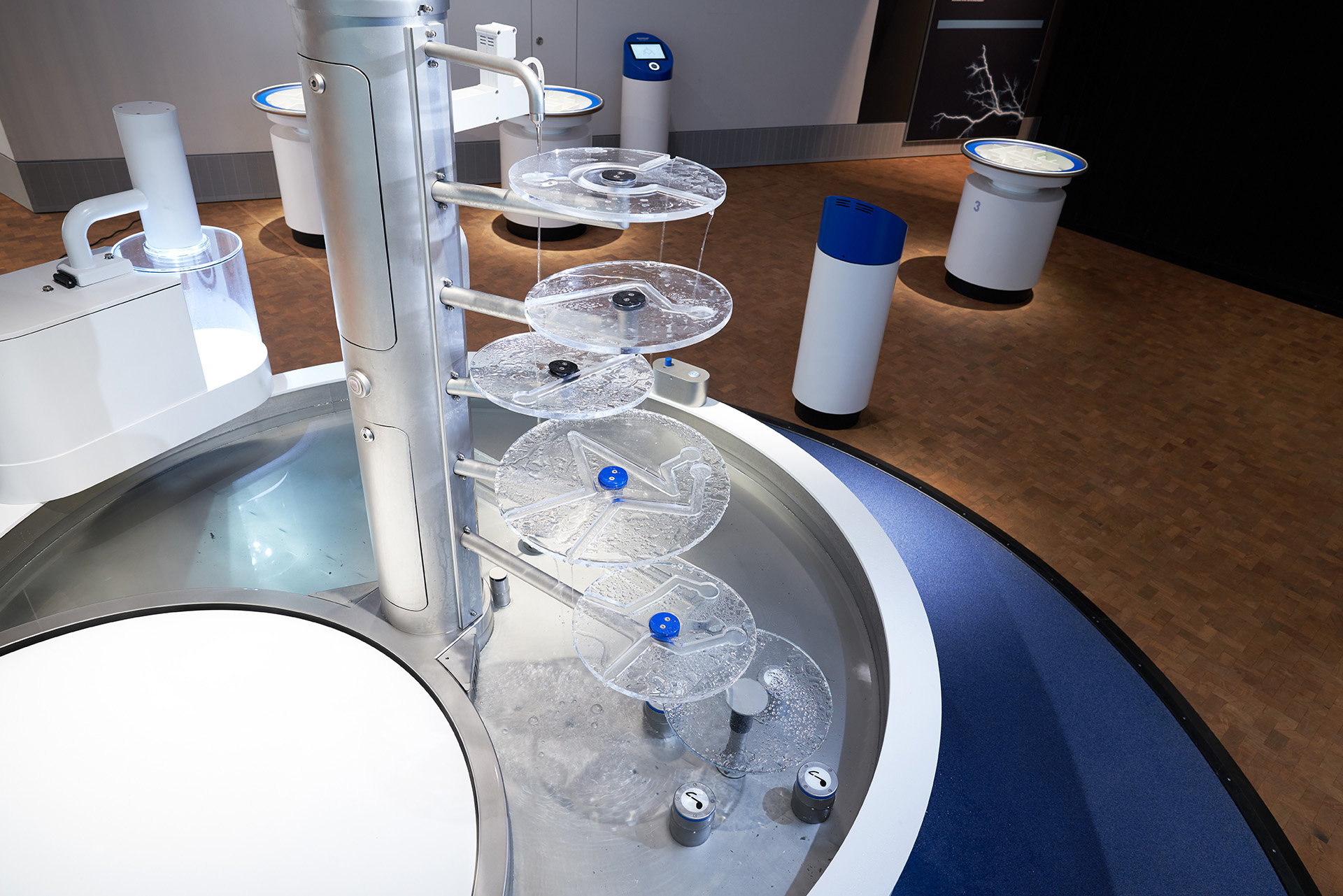
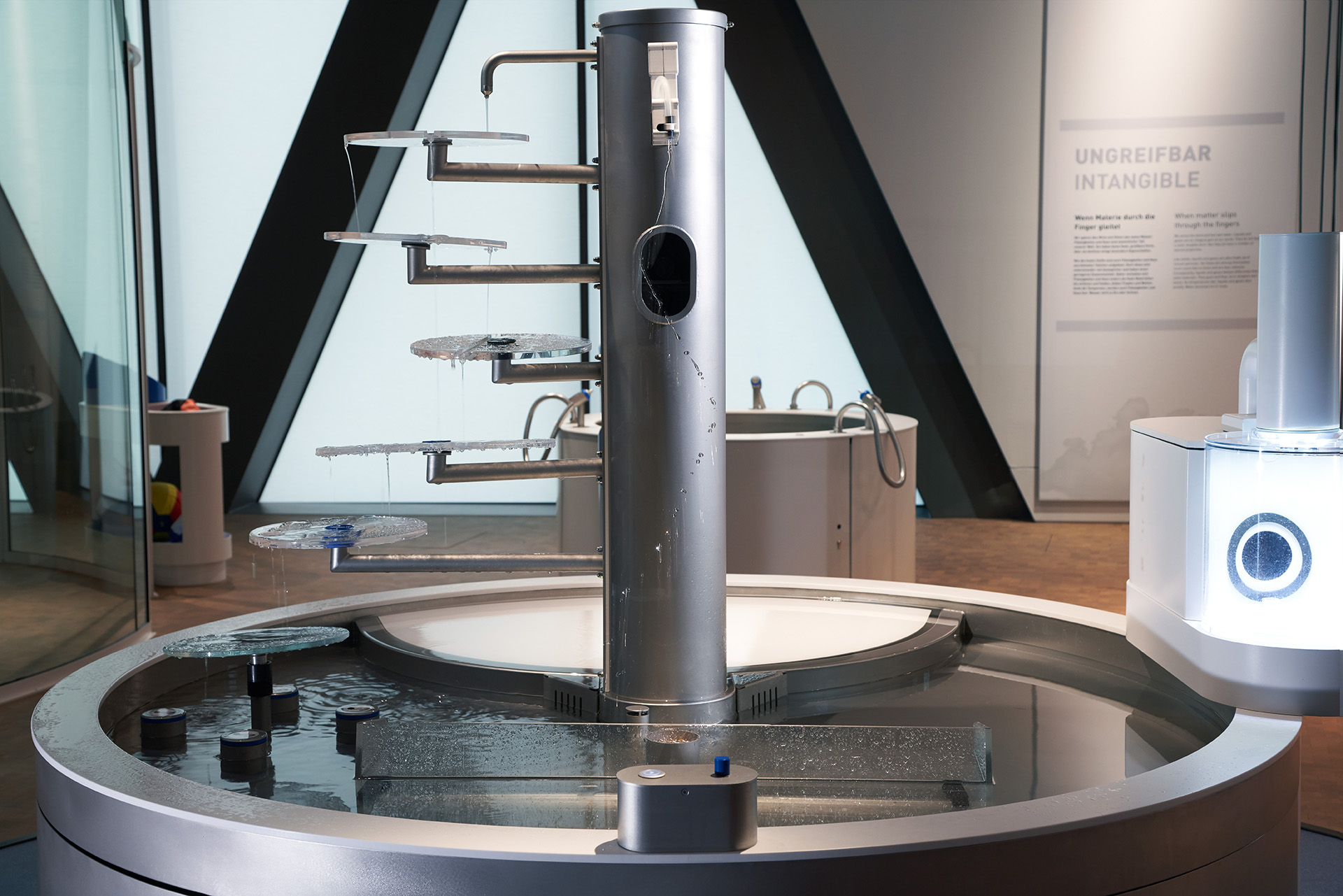
Water naturally flows downward. It finds the path of least resistance and forms beads, thick streaks or large puddles on its way. Change the water's path to produce a piece of music.

Duration:5 min
Floor:OG 1
Keywords:
Photofit Picture

Photofit Picture

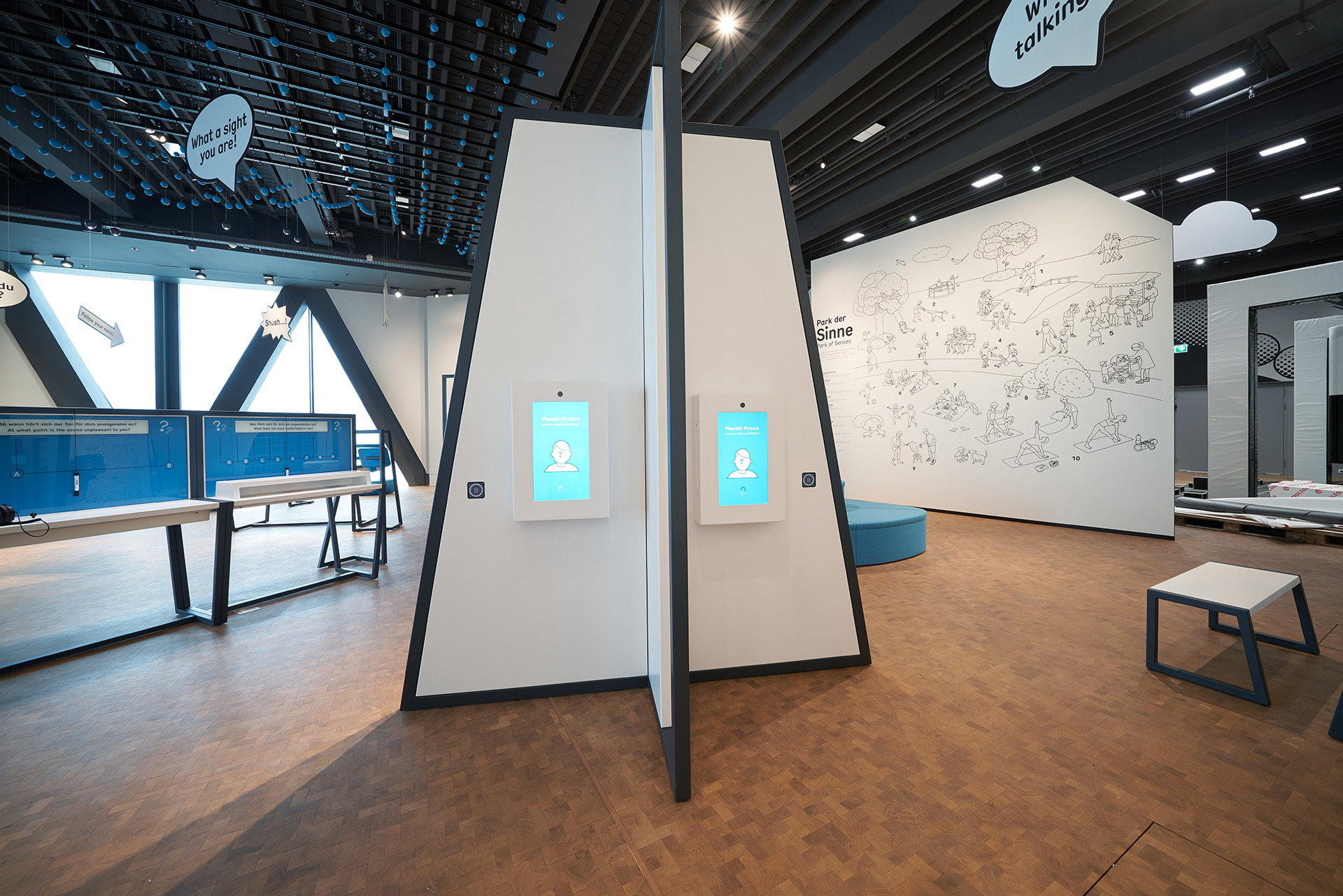
Our brain is able to recognize faces easily. We don't know why that is. The brain at any rate does not pay much attention to details. That's why it is difficult to create a composite of a familiar face.

Duration:8 min
Floor:OG 2
Keywords:SocietySensory nervous systemPerception +1
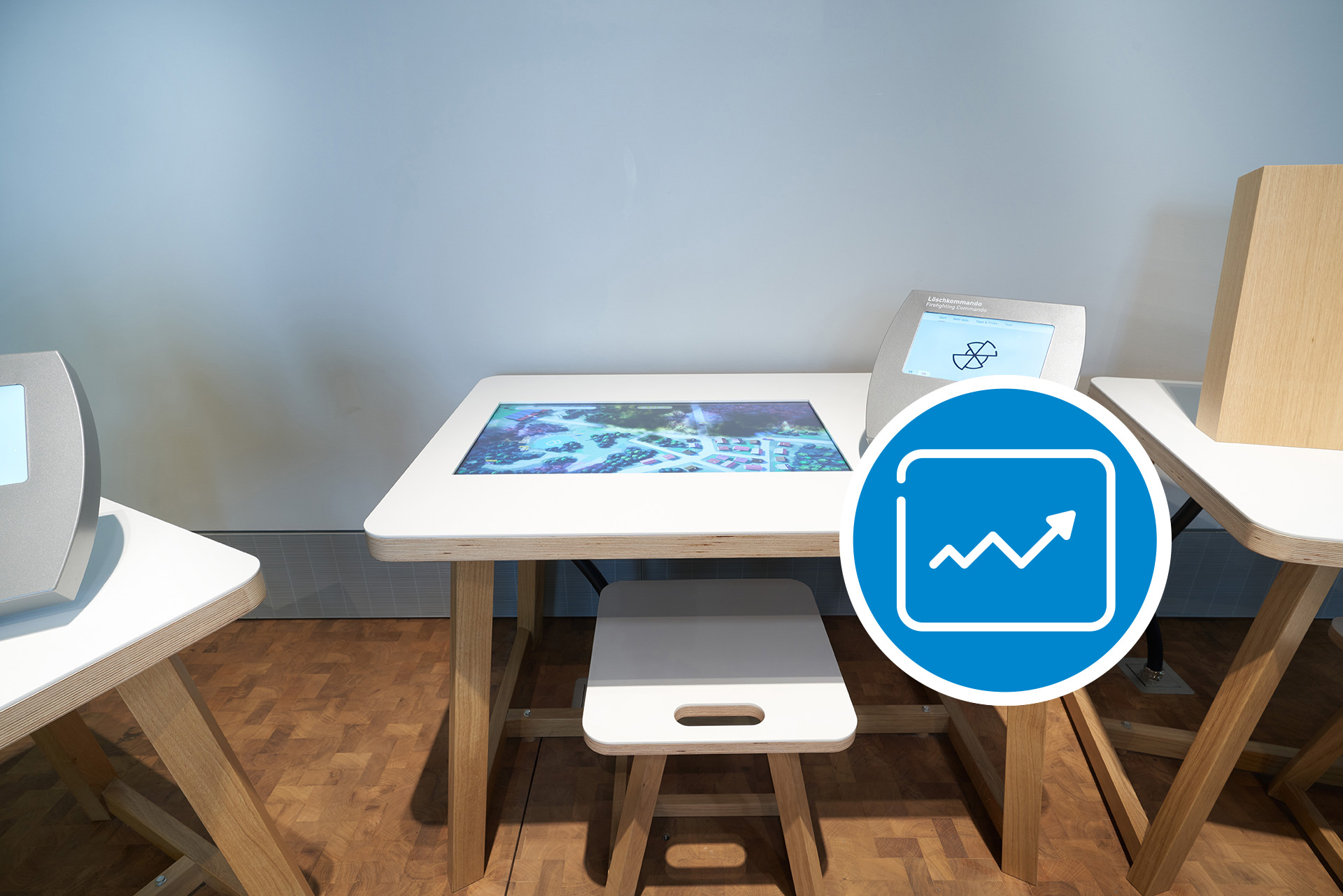
Firefighting Commando

Firefighting Commando

We are often confronted with many expectations and desires that we cannot fulfill. It is just as difficult in this game to put out all the forest fires. Who is able to get the best results through smart organization?

Duration:5 min
Floor:OG 3
Keywords:BrainSocietyPerception +1
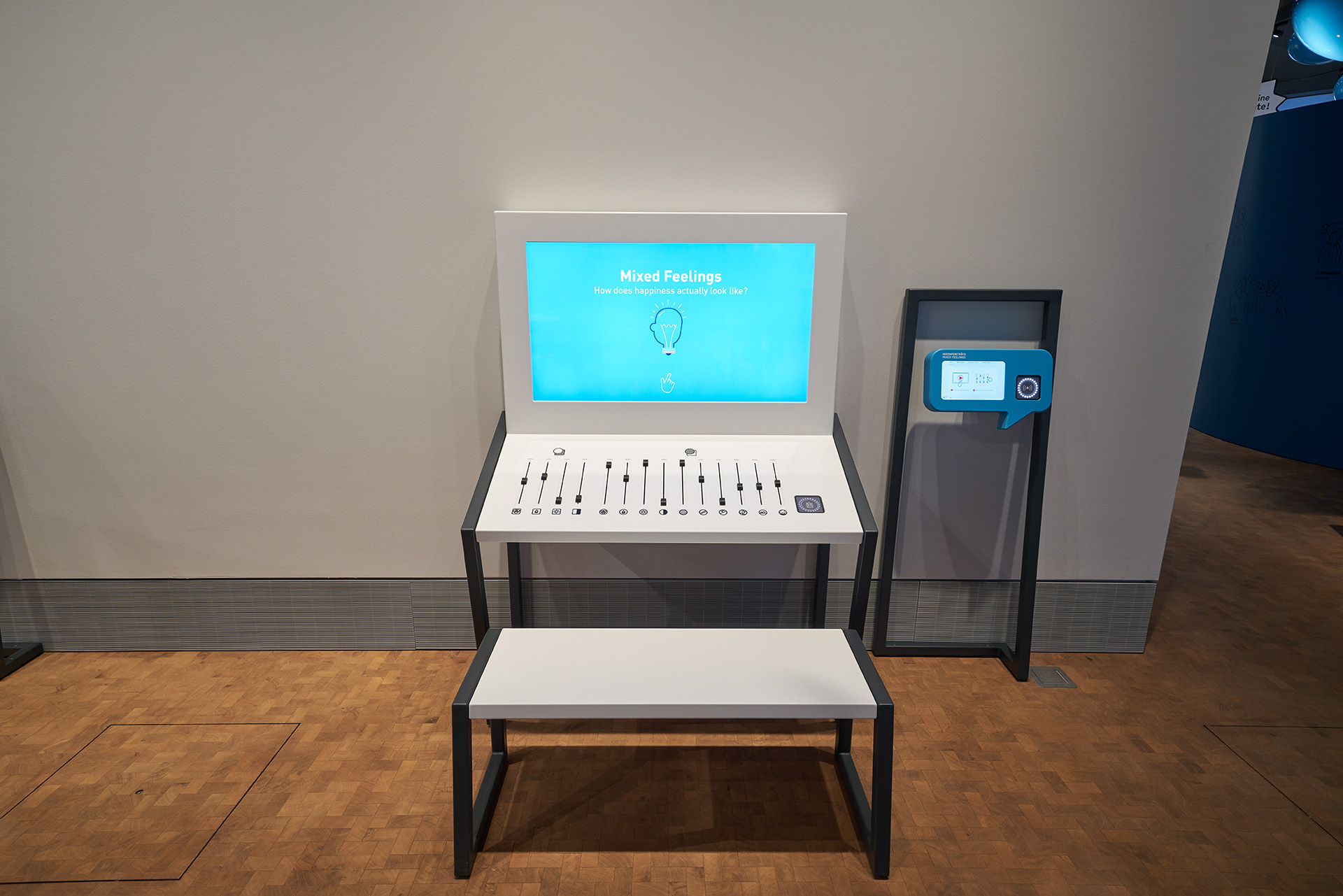
Mixed Feelings

Mixed Feelings

Our brain combines originally separate perceptions, feelings and ideas to form a whole. This is called "association". This is why certain concepts are permanently linked in our minds with individual images.

Duration:15 min
Floor:OG 2
Keywords:SocietyCreativityColour +1
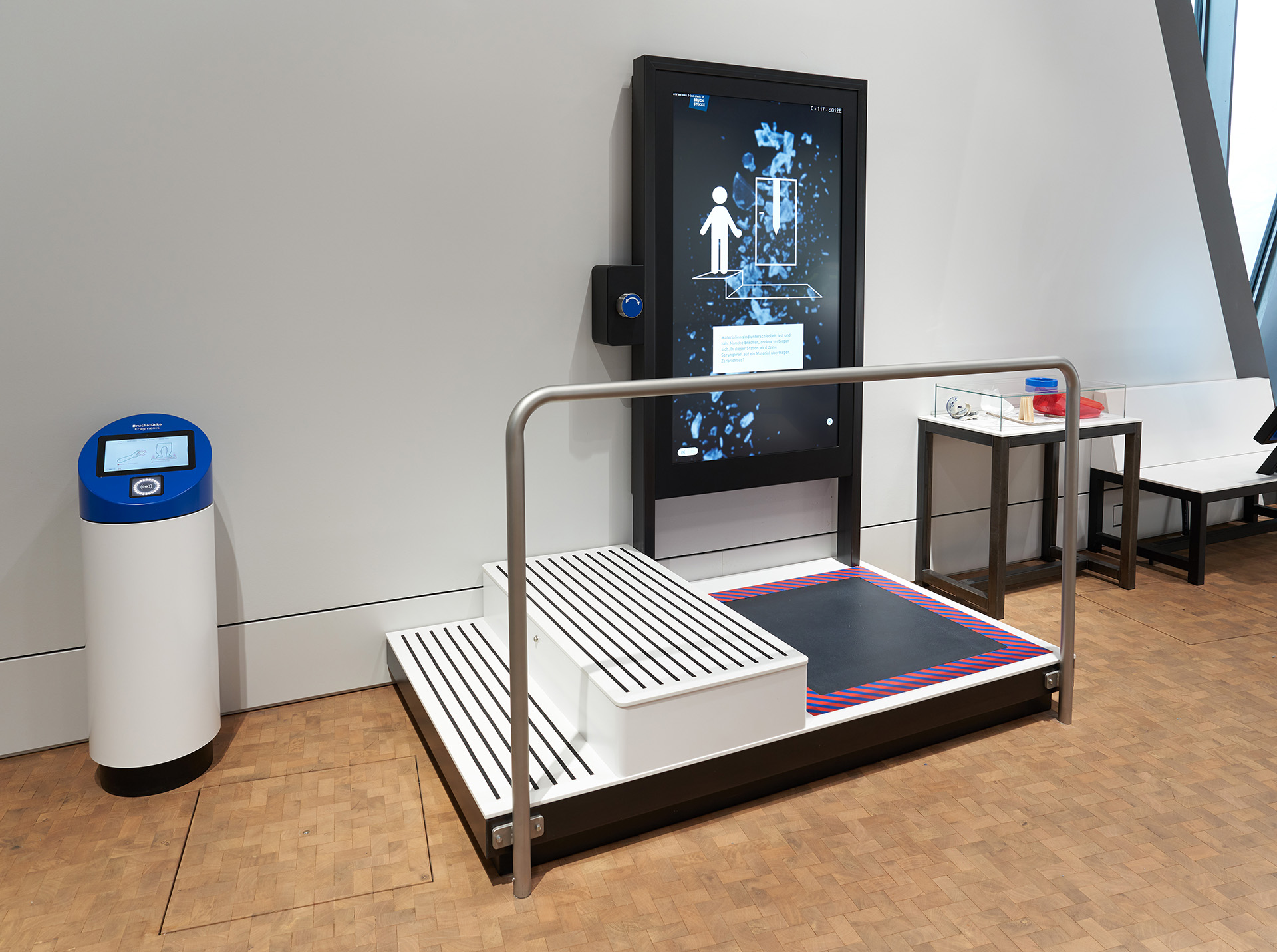
Fragments

Fragments

The machine presses down onto the sample material with ever greater force. Will it hold up under pressure? Will it bend? When and how does it break? Test the amount of pressure the different materials are able to withstand and how they break.

Duration:5 min
Floor:OG 1
Keywords:MaterialsProceduresBuilding +2
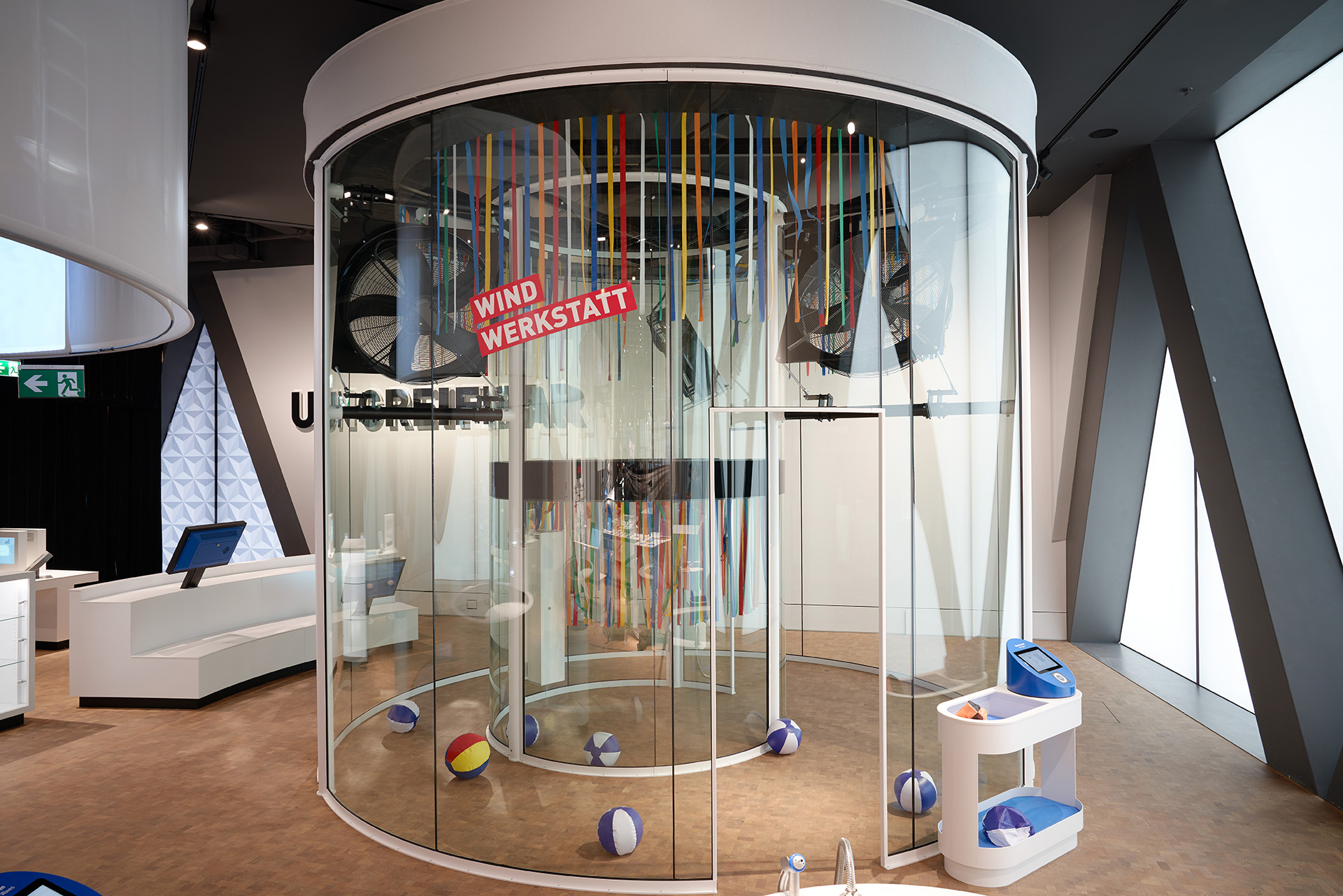
Air Space

Air Space

At experimenta the wind blows in a circle. It alternates in intensity between strong and a lull. Where does it blow the hardest? Use different test objects to experiment in the Air Space and measure the wind's speed.

Duration:10 min
Floor:OG 1
Keywords:MotionForces of natureFluid mechanics +1
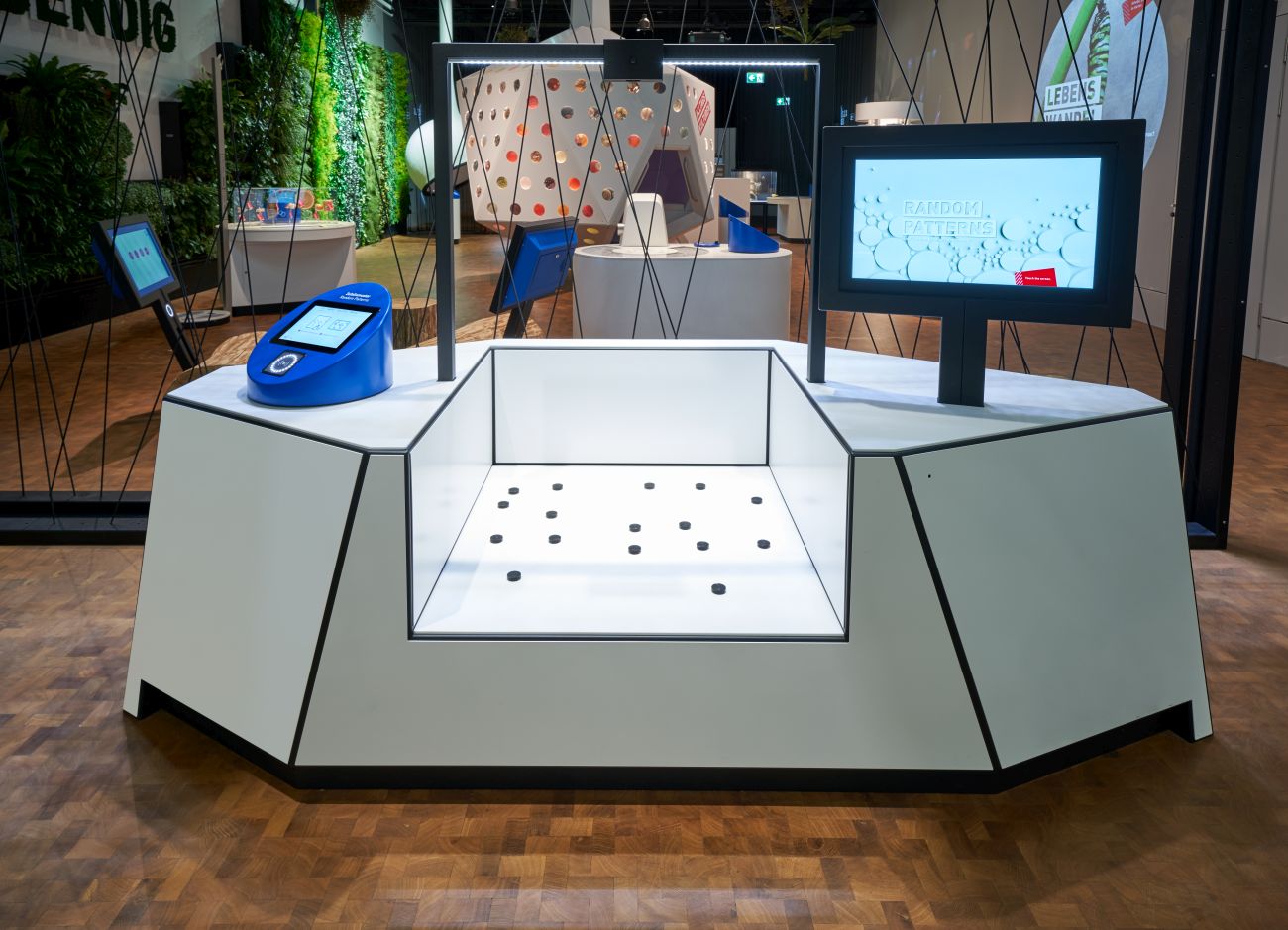
Random Patterns

Random Patterns

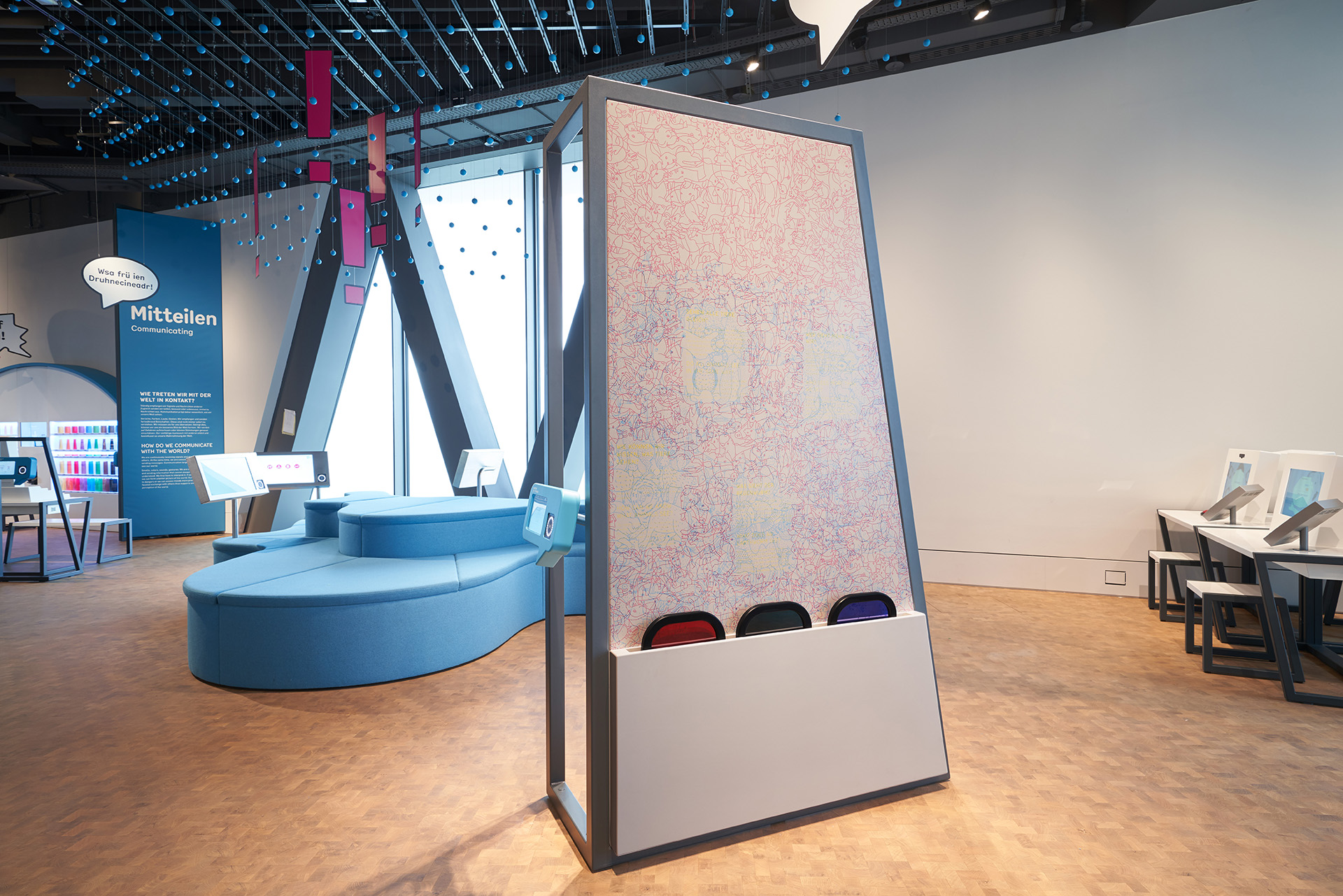
People are pattern-seekers and have specialized in recognizing and interpreting patterns and structures rapidly. It is difficult for us to act consciously in a random way. Anything random is also difficult to understand. The computer makes the attempt at this station. Is it successful?

Duration:15 min
Floor:OG 1
Keywords:
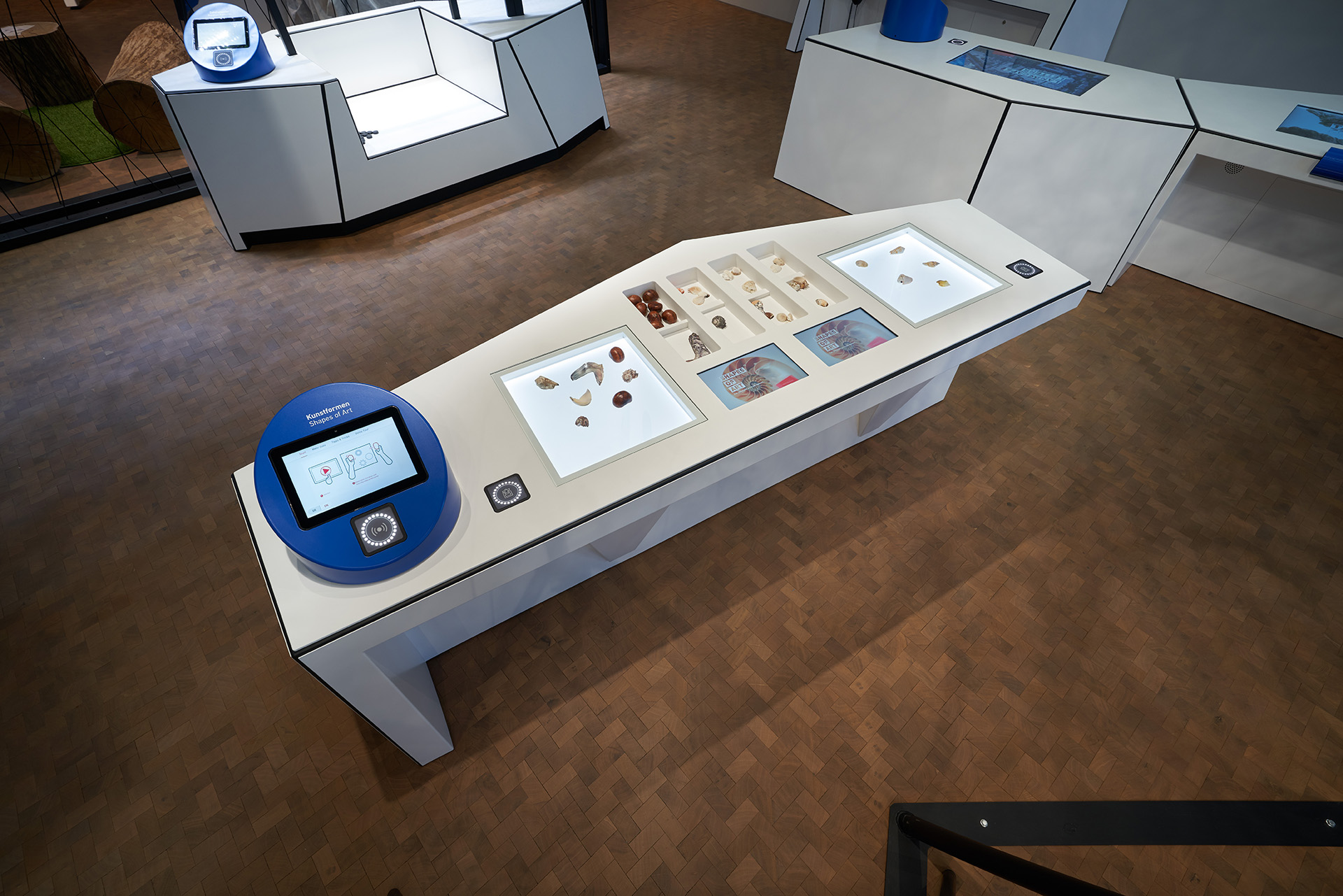
Shapes of Art

Shapes of Art

Nature is full of impressive shapes and patterns. It creates its own, very unique works of art. This in turn is an outstanding starting point from which to create your own Nature artwork.

Duration:5 min
Floor:OG 1
Keywords:ArtCreativityStructure +2
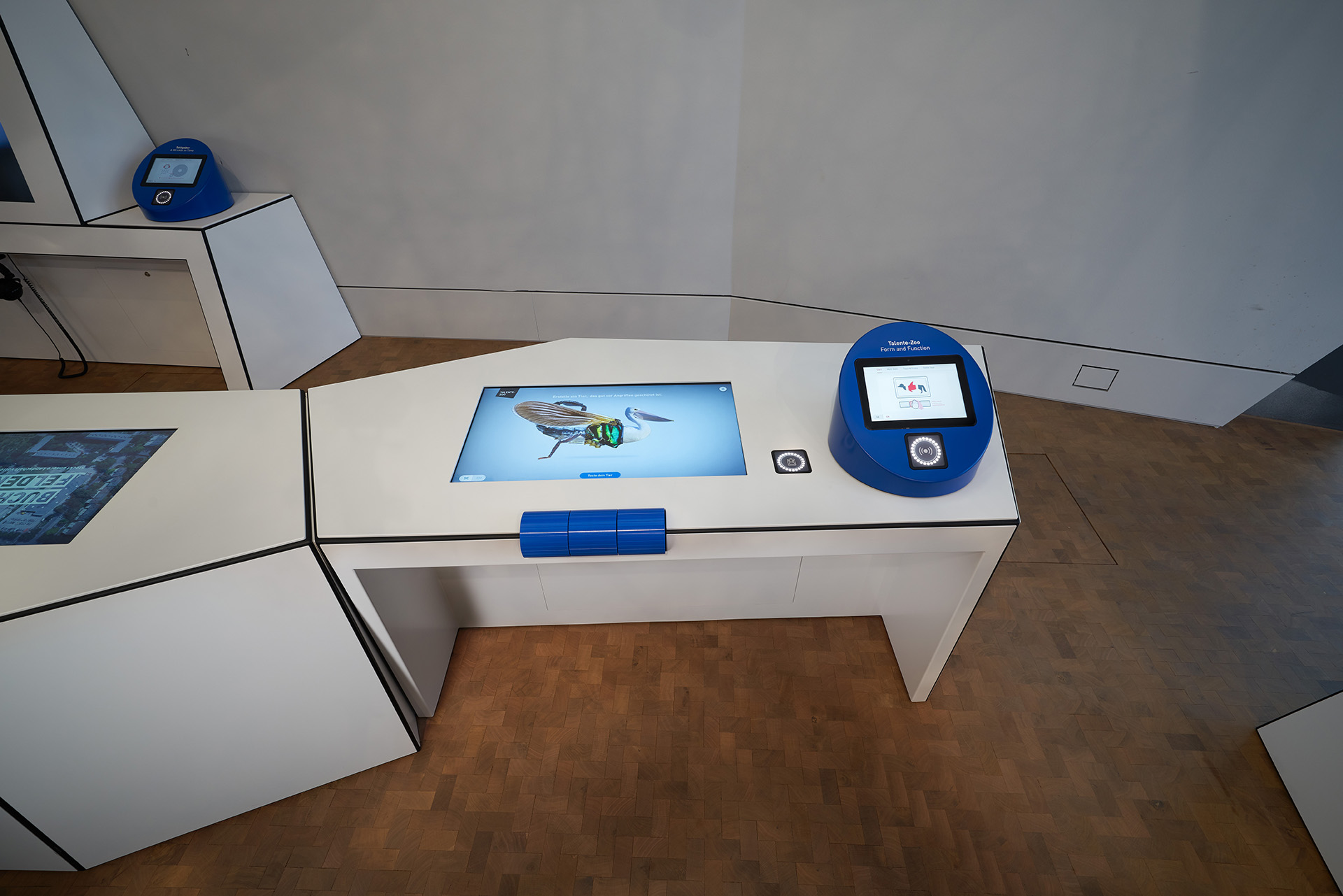
Form and Function

Form and Function

Anyone wishing to do something special needs special skills. These stem in part from appearance, shape and structure. Form and function are thus closely related. Create new creatures with special talents.

Duration:10 min
Floor:OG 1
Keywords:
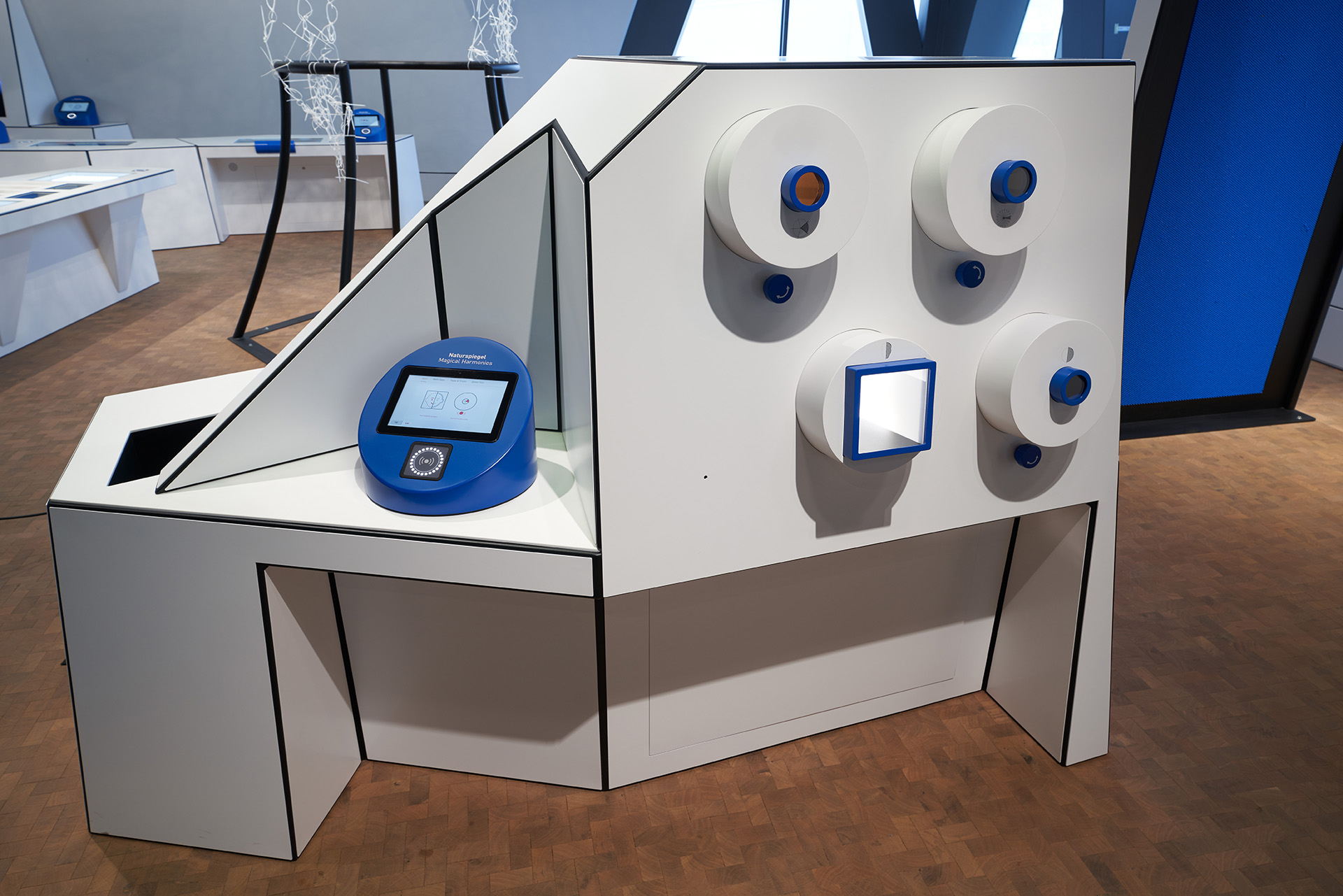
Magical Harmonies

Magical Harmonies

If we look in the mirror we discover: we are symmetrical! The left and right halves of the body resemble each other externally and mirror each other. In Nature, there are different shapes of symmetry. Discover them here!

Duration:5 min
Floor:OG 1
Keywords:FormPhysiqueMathematics +3
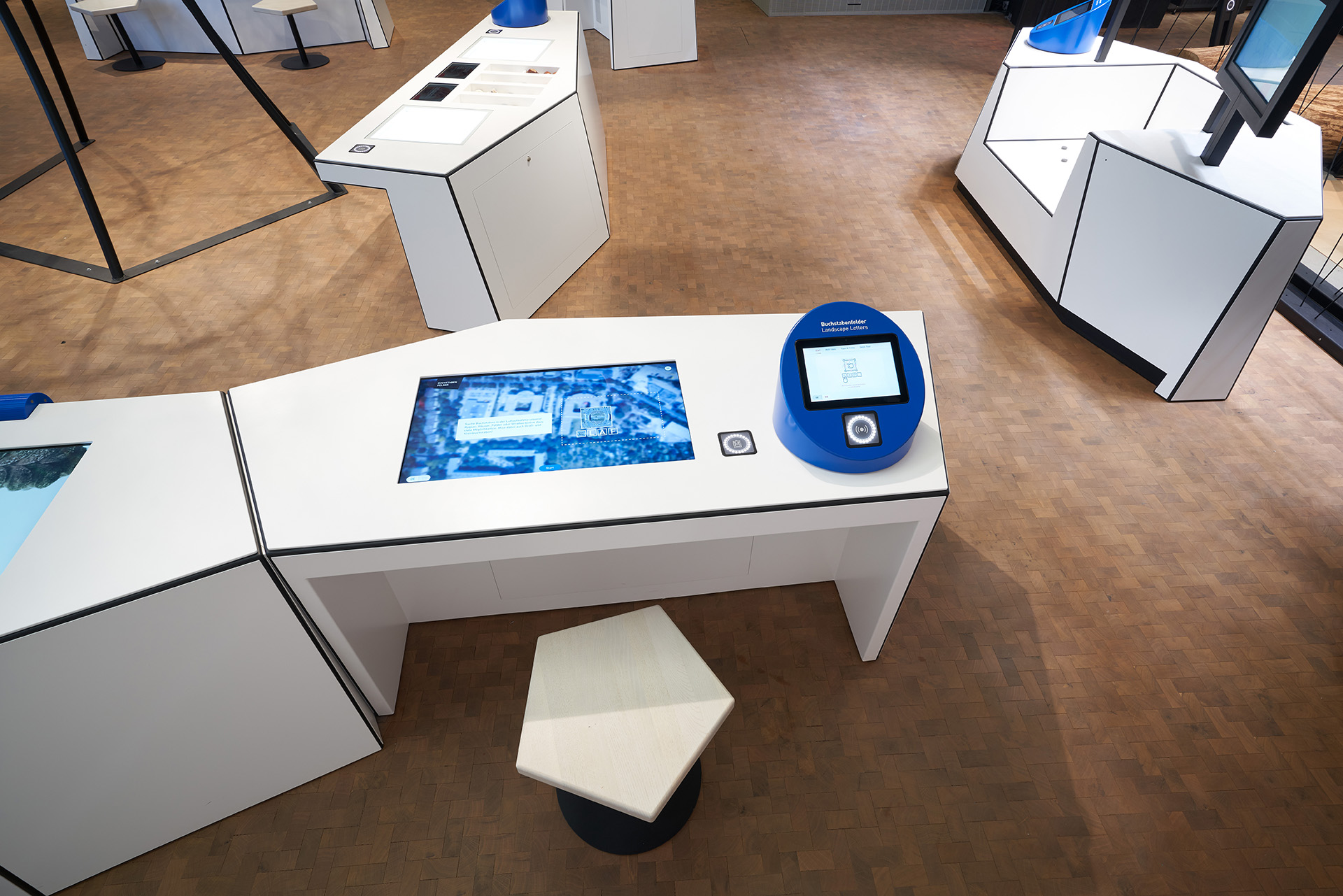
Landscape Letters

Landscape Letters

Ever since satellite images have been available, a popular sport has emerged worldwide: the search for letters or other curious objects in aerial photographs. It is not difficult because our brain likes looking for these kinds of patterns and structures.

Duration:5 min
Floor:OG 1
Keywords:SoilArtPsychology +8
Substantial Changes

Substantial Changes

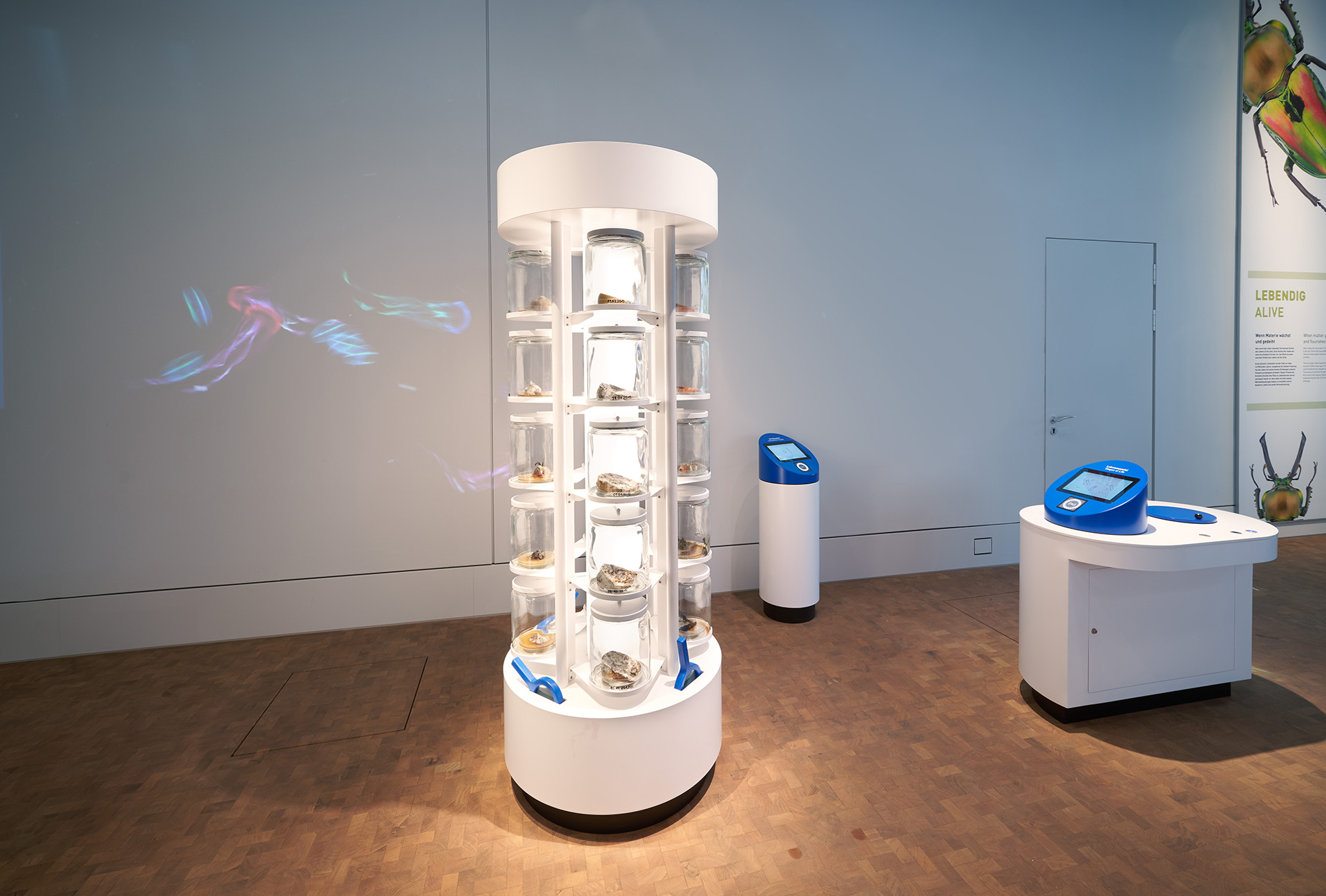
Yummy or yucky? New life is growing on these organic products. Because bacteria and fungi also love bread, cheese, tomatoes or carrots. The organisms decompose the existing organic material and use it for their own growth.

Duration:5 min
Floor:OG 1
Keywords:AgeingBacteriaBiology +3
Color your World

Color your World

White light is colorful. Yet something is missing in a colored light beam. In its light, some things remain invisible. This is because they do not receive light they can reflect. It is why three different worlds of color can exist in a single room.

Duration:5 min
Floor:OG 1
Keywords:DesignArtCreativity +5
Dancing Water

Dancing Water

It looks like the water is splashing randomly. It actually follows a controlled stimulus. It is just too fast for our eye to see. A camera, however, with the right frame rate reveals the artistic movement of the water.

Duration:5 min
Floor:OG 1
Keywords:
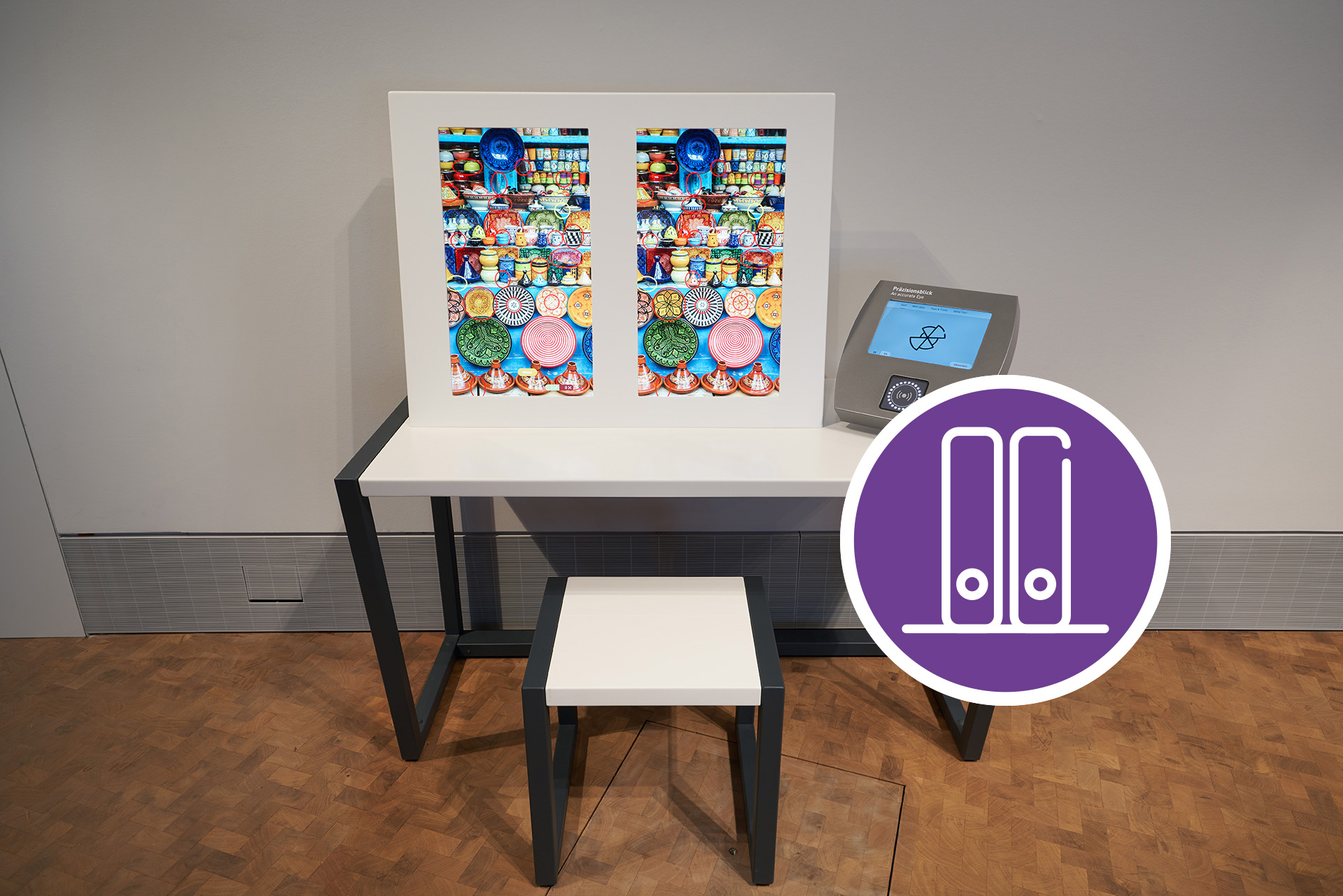
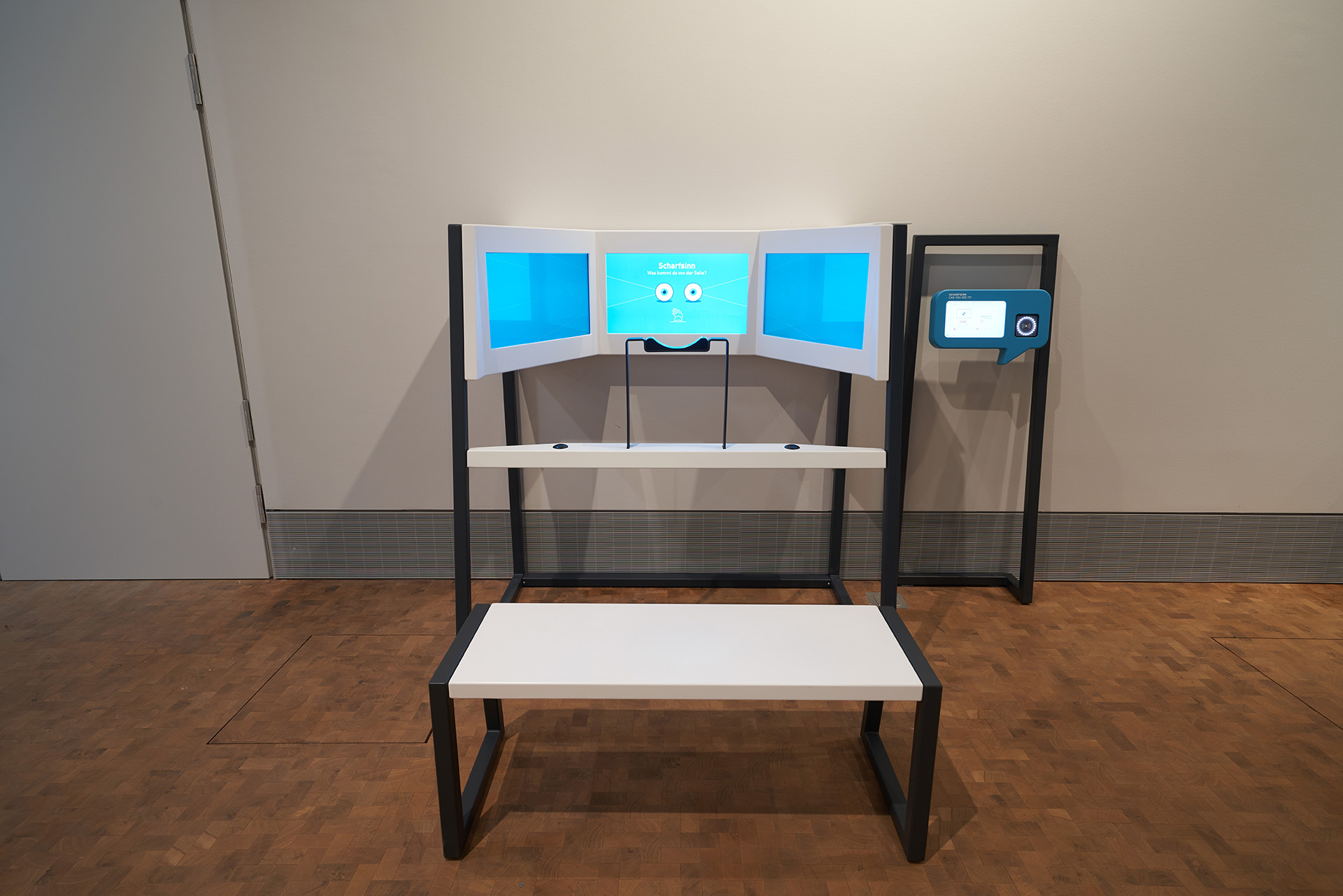
An accurate Eye

An accurate Eye

A discerning eye is needed to discover minor differences between two images. It is no easy feat. The brain initially ignores details. Once a difference is detected, it is immediately perceived as obvious.

Duration:3 min
Floor:OG 2
Keywords:EvolutionBrainSociety +2
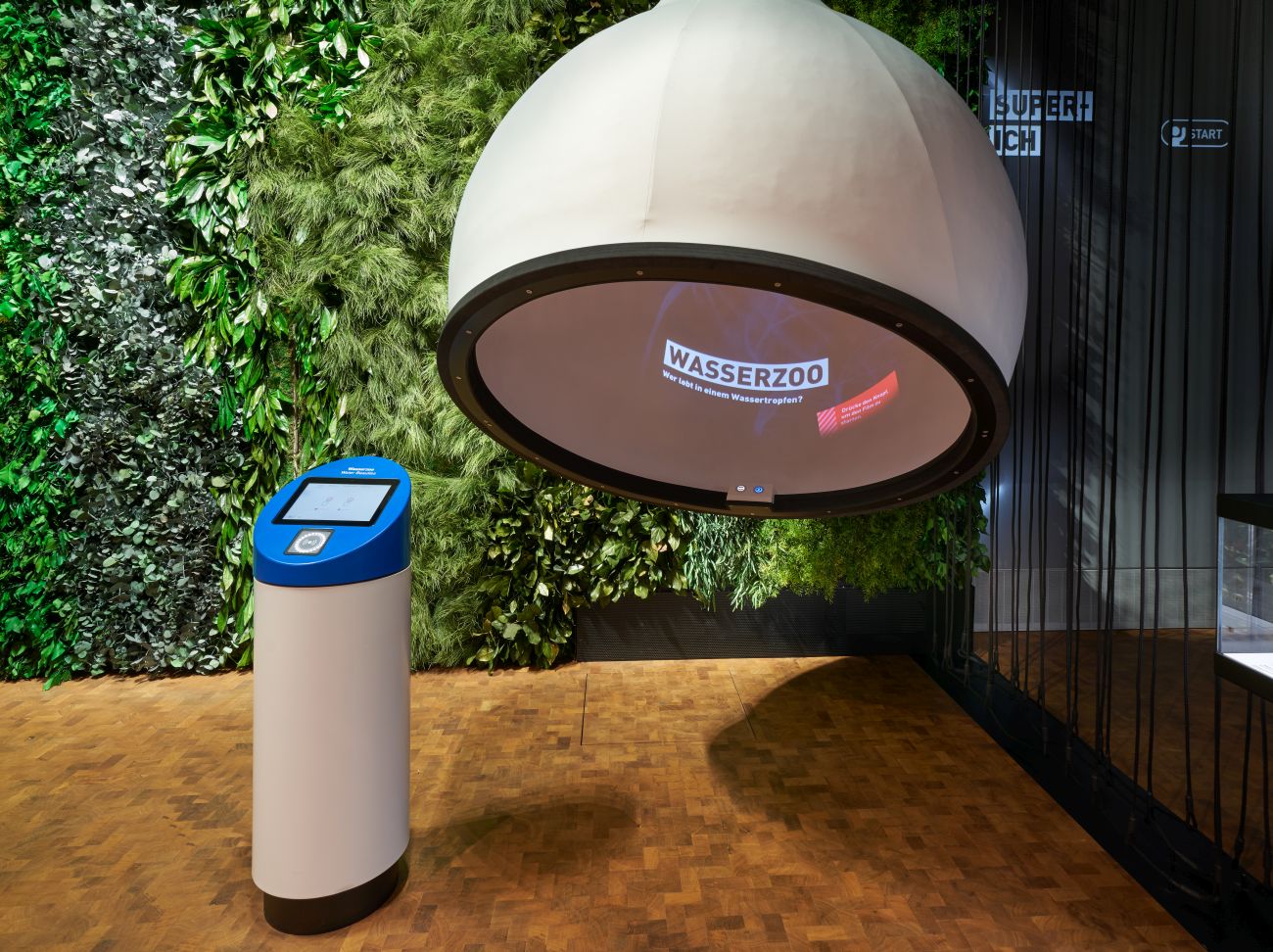
Water Beauties

Water Beauties

Water is the largest habitat on earth and is considered the source of all life. It is amazing what kind of creatures are to be found in water. Take the plunge and go on a fascinating journey through the microscopic world of water.

Duration:8 min
Floor:OG 1
Keywords:BiologyEvolutionLiving environments +3
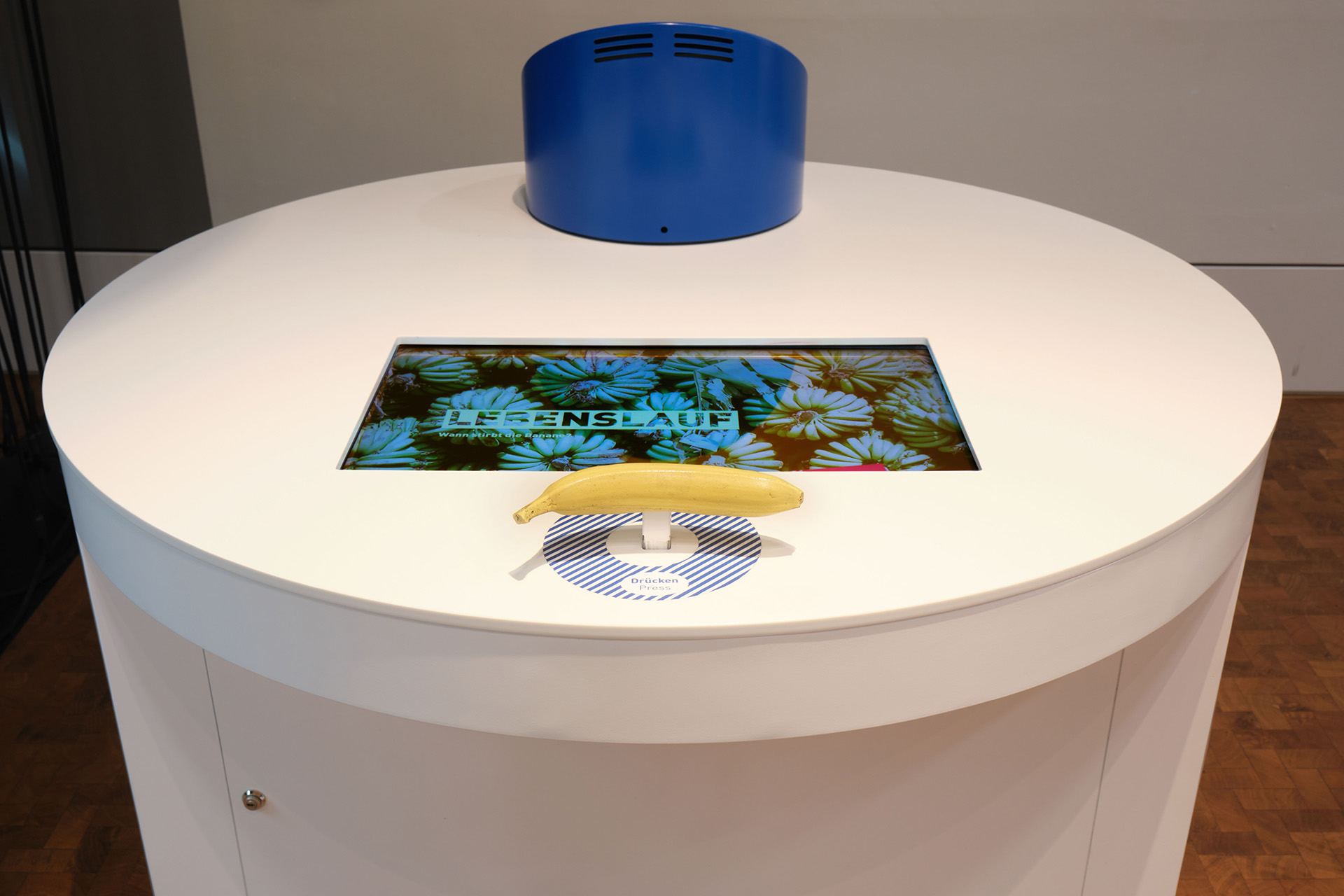
A Banana´s Journey

A Banana´s Journey

Death is part of life. Yet sometimes it is difficult to determine when life is over. Plants, for example, are amazingly capable of regeneration. Follow the banana on its journey through life and cast a vote when you think it's dead.

Duration:5 min
Floor:OG 1
Keywords:AgeingBacteriaBiology +3
Ripples and Waves

Ripples and Waves

Waves form, spread, superimpose or are reflected when they encounter obstacles. Many factors influence these wave images. Simply beautiful. Experiment with the wave images and observe them in slow motion.

Duration:5 min
Floor:OG 1
Keywords:
Make a Splash

Make a Splash

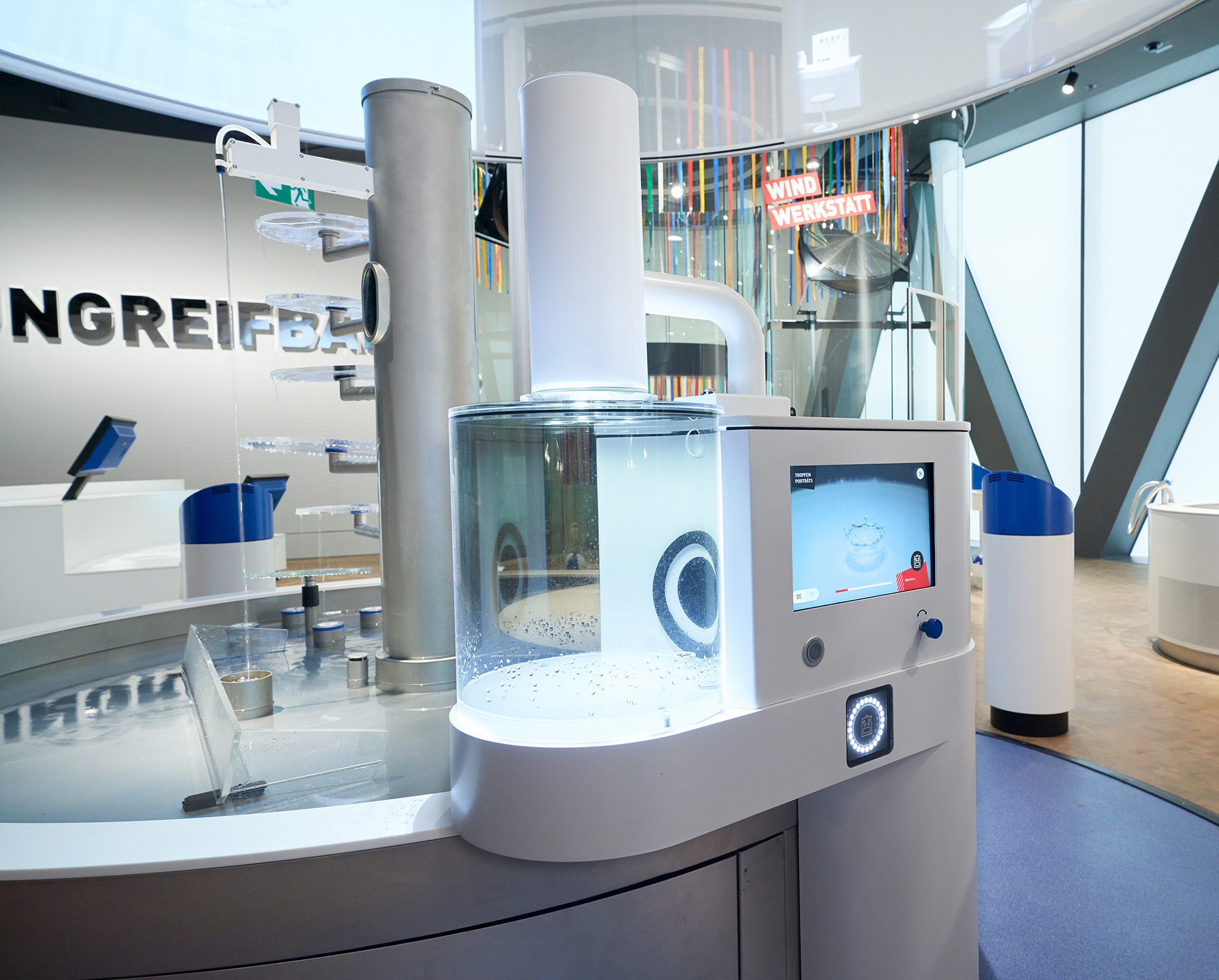
Water forms drops. This is because the smallest elements of water attract each other. If the drop becomes too large, gravity prevails. The drop falls. And the impact is hard. What happens then is shown in detail in the slow-motion film.

Duration:5 min
Floor:OG 1
Keywords:MotionWater
Food Webs

Food Webs

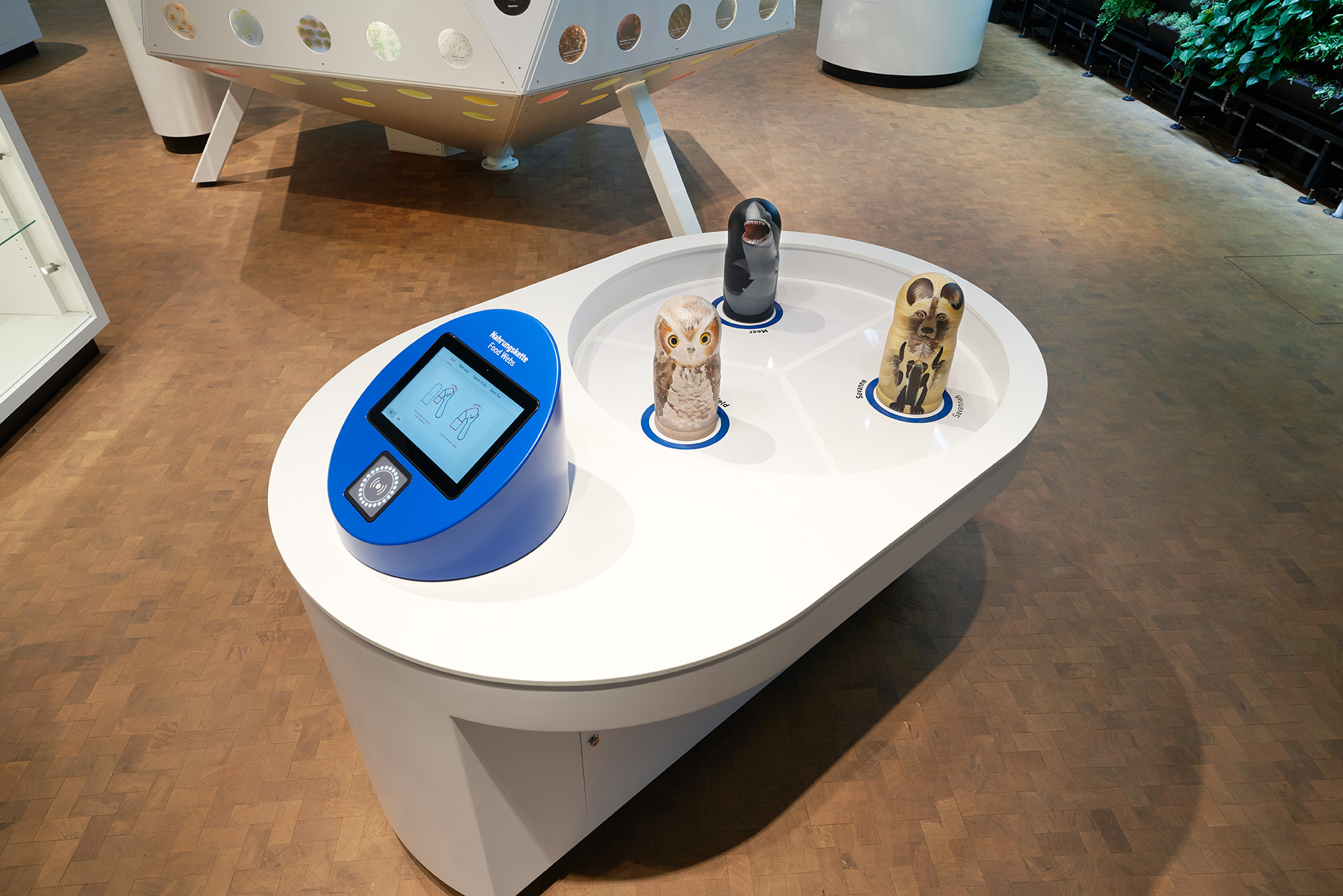
Every food chain has a beginning. It is plants or microorganisms that produce organic biomass. Yet what is the next link in the chain? Who is at risk of being eaten and by whom? And what dependencies develop in the ecosystems?

Duration:10 min
Floor:OG 1
Keywords:BiologyNutritionPlants +1
Scratch it!

Scratch it!

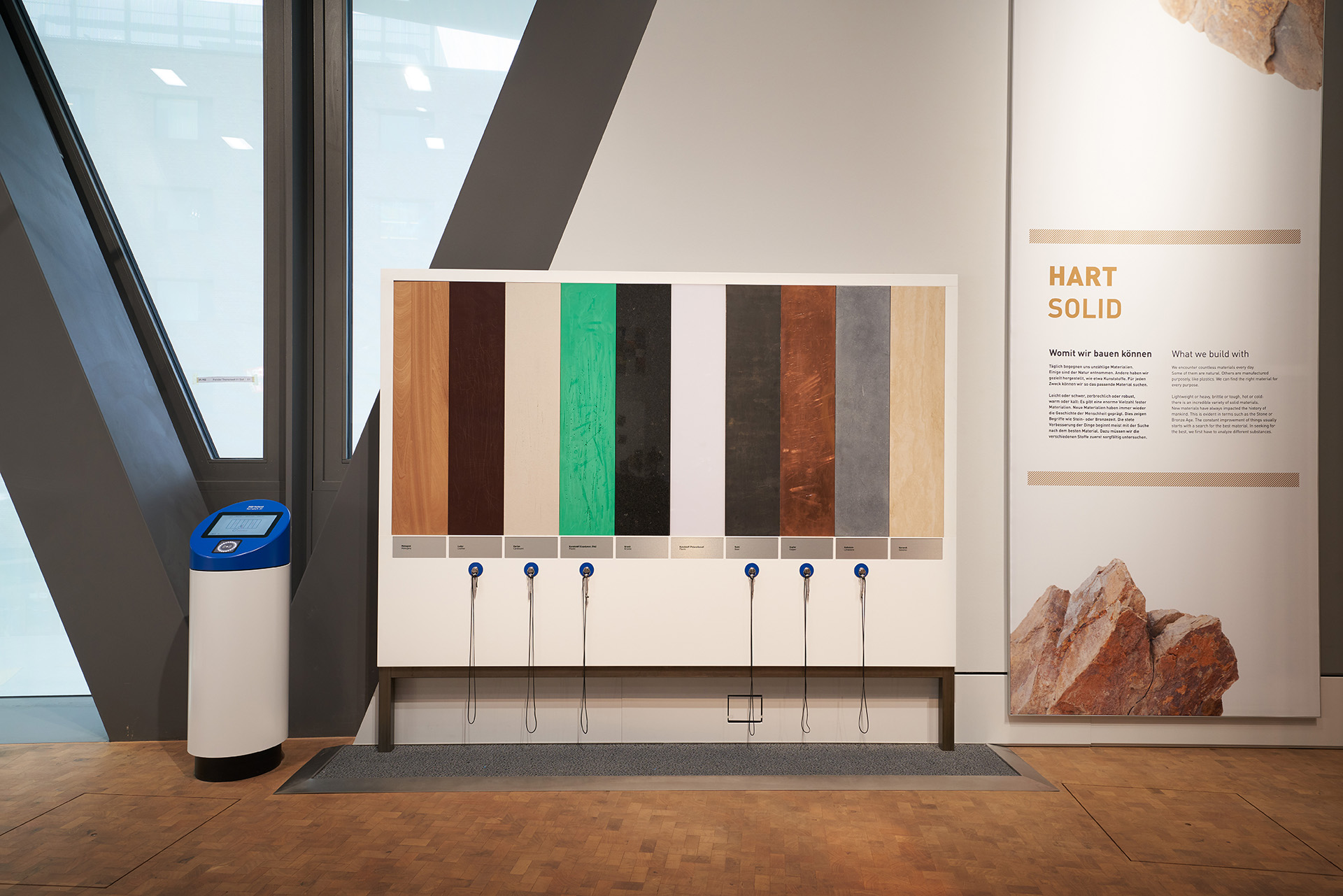
Harder materials scratch softer materials. This is actually something we experience every day. It is, however, also the basis of the Mohs Hardness Scale still in use today. Test how the materials can be scored and scratched.

Duration:10 min
Floor:OG 1
Keywords:IndustryMaterials
Live Wire

Live Wire

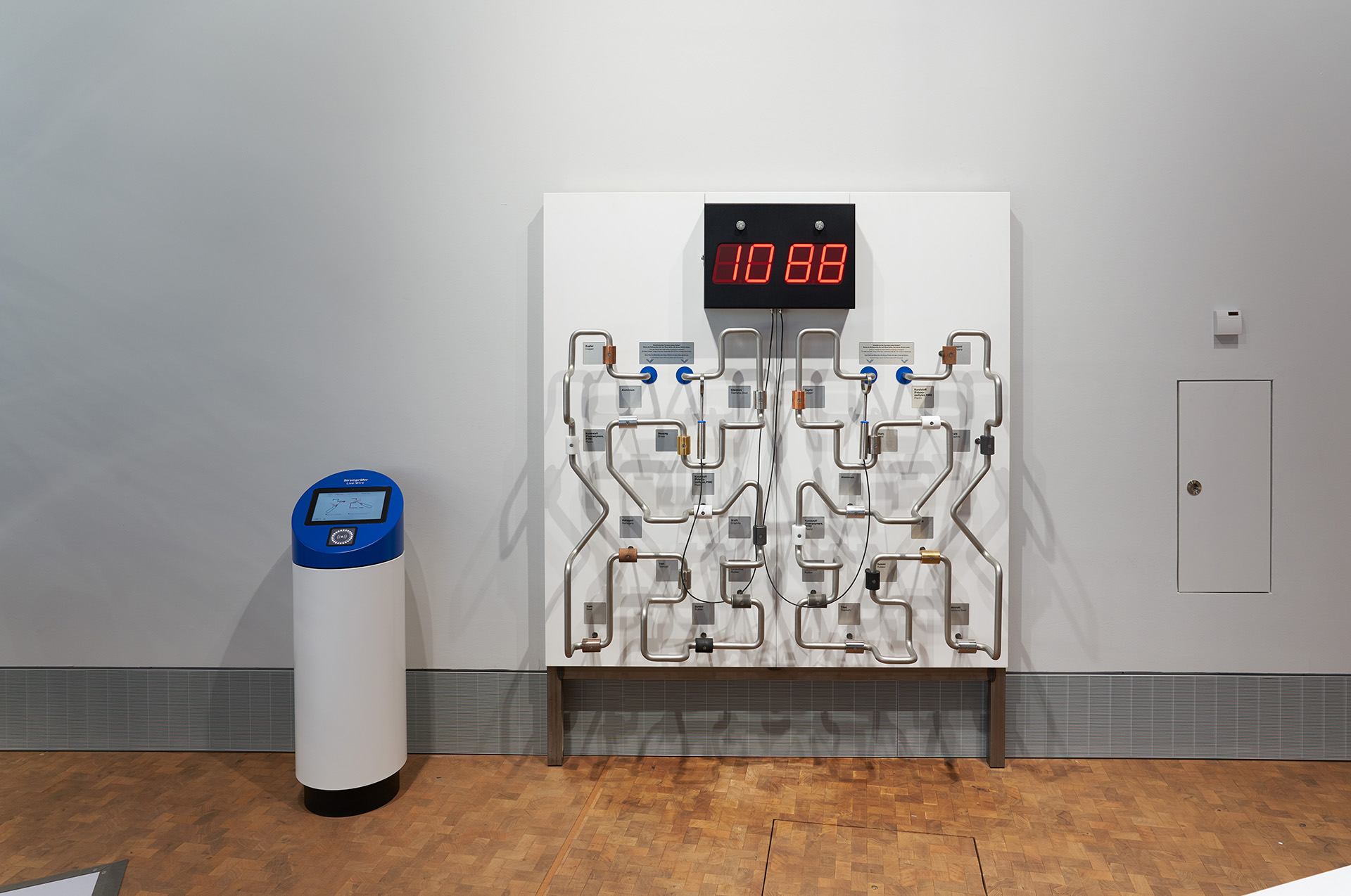
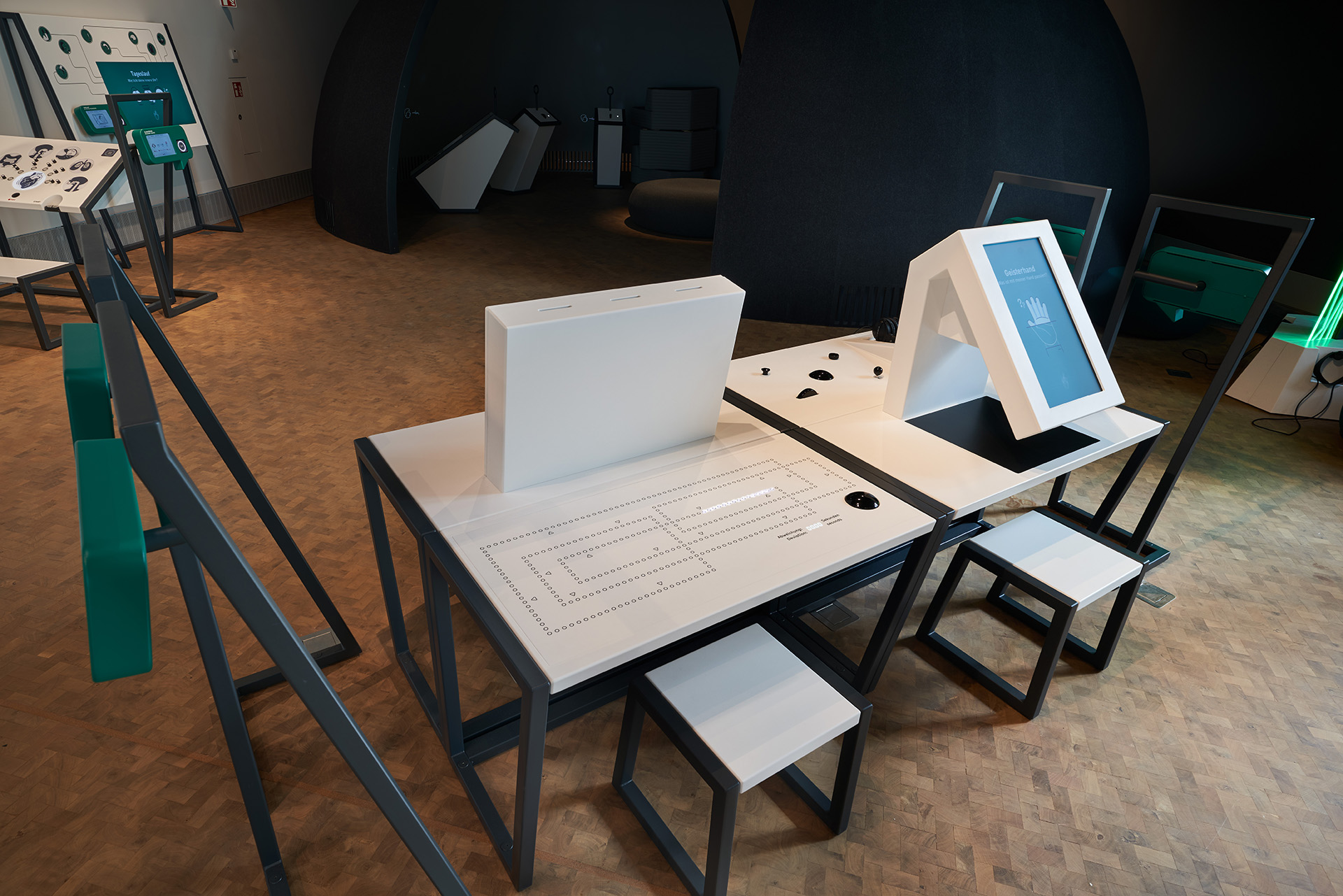
Who is able to guide the metal loop along the track without touching it? You will get a penalty point every time you make contact. Luckily, there are stops along the way - for all those who know which materials do not conduct electricity.

Duration:10 min
Floor:OG 1
Keywords:ElectricityMotion
Hot or Cold!

Hot or Cold!

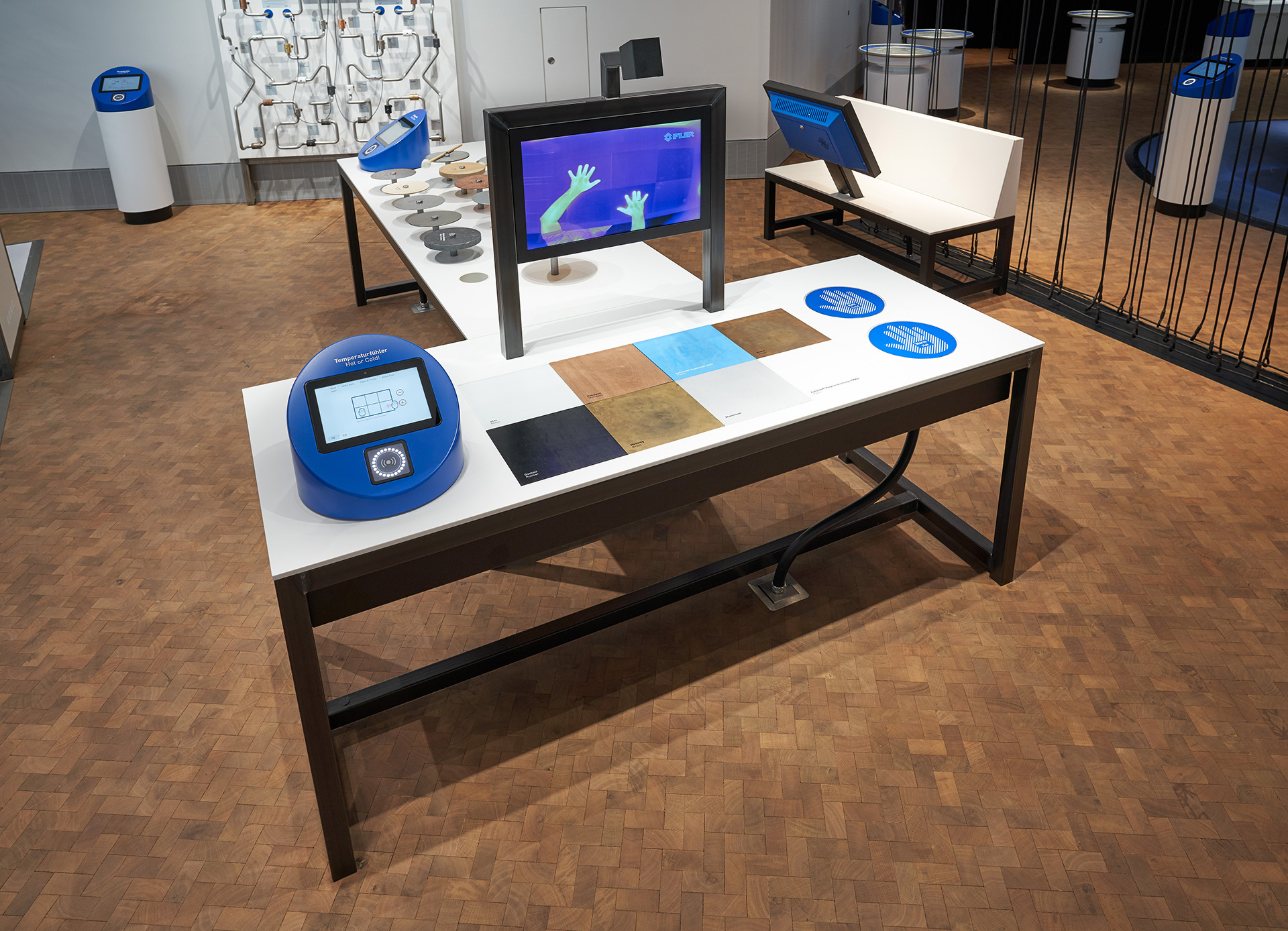
Which materials conduct heat well? They rapidly absorb the heat of your hands - and release it just as fast again when you raise your hands. To leave lasting impressions, look for poor conductors of heat.

Duration:5 min
Floor:OG 1
Keywords:EnergyMaterialsHeat
Shake it!

Shake it!

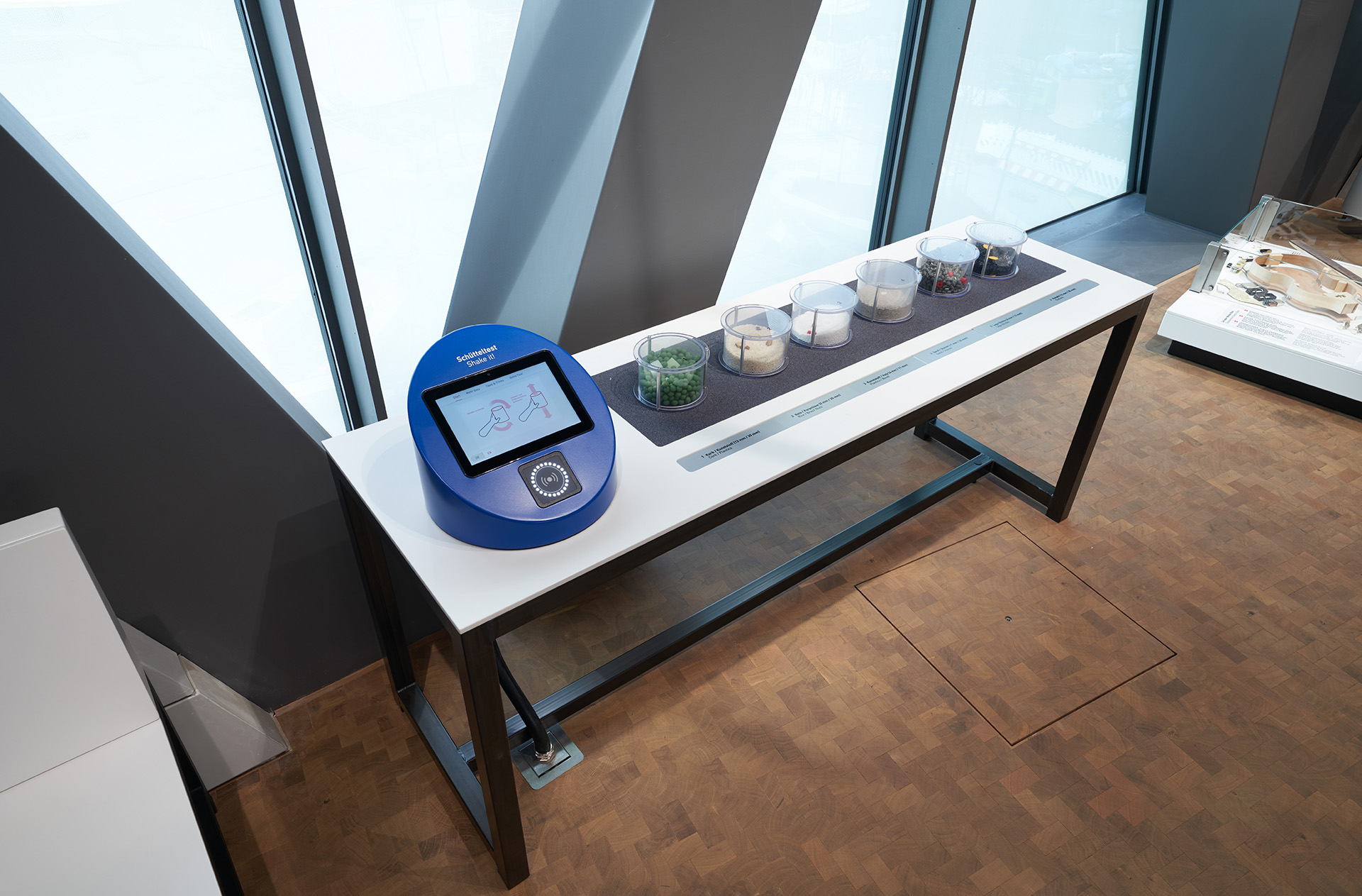
We can find the answer in the mixed nuts or granola: large pieces usually rise to the top. But it isn't really that simple, and many different factors play a role. Try it yourself and shake the different containers.

Duration:5 min
Floor:OG 1
Keywords:MotionForm
Rebound

Rebound

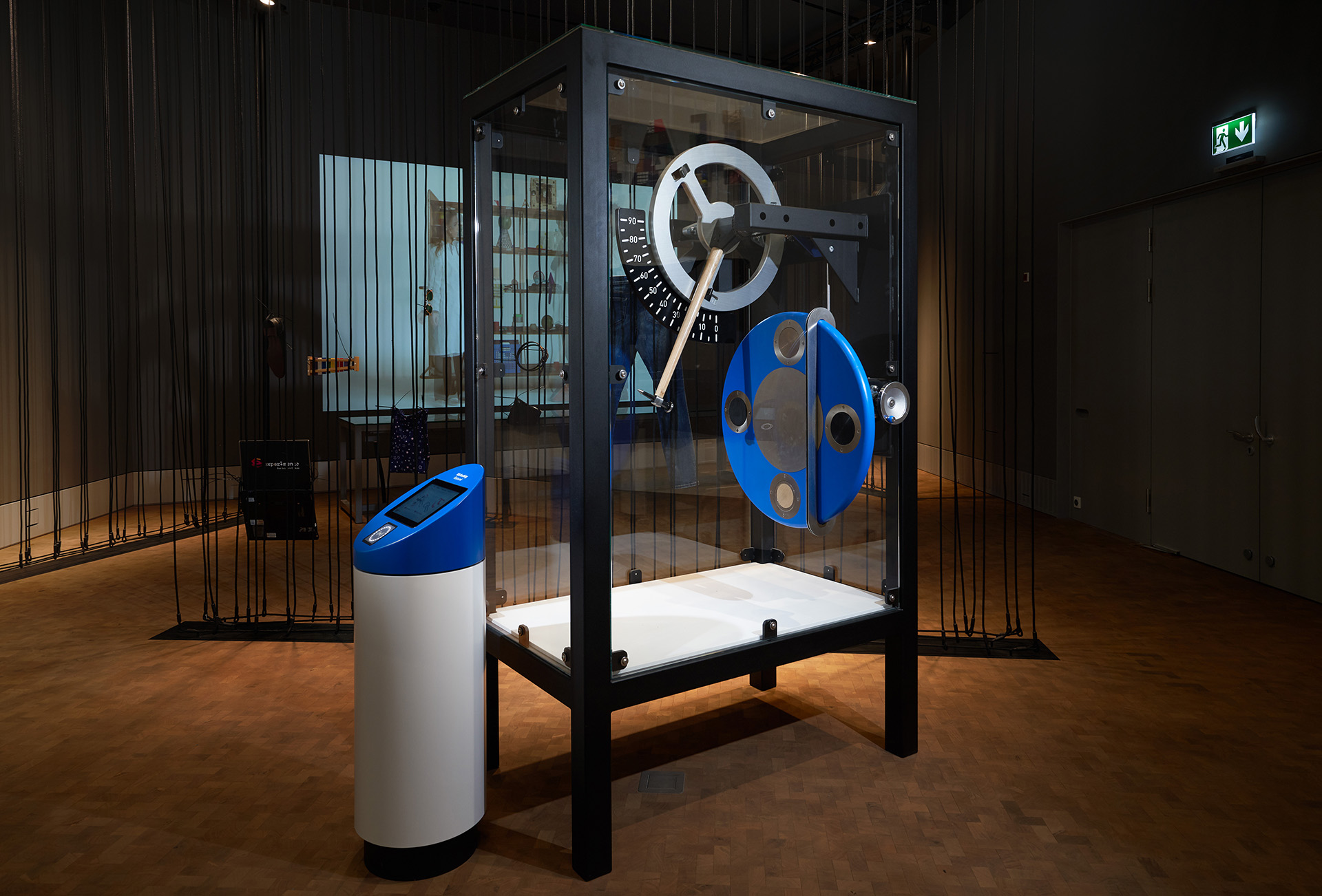
When a hammer is used to strike something, its energy has to go somewhere. Either the hammer deforms the material it strikes - or it recoils. Study the hammer's return force on the different materials more carefully.

Duration:5 min
Floor:OG 1
Keywords:MotionEnergy
Marvelous Materials

Marvelous Materials

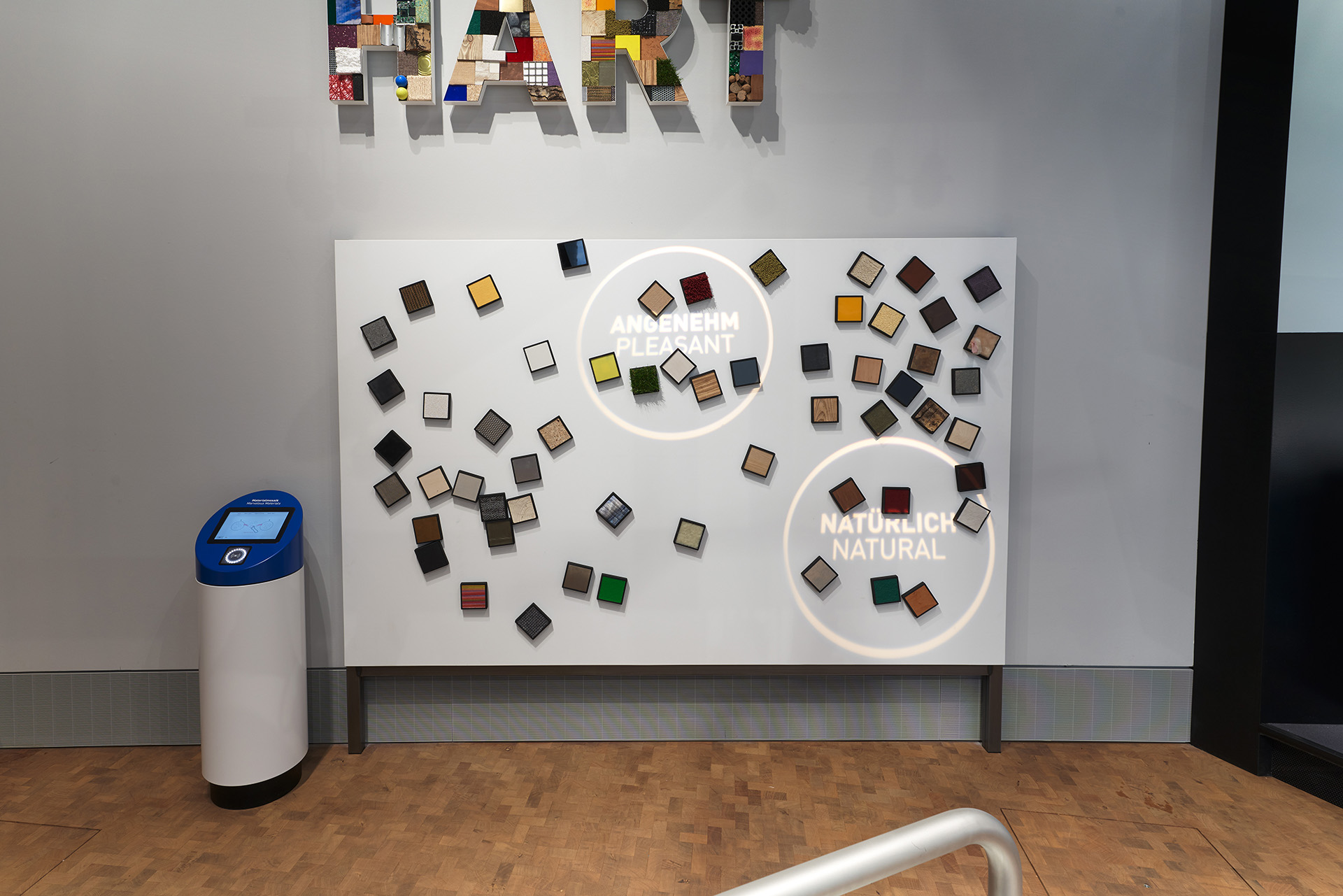
Stone Age, Iron Age, Bronze Age: materials have informed the course of human history. Are we living in the Plastic Age today? Nowadays at least there is a huge number of many different materials. Discover them and sort them.

Duration:5 min
Floor:OG 1
Keywords:BuildingMaterials
Blind Puzzle

Blind Puzzle

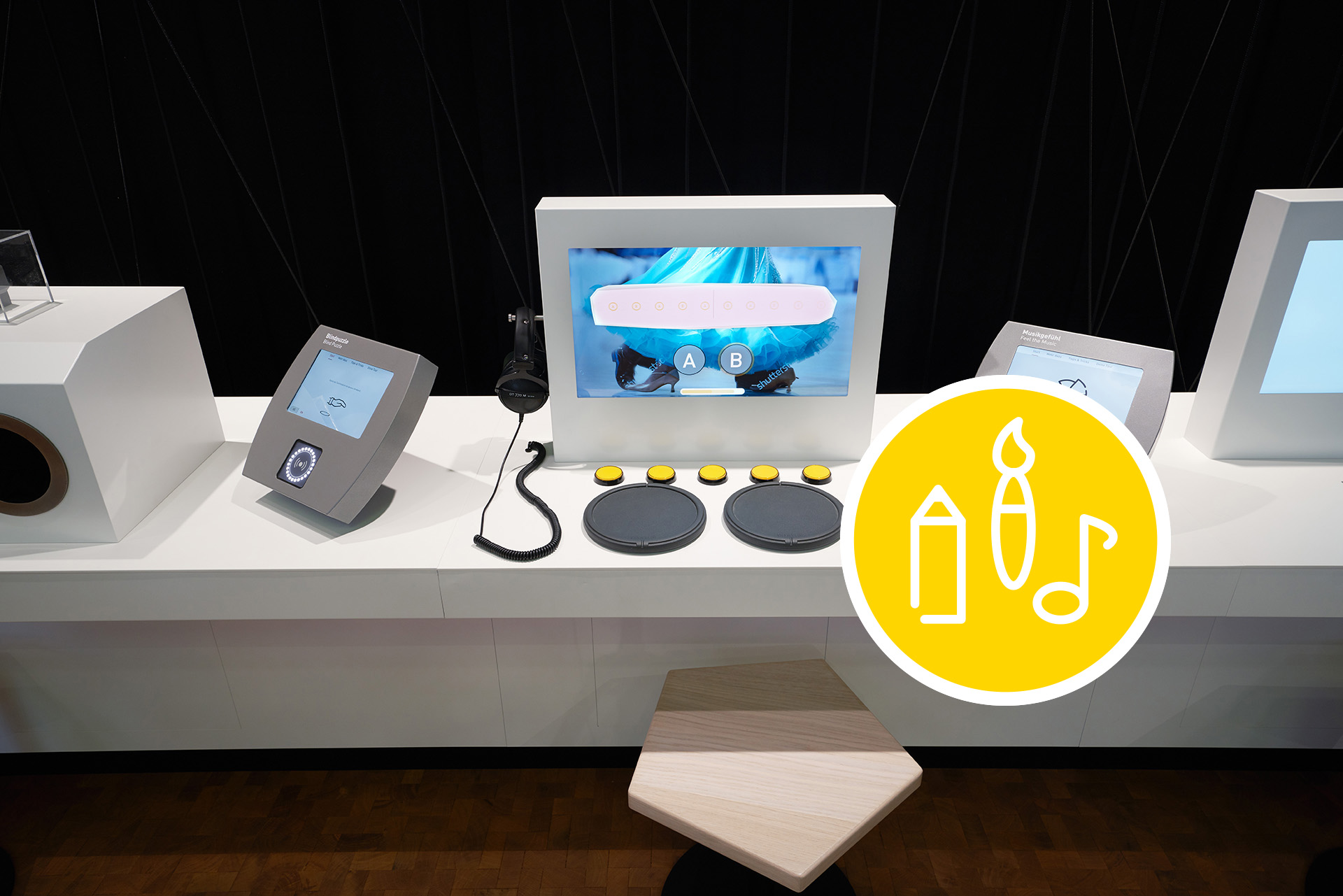
Normally, the eye constantly controls the movement of our hands. But what happens when our eyes can no longer do their job? This is where the sensory cells in the fingers have to take over more tasks to solve the puzzle.

Duration:3 min
Floor:OG 1
Keywords:BuildingFormHealth +3
Feel the Music

Feel the Music

The beat of the music is already hidden in our body in our heart beat and breathing. Recognizing pitch is similar to recognizing patterns and must be learned. This station tests both.

Duration:3 min
Floor:OG 1
Keywords:SocietyHealthMusic +4
Making Decisions

Making Decisions

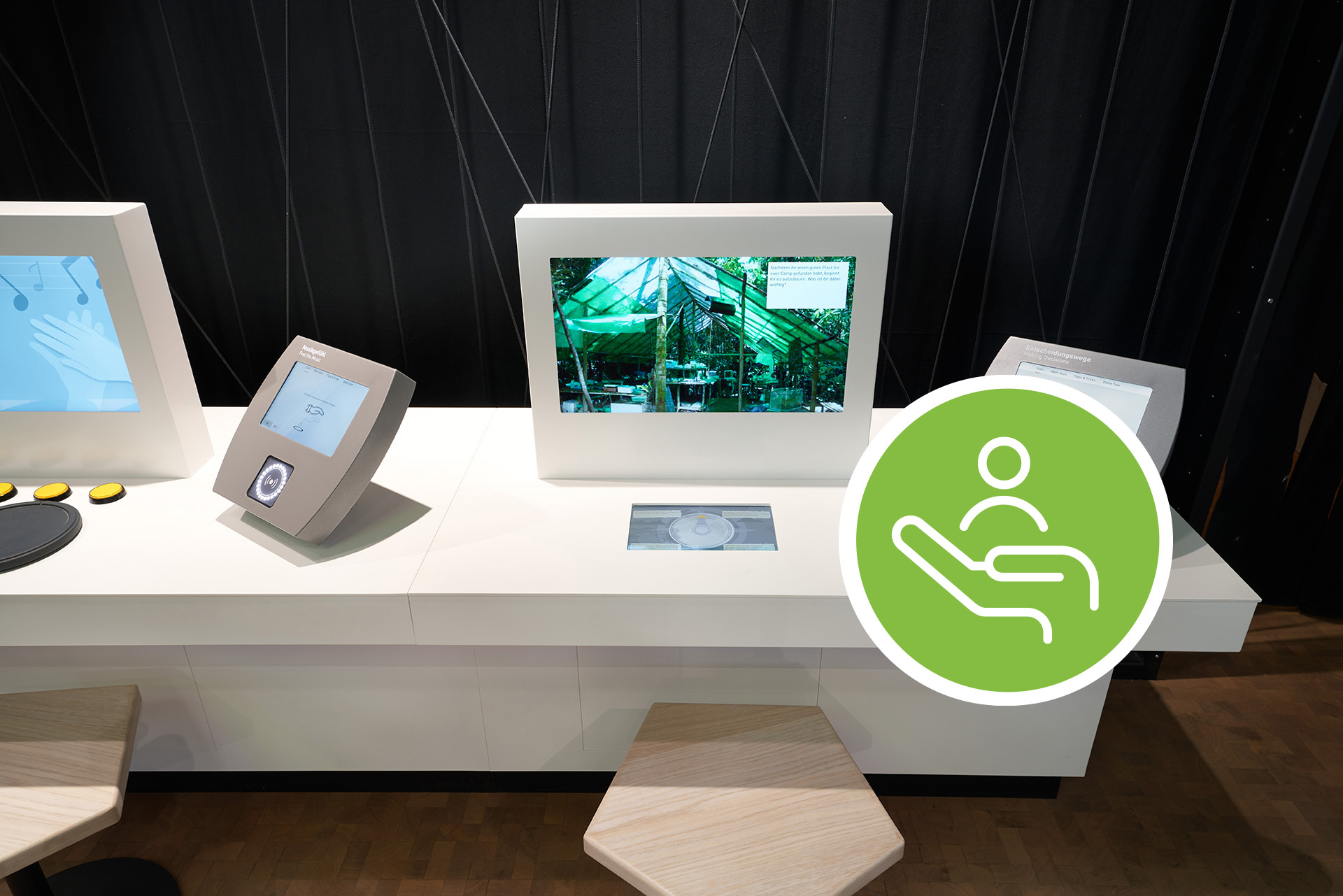
We make countless decisions every day. We carefully consider some and for others rely on our "gut feelings". Specific reasons and values are usually behind our decisions.

Duration:5 min
Floor:OG 1
Keywords:BrainSocietyPsychology +2
Sorting Belt

Sorting Belt

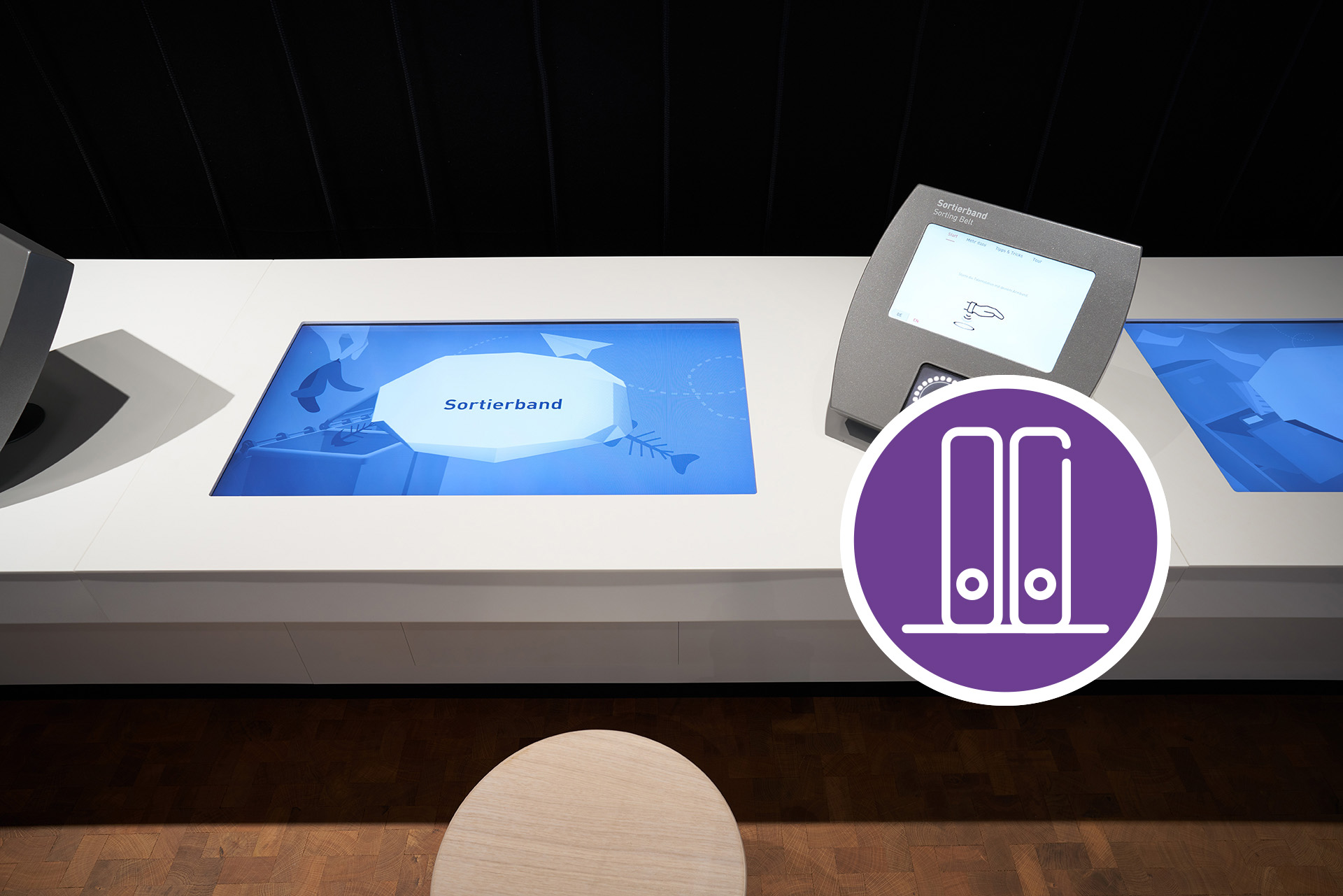
Some people may feel constrained by definite rules. Others may feel they provide a safe framework for action. You will succeed at this station if you are able to focus on a single task over a longer period of time and complete it without error.

Duration:3 min
Floor:OG 1
Keywords:SocietyProcessesMaterials +3
A Sense of Order

A Sense of Order

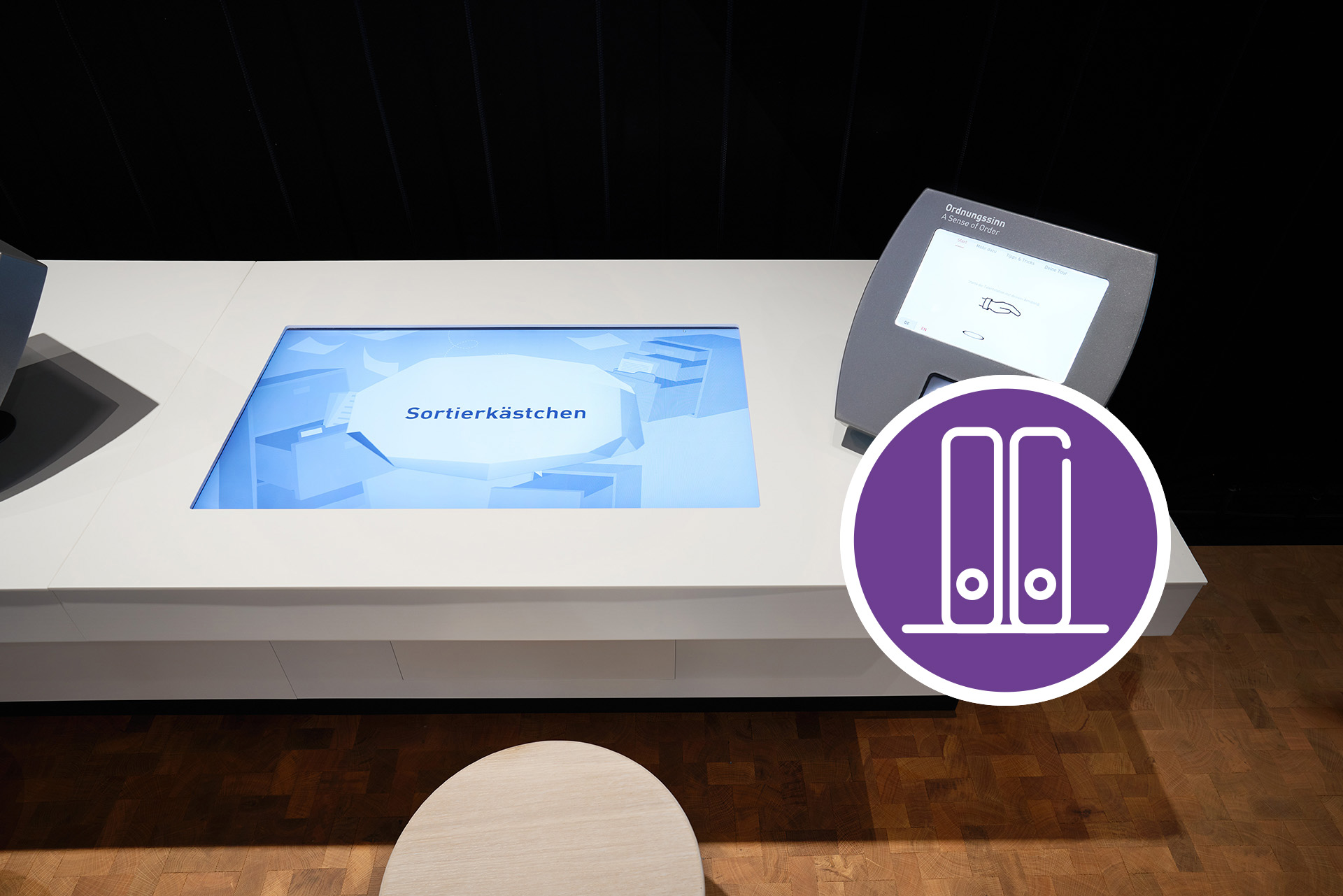
How is our brain able to locate a certain, earlier experience again almost instantaneously? An important factor is the sense of order in our mind. We automatically and consciously form categories and file new experiences accordingly.

Duration:5 min
Floor:OG 1
Keywords:ColourFormBrain +1
Picture perfect?

Picture perfect?

The outcome is a figure consisting of several parts. Yet two people are involved in the completion of this task. Clear communication is needed to succeed. It sounds simple, but is harder than it seems.

Duration:5 min
Floor:OG 1
Keywords:ColourFormCommunication +3
Micro-Universe

Micro-Universe

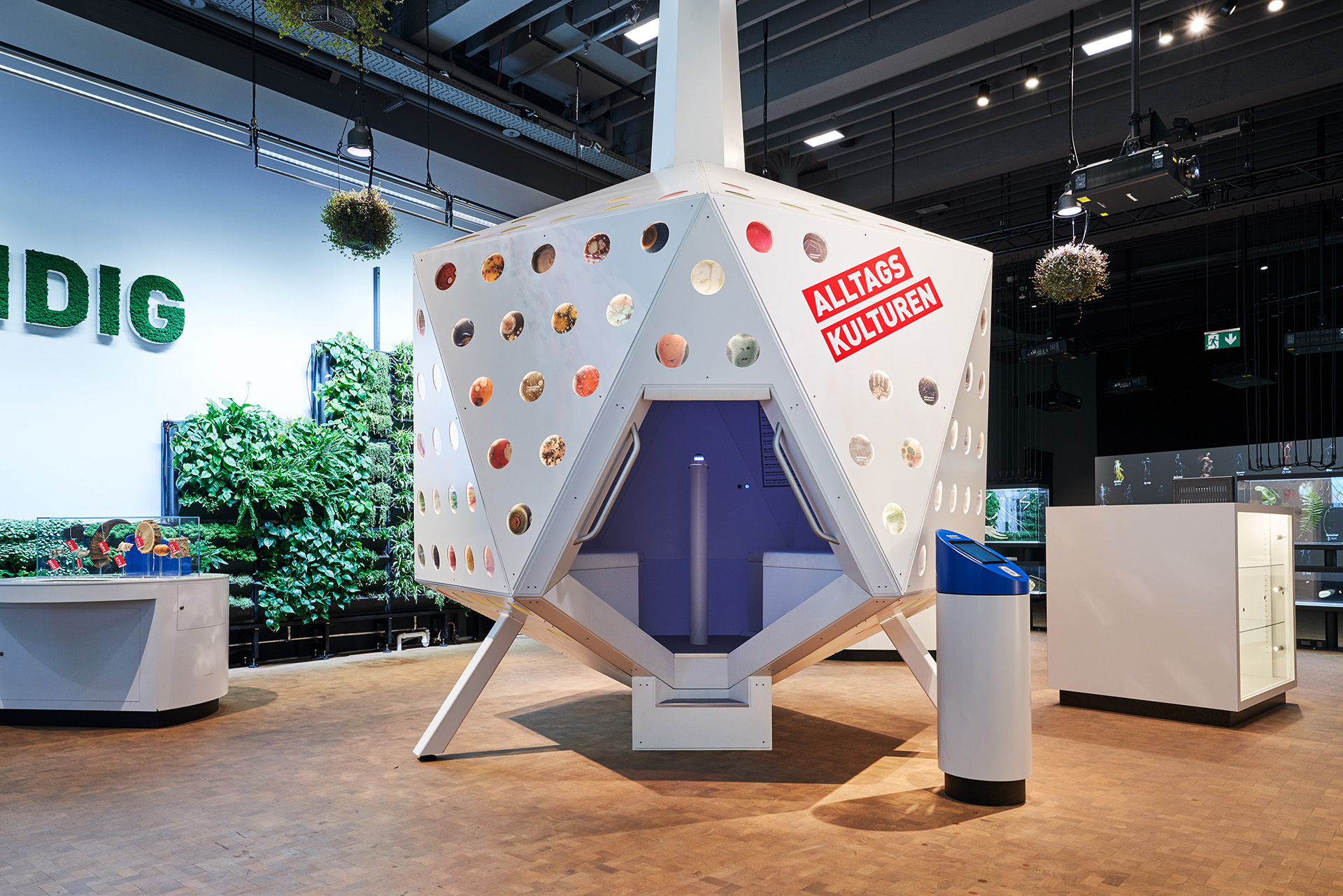
Countless microorganisms populate our Earth. Many of them still have yet to be studied. To learn more about them, they are cultured in small dishes and made visible. Discover several of the microorganisms we encounter every day.

Duration:12 min
Floor:OG 1
Keywords:BacteriaBiologyFood +6
Oddity Detection

Oddity Detection

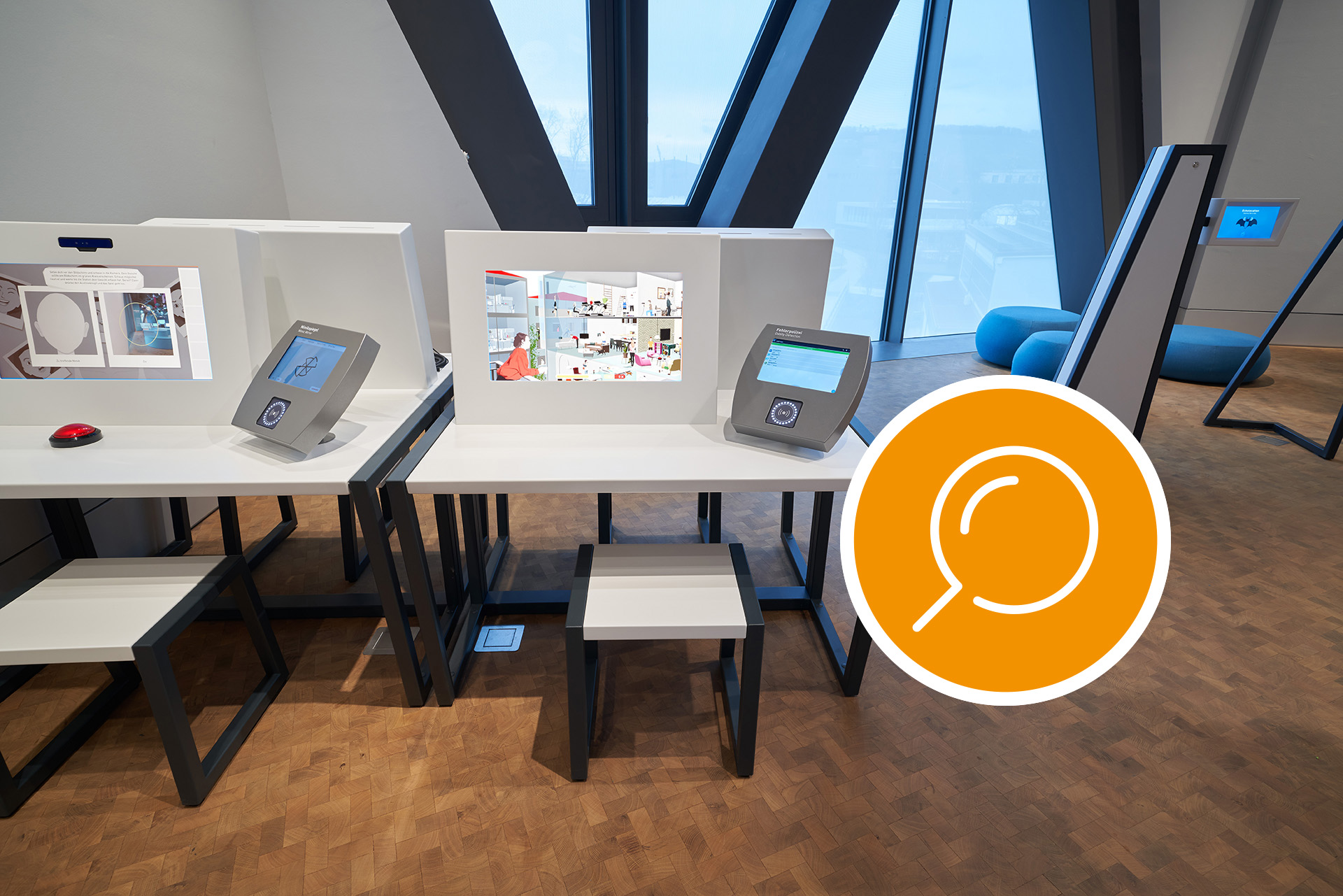
Our senses are designed to notice movement and changes in the world around us. At this station, you need to decide whether the changes you see are usual or unnatural.

Duration:3 min
Floor:OG 2
Keywords:MotionSensesAnimals +4
Power of Persuasion

Power of Persuasion

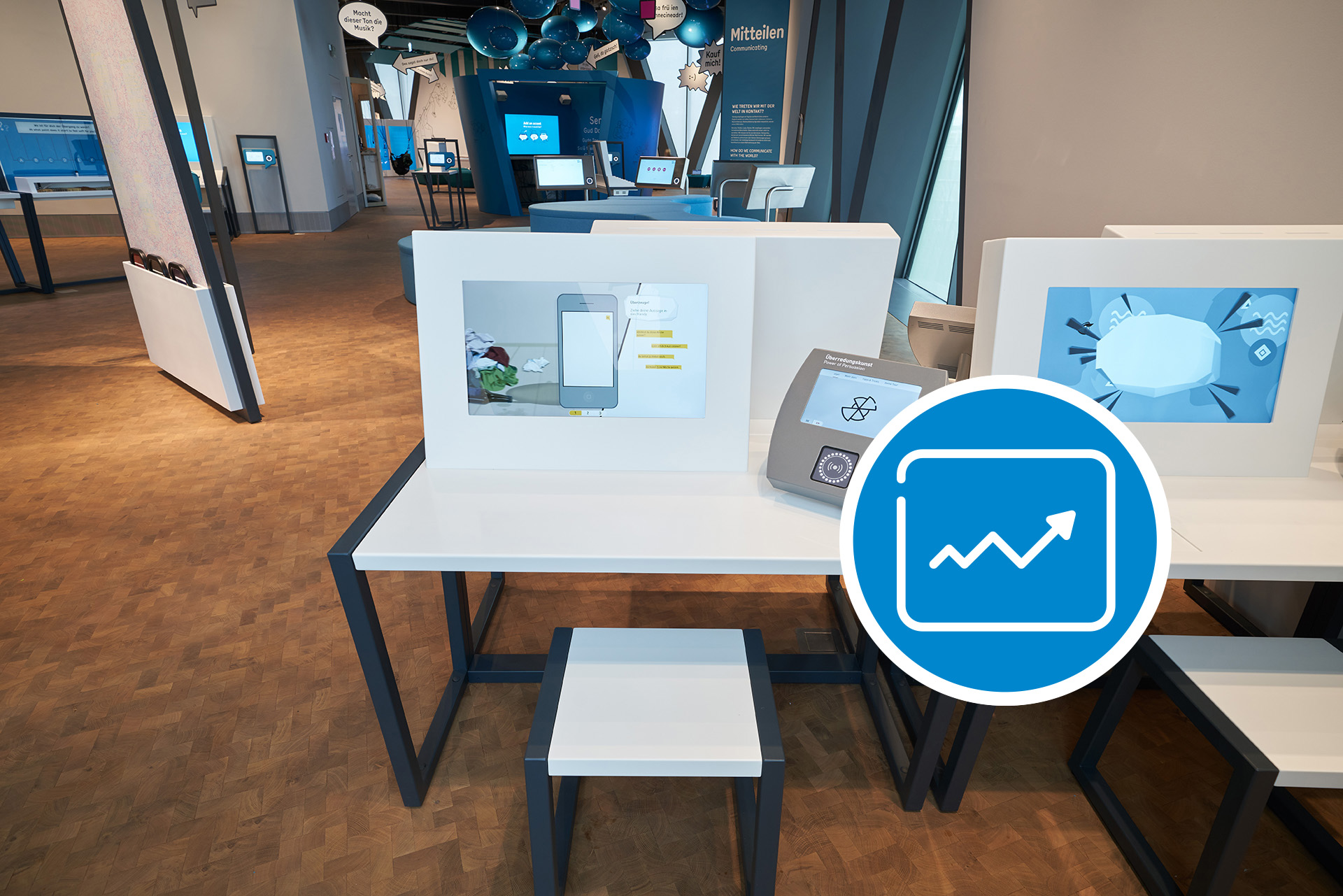
Persuading someone to do something is not the same as convincing someone of something. But how do we best go about it? Good arguments are important, but are often not enough. The art of persuasion is tested in different situations.

Duration:4 min
Floor:OG 2
Keywords:SocietyCommunicationPolitics +1
Mimic Mirror

Mimic Mirror

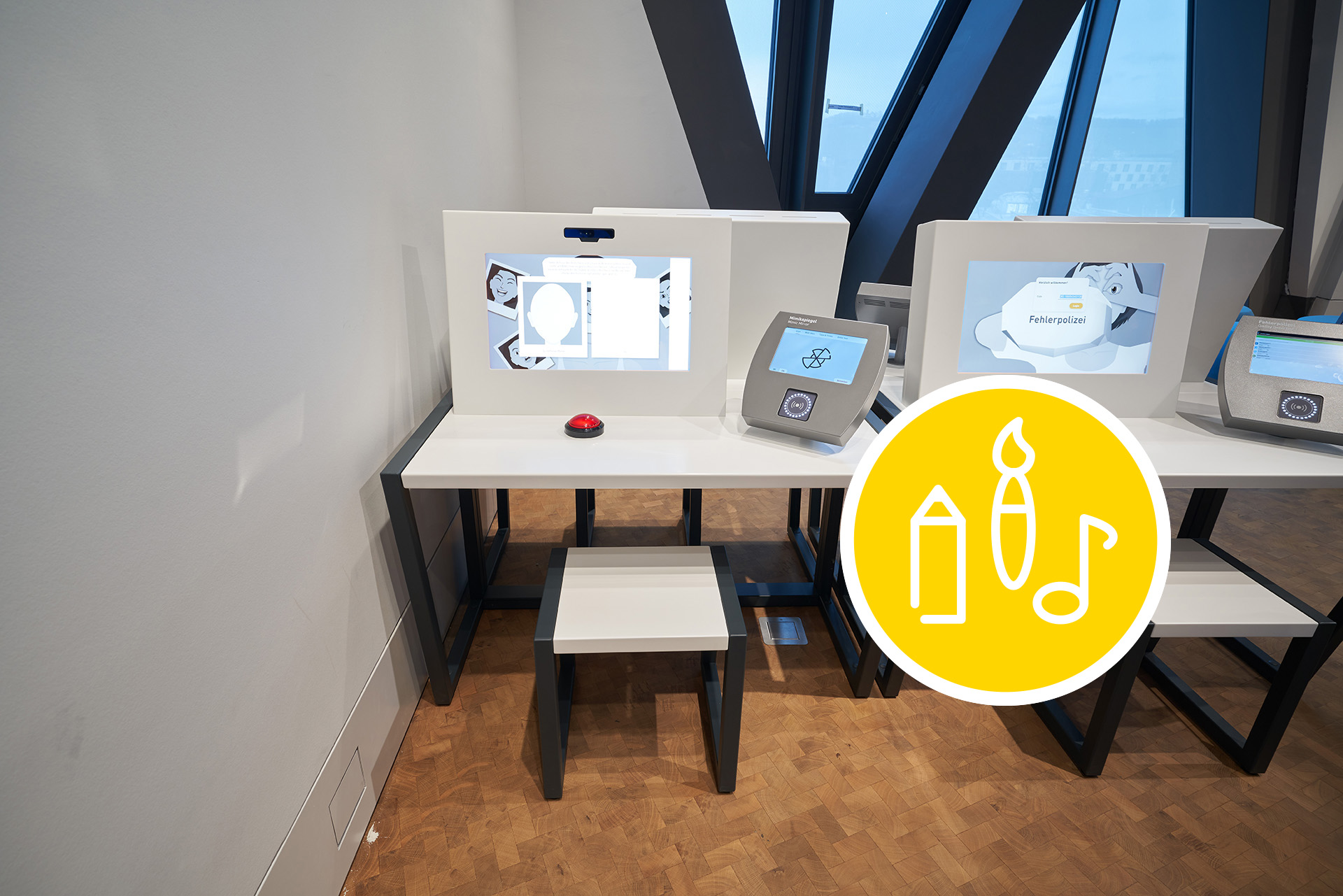
Surprise, fear or joy: by tensing and relaxing our face muscles we constantly express a wide range of feelings. We are able to consciously control our facial expressions. How expressive is your face?

Duration:2 min
Floor:OG 2
Keywords:MotionBrainSociety +6
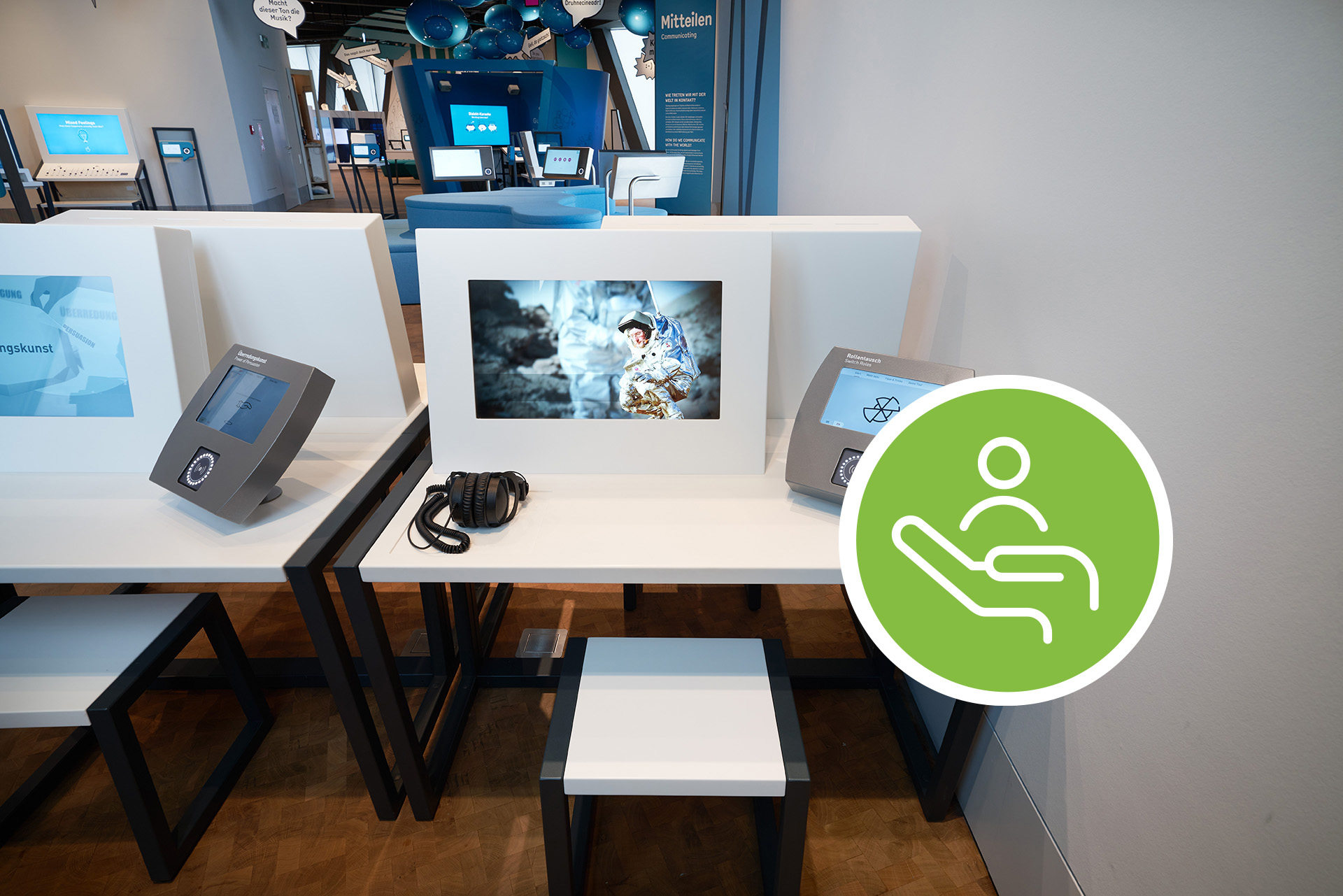
Switch Roles

Switch Roles

One thing is very important to be able to react to other people in an appropriate way: empathy. Our brain creates a virtual mirror of the individual. This lets us act compassionately and proactively.

Duration:5 min
Floor:OG 2
Keywords:MotionBrainSociety +3
Loophole

Loophole

We can admire the outstanding body control of many athletes. Our ability to control our bodies is partly influenced by our genes. Yet there are things we can also learn and practice. This station demonstrates how flexible we are.

Duration:3 min
Floor:OG 2
Keywords:SocietyBrainMotion +1
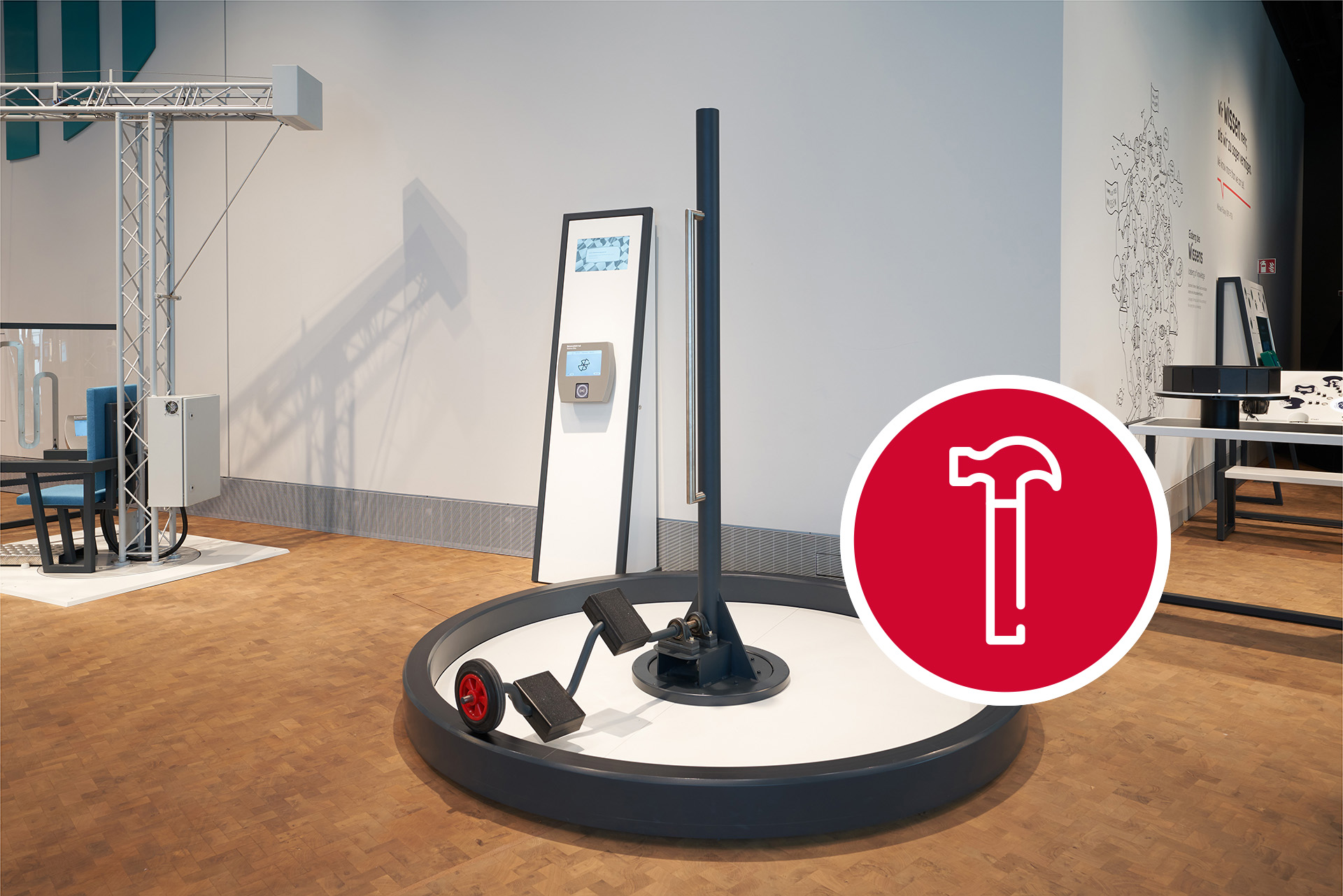
Balance Bike

Balance Bike

Cycling demands very complex performance from our body. We have to watch our balance and may need to make fast corrections. The balance bike tests our sense of balance and how we control our body.

Duration:1 min
Floor:OG 2
Keywords:HealthSensesRobotics +2
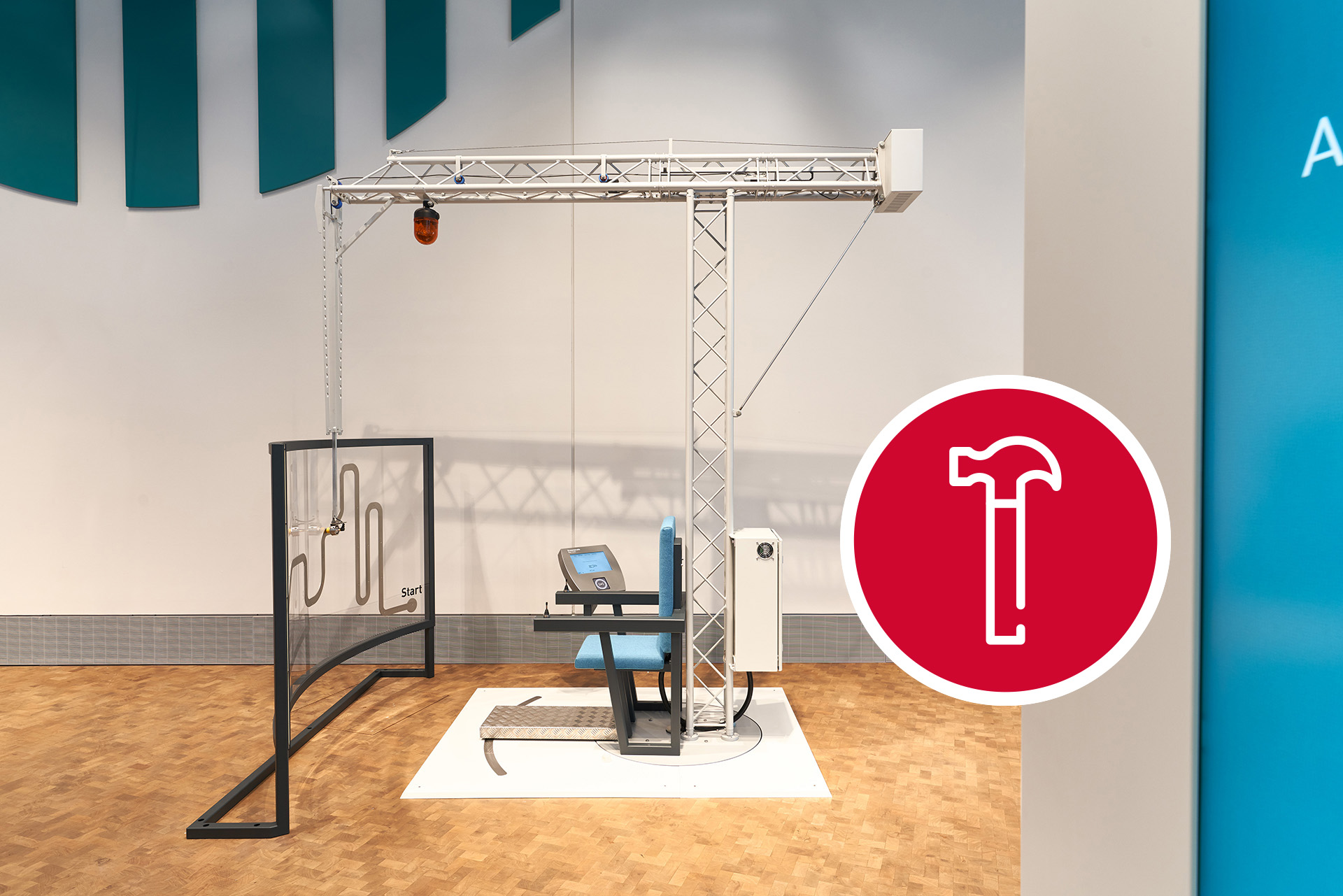
One Track

One Track

Good fine motor skills require perfect hand-eye coordination, a feeling for fine movement and sufficient muscle tension in the hand and fingers. These abilities are tested as the crane travels.

Duration:3 min
Floor:OG 2
Keywords:MotionVehiclesBrain +1
Technical Literacy

Technical Literacy

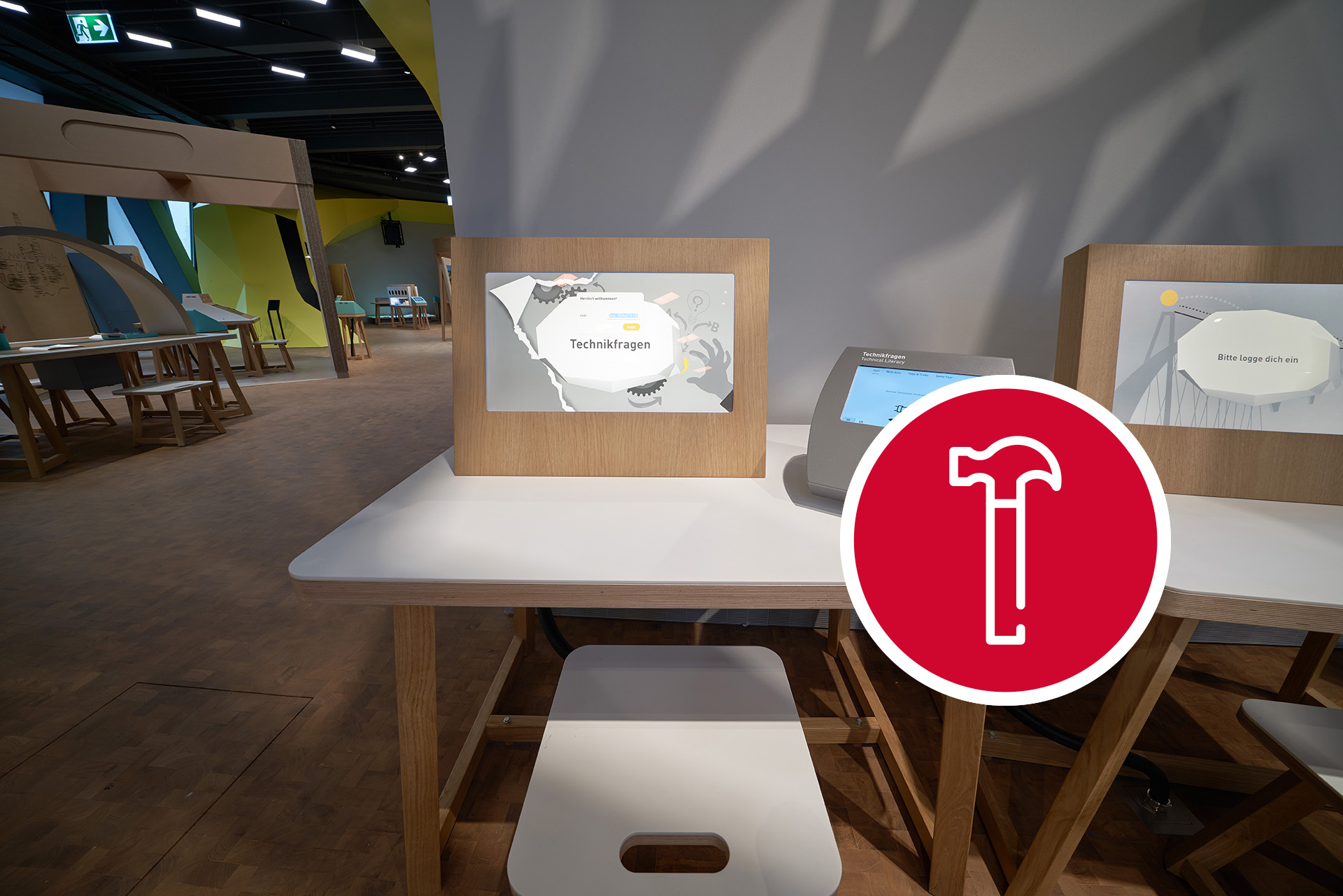
We live in an increasingly technological world and use countless technical devices every day. Those interested in technology usually also know a lot. This station tests our basic practical and technical understanding.

Duration:6 min
Floor:OG 3
Keywords:EducationArtificial intelligenceSociety
Fact Check

Fact Check

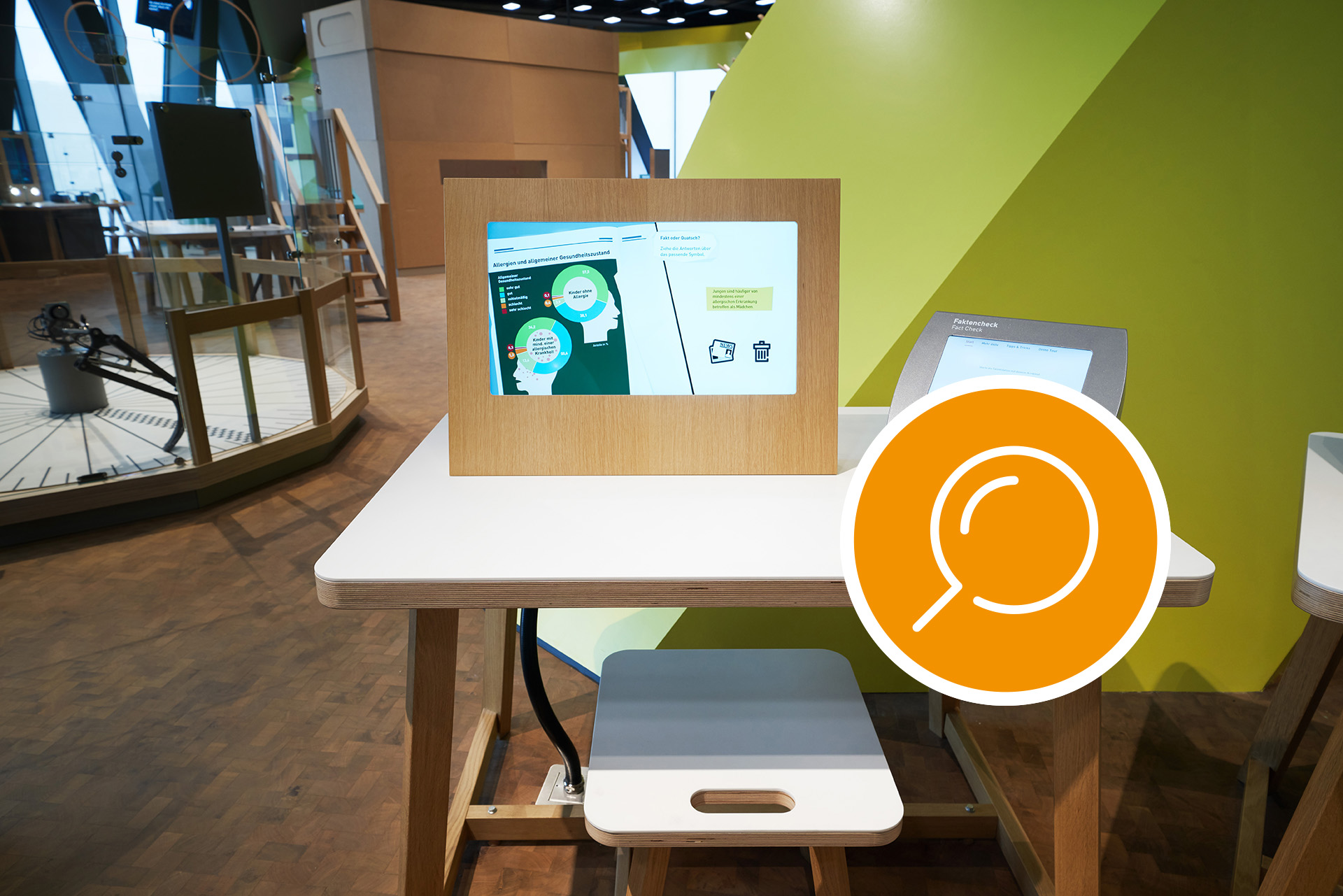
We run into pie, curve or bar charts every day at school, in science and the media. They illustrate complex subjects. Check which statements correctly report the facts in the diagrams.

Duration:3 min
Floor:OG 3
Keywords:EducationSocietyAdolescence +1
Bridge Building

Bridge Building

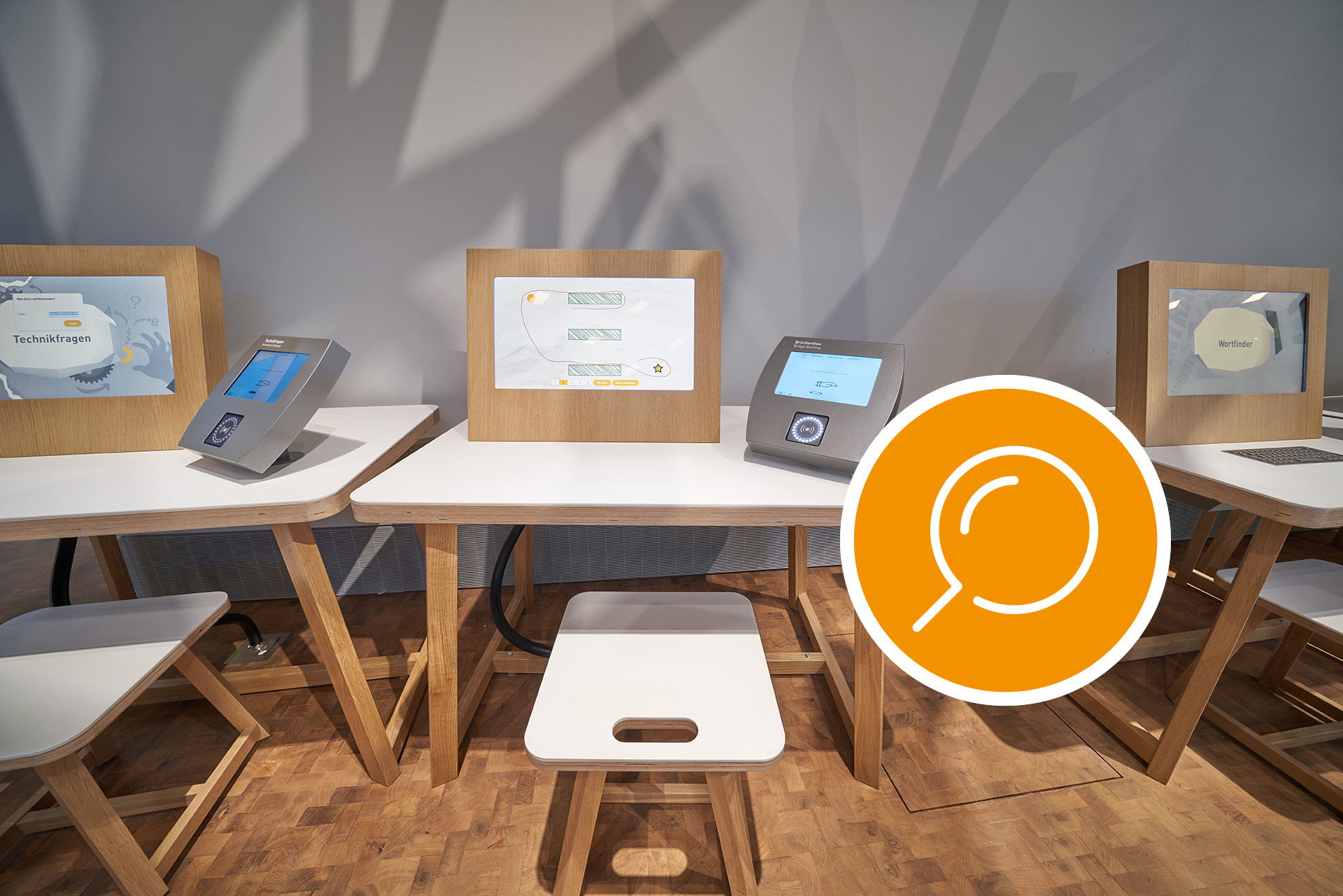
Good problem-solving is a key skill. What do we do when we don't exactly know what we should do? It all starts with being able to understand the problem correctly. At this station, a path must be found for a marble.

Duration:5 min
Floor:OG 3
Keywords:EducationAdolescenceSociety +1
Frustration Test

Frustration Test

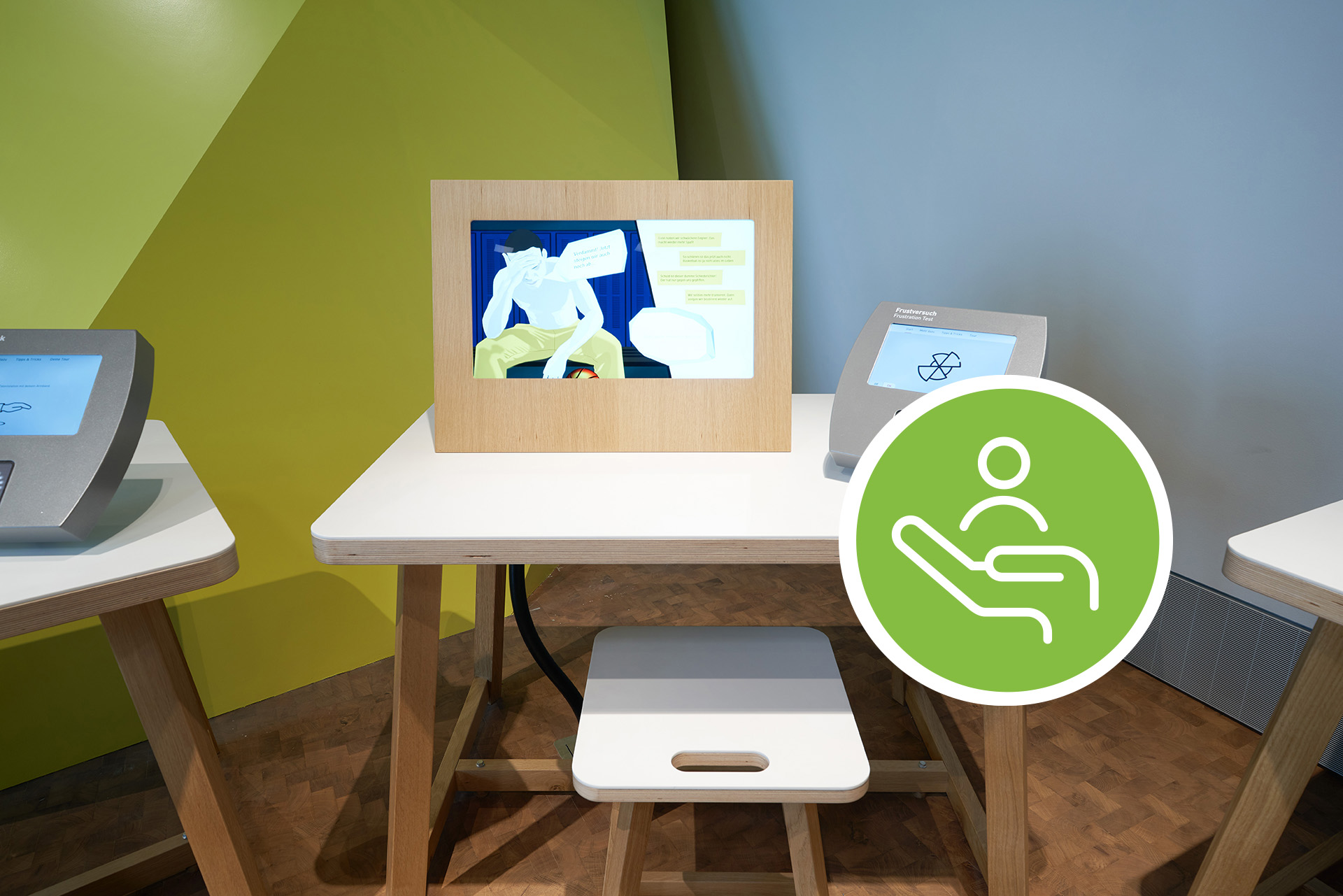
There are days on which everything seems to go wrong. Learning to deal with frustration is thus an important task. There are different strategies for dealing with frustration. How would you react to the different situations in this frustration test?

Duration:4 min
Floor:OG 3
Keywords:MotionSocietyBrain +1
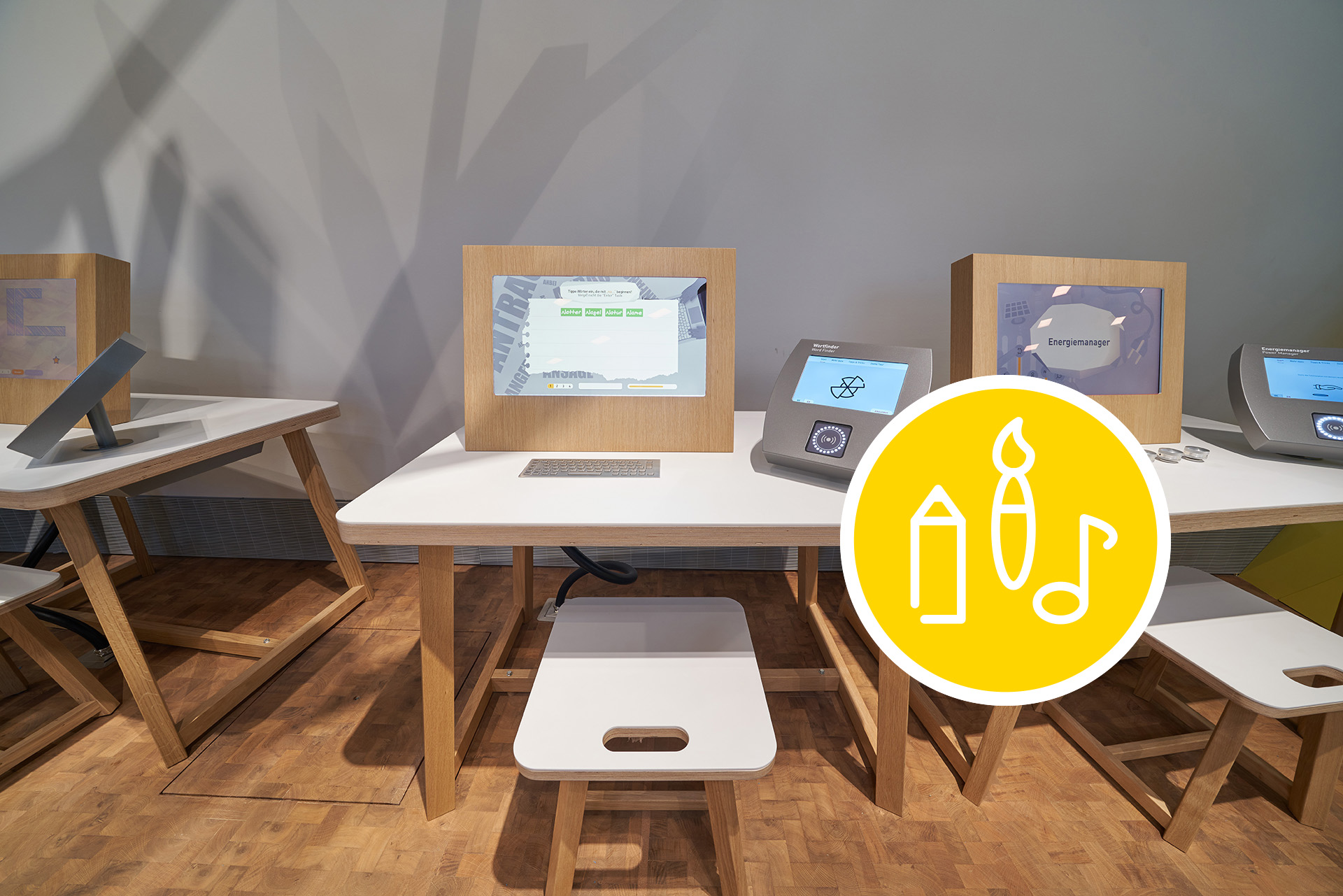
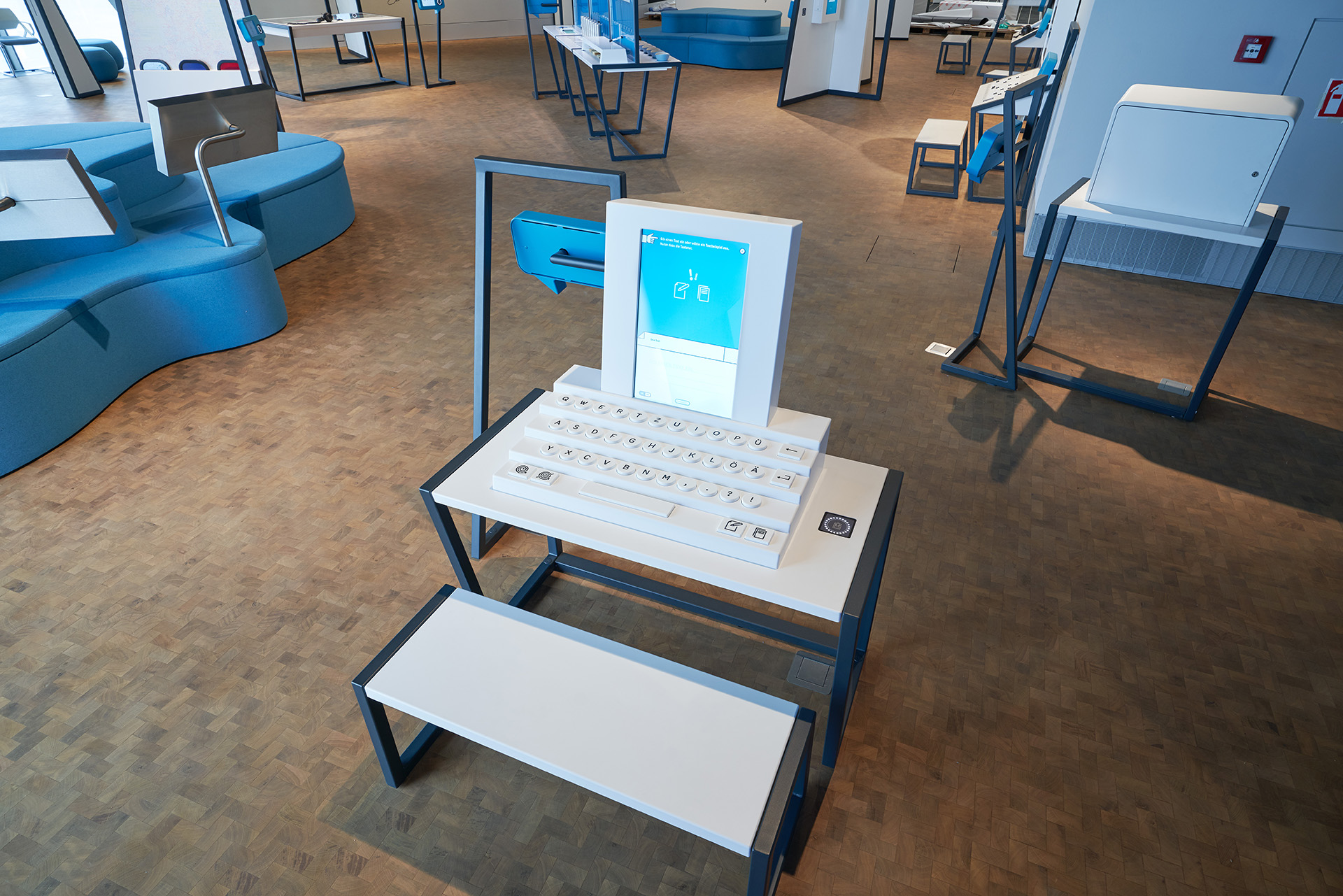
Word Finder

Word Finder

We have a kind of mental dictionary in our minds. To find terms instantly when needed, our vocabulary is structured systematically. Who is able to find more correct words faster?

Duration:5 min
Floor:OG 3
Keywords:EducationBrainSociety +2
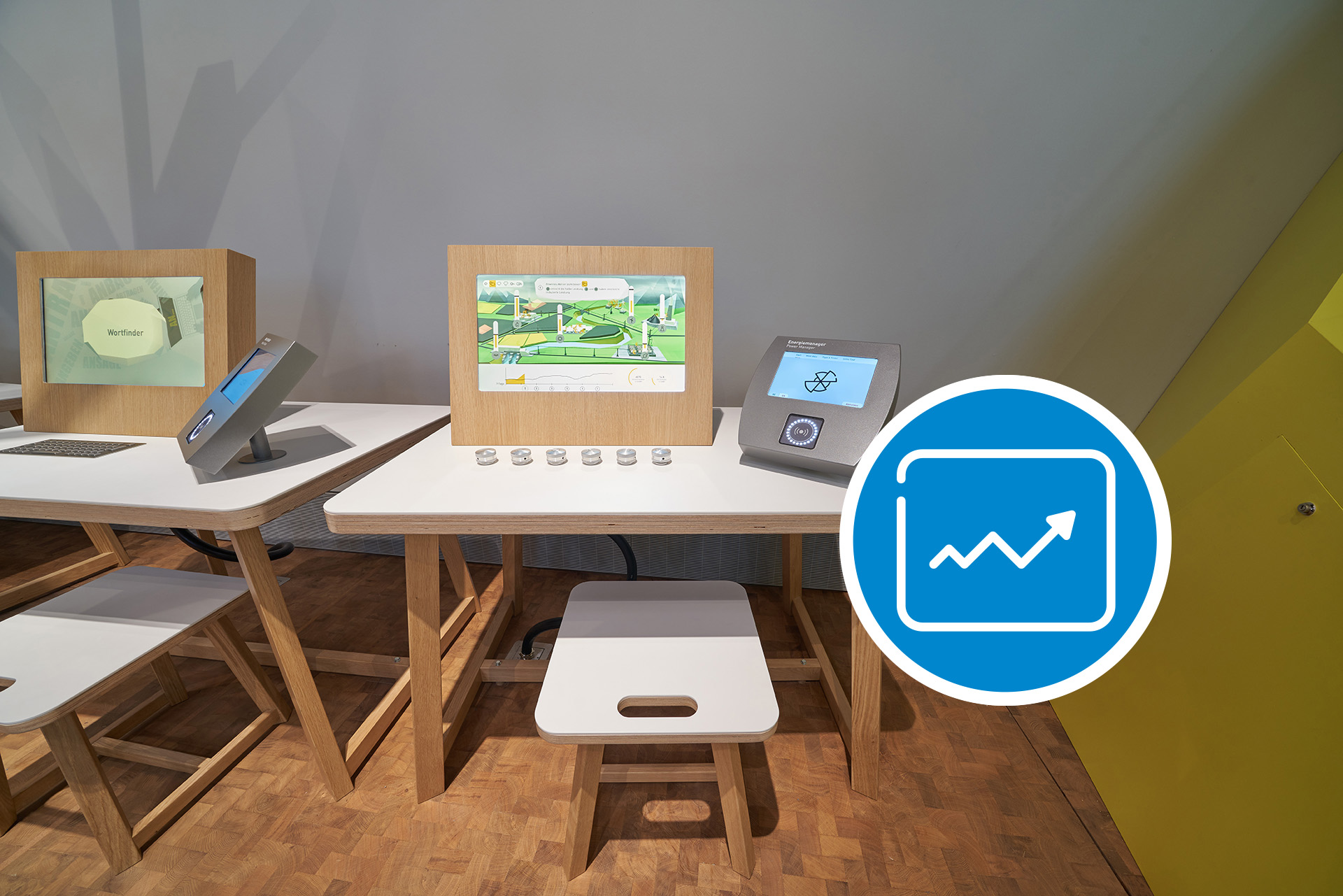
Power Manager

Power Manager

How can we secure the power supply? In this game, we have to keep an eye on demand, costs and the environment. Proactive planning and a fast reaction to unexpected incidents can help.

Duration:3 min
Floor:OG 3
Keywords:Mineral resourcesEnergyElectricity +3
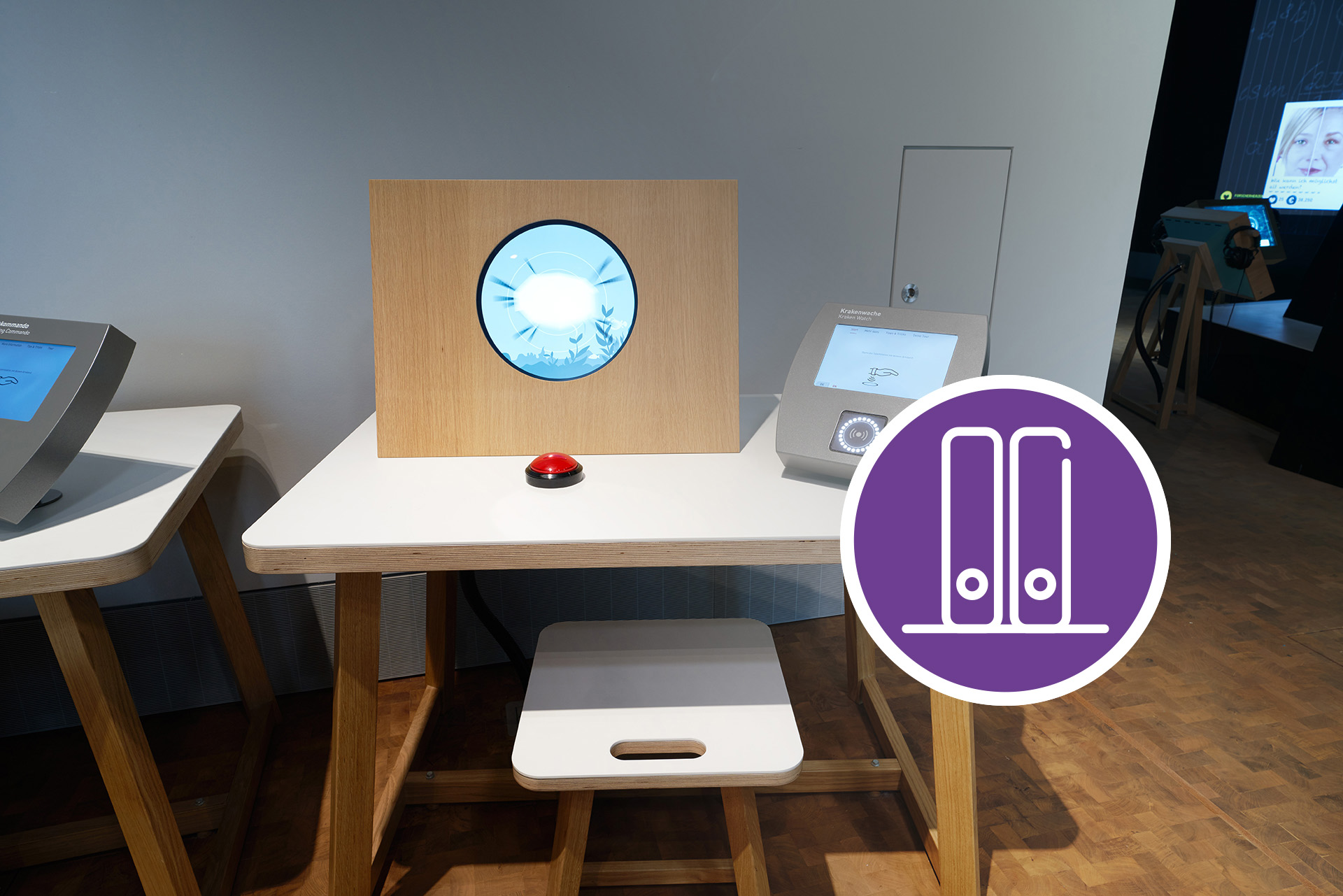
Kraken Watch

Kraken Watch

Staying alert when performing a monotonous task is difficult. Yet we find it difficult to concentrate in a boring and less challenging environment and become sleepy. In this game, however, you have to pay attention!

Duration:3 min
Floor:OG 3
Keywords:BrainHealthSenses +1
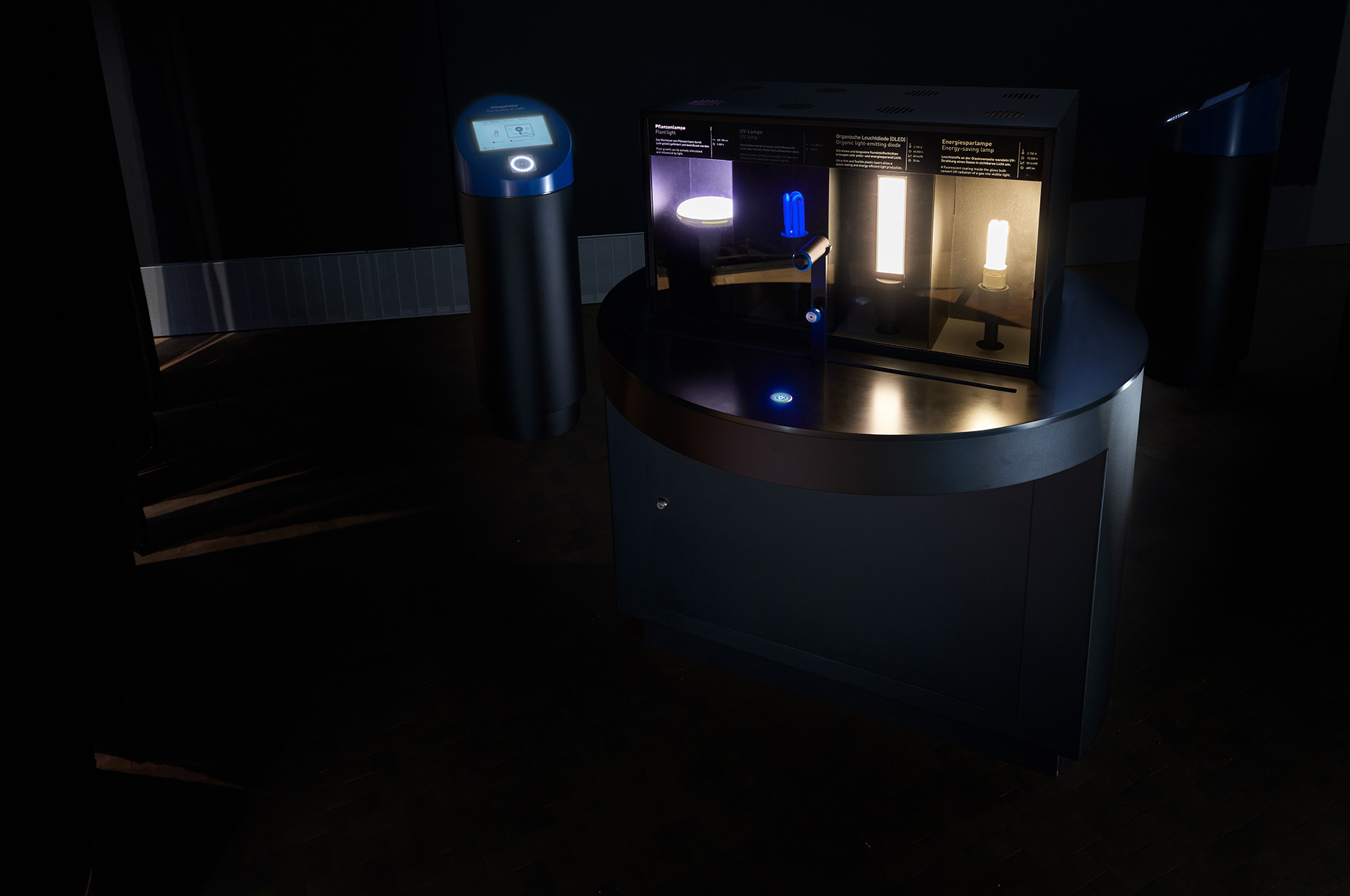
The Quality of Light

The Quality of Light

Every light bulb produces a different quality of light. It is not easy to grasp the differences. Concepts like color spectrum, light temperature or illuminance can help in this case. Find out more about the lights around you.

Duration:5 min
Floor:OG 1
Keywords:ElectricityEnergyLight +6
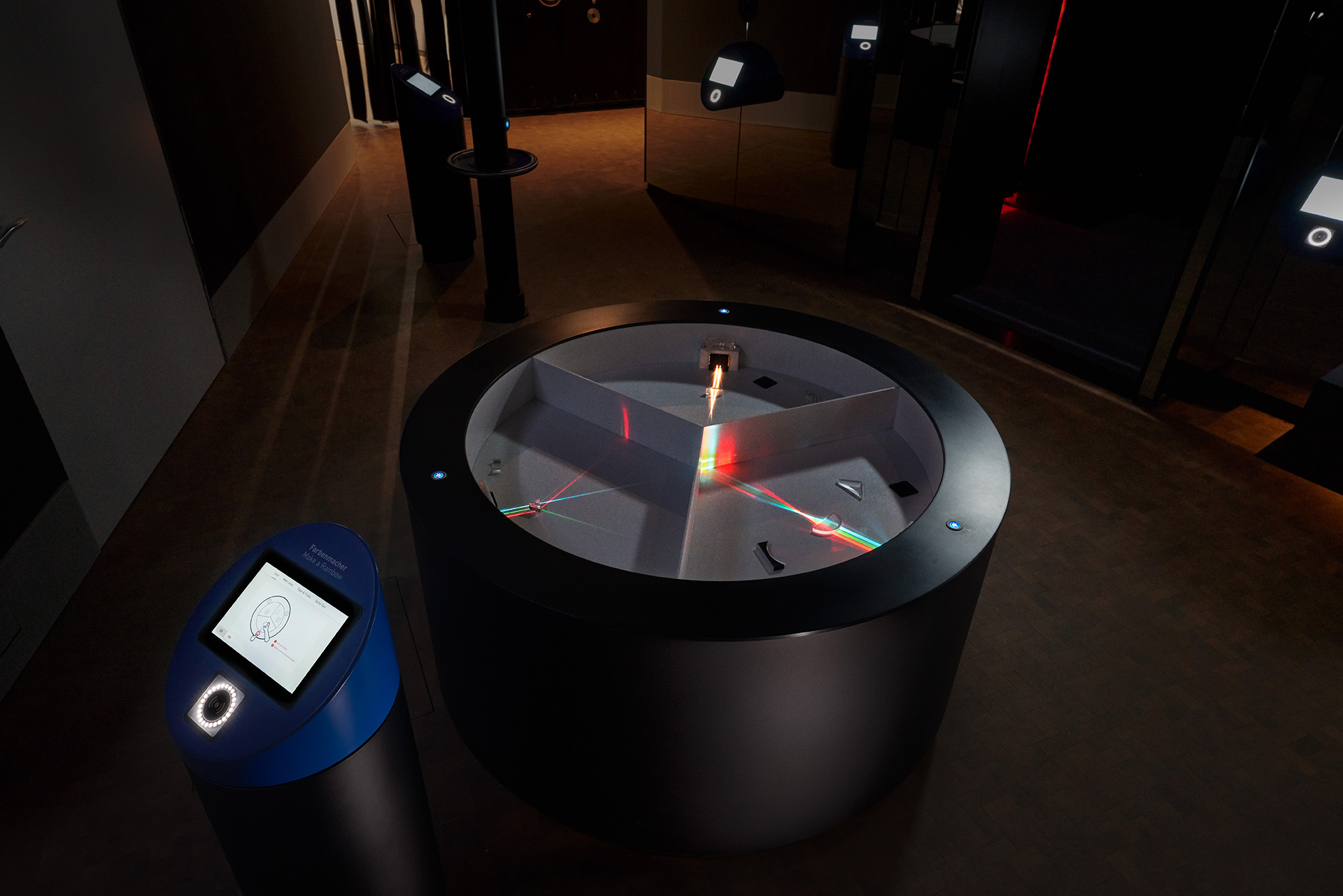
Make a Rainbow

Make a Rainbow

Light passes from the air into the glass and returns to the air. It changes its direction every time it crosses these boundaries. Every color does it a bit differently. It's the reason why the colors suddenly appear next to each other and create a rainbow.
Duration:6 min
Floor:OG 1
Keywords:ColourLightPhysics +1
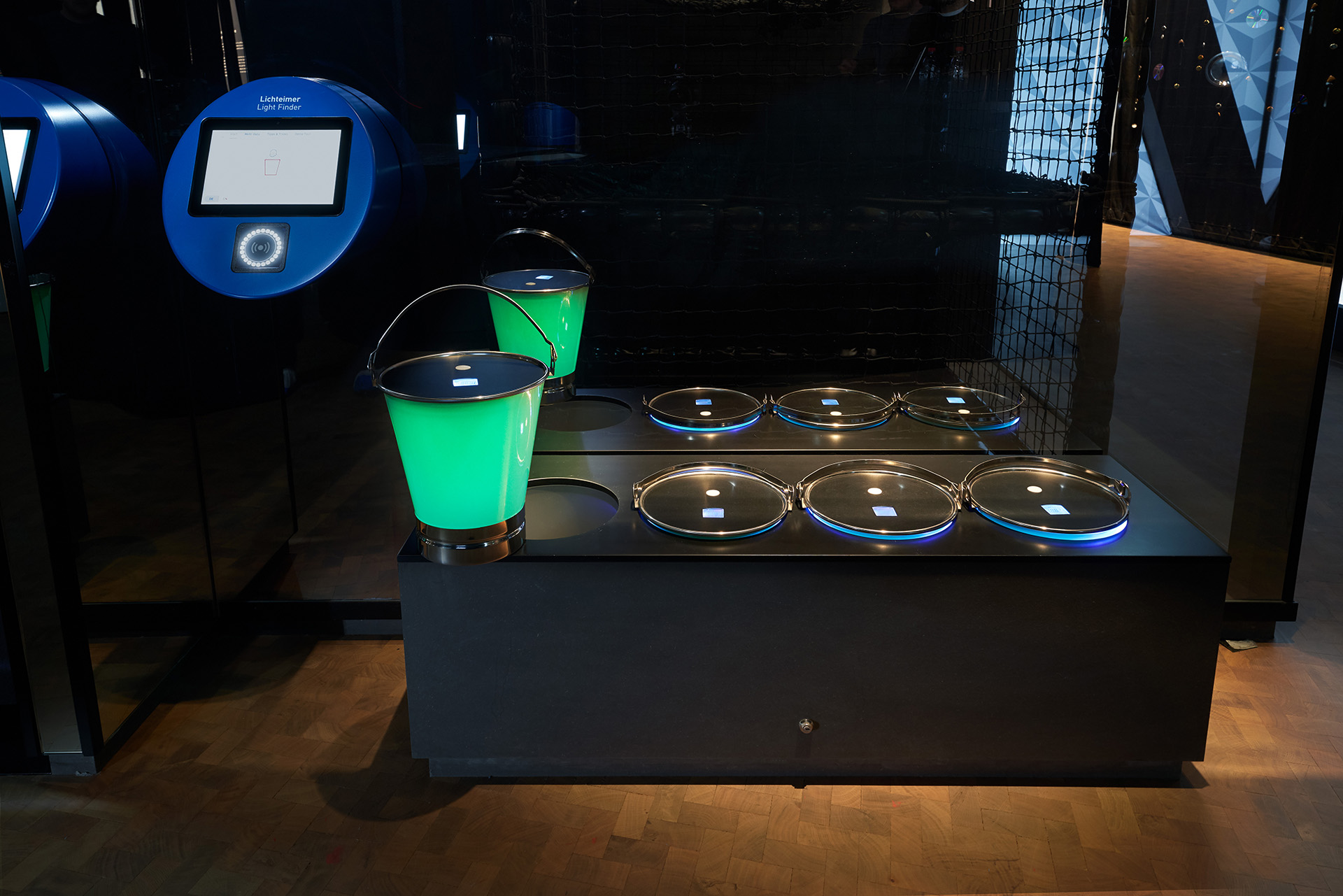
Light Finder
Light Finder
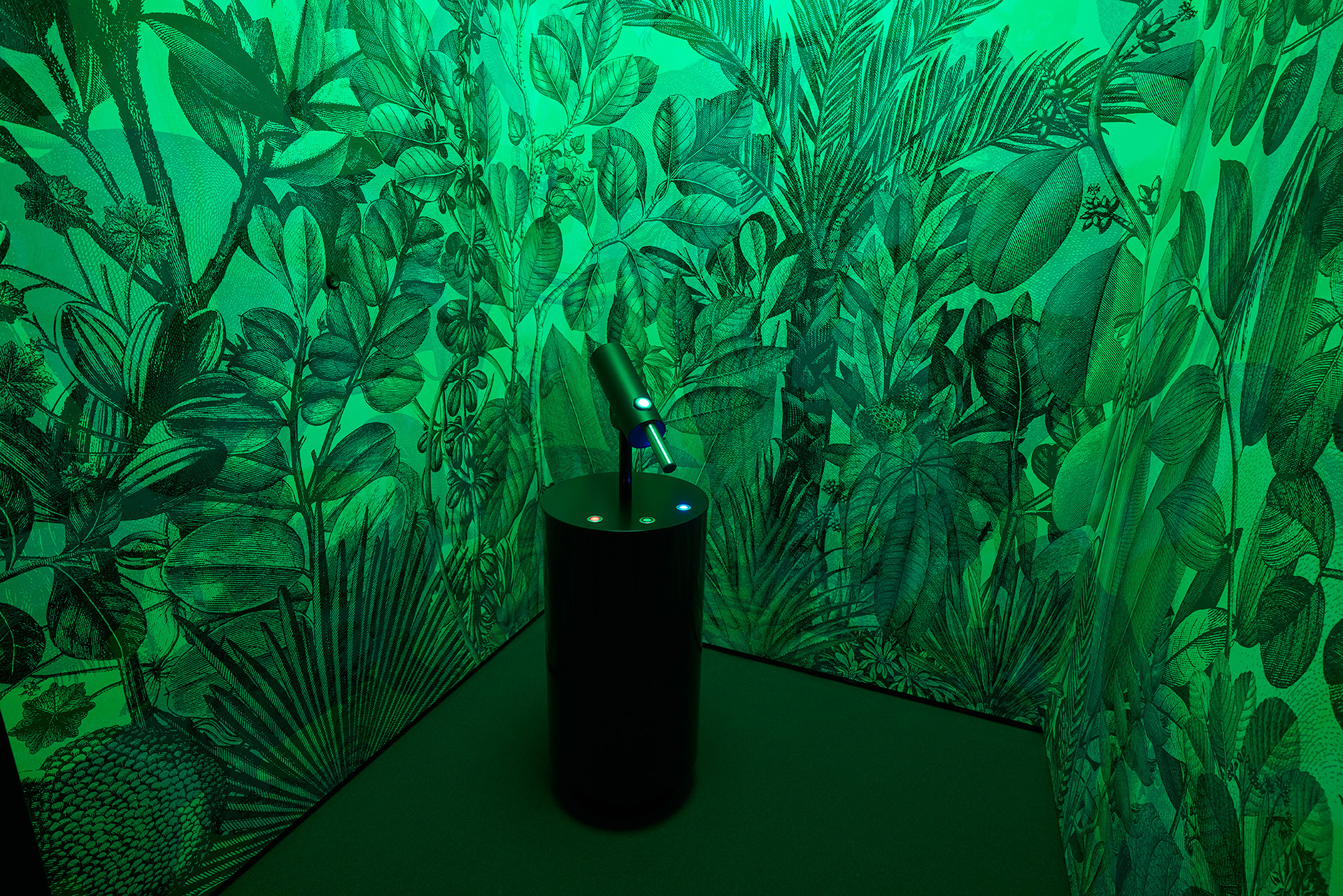
As foolish townspeople built a town hall without windows, they wanted to carry light inside in buckets. They couldn't do it. But you can carry the green, glowing buckets and, as you do, you can measure the exhibition's brightness.
Duration:8 min
Floor:OG 1
Keywords:EnergyLight
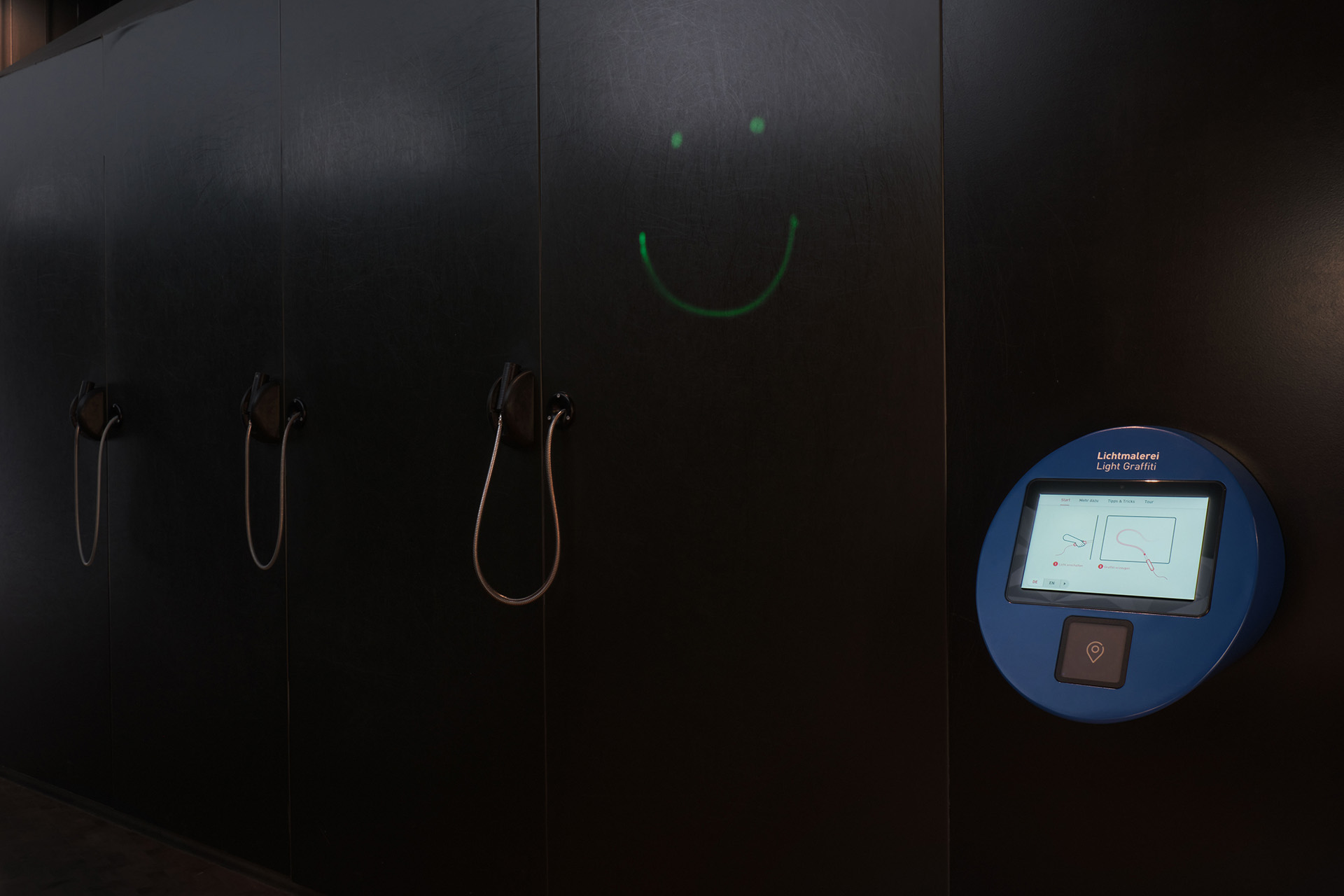
Light Graffiti
Light Graffiti
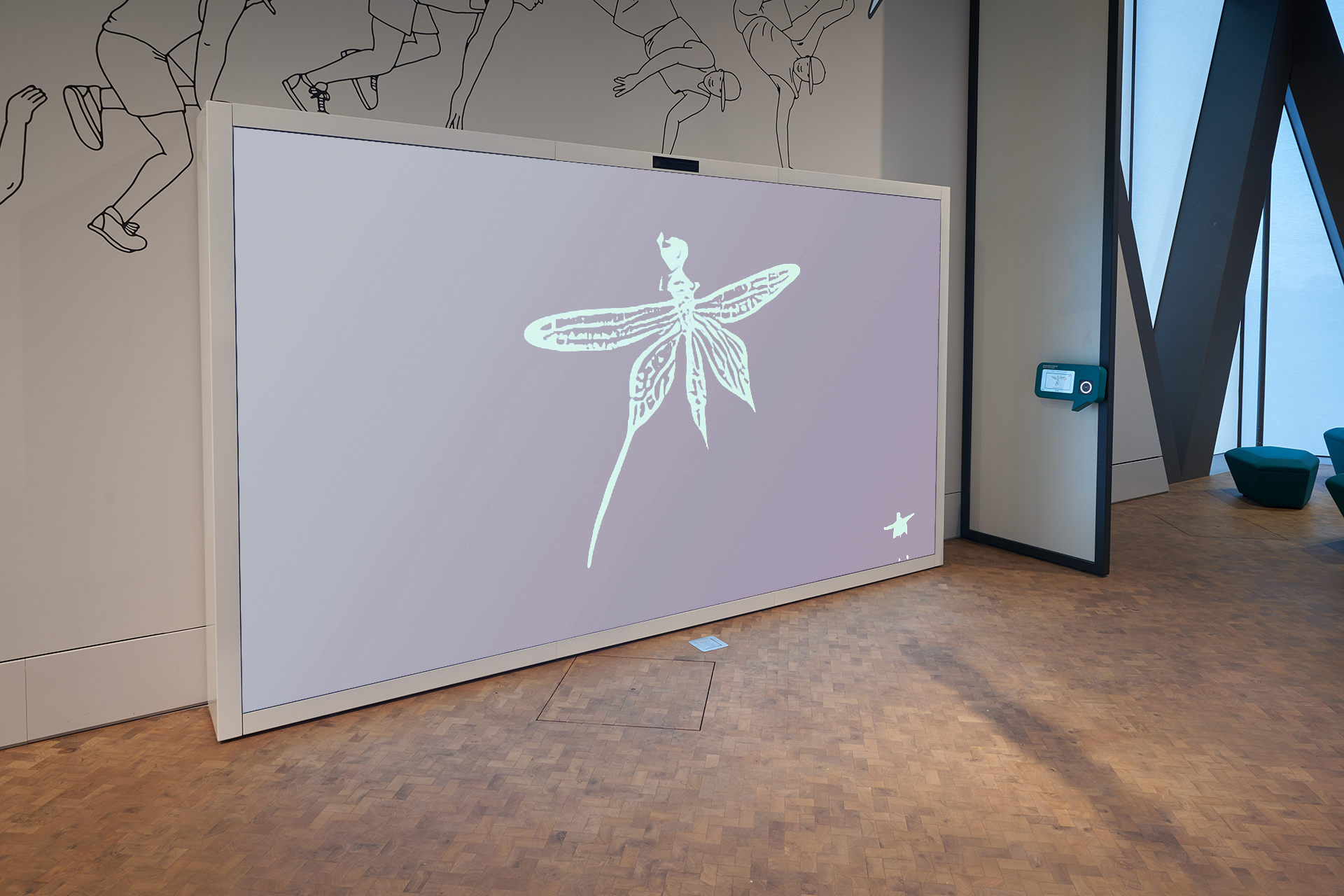
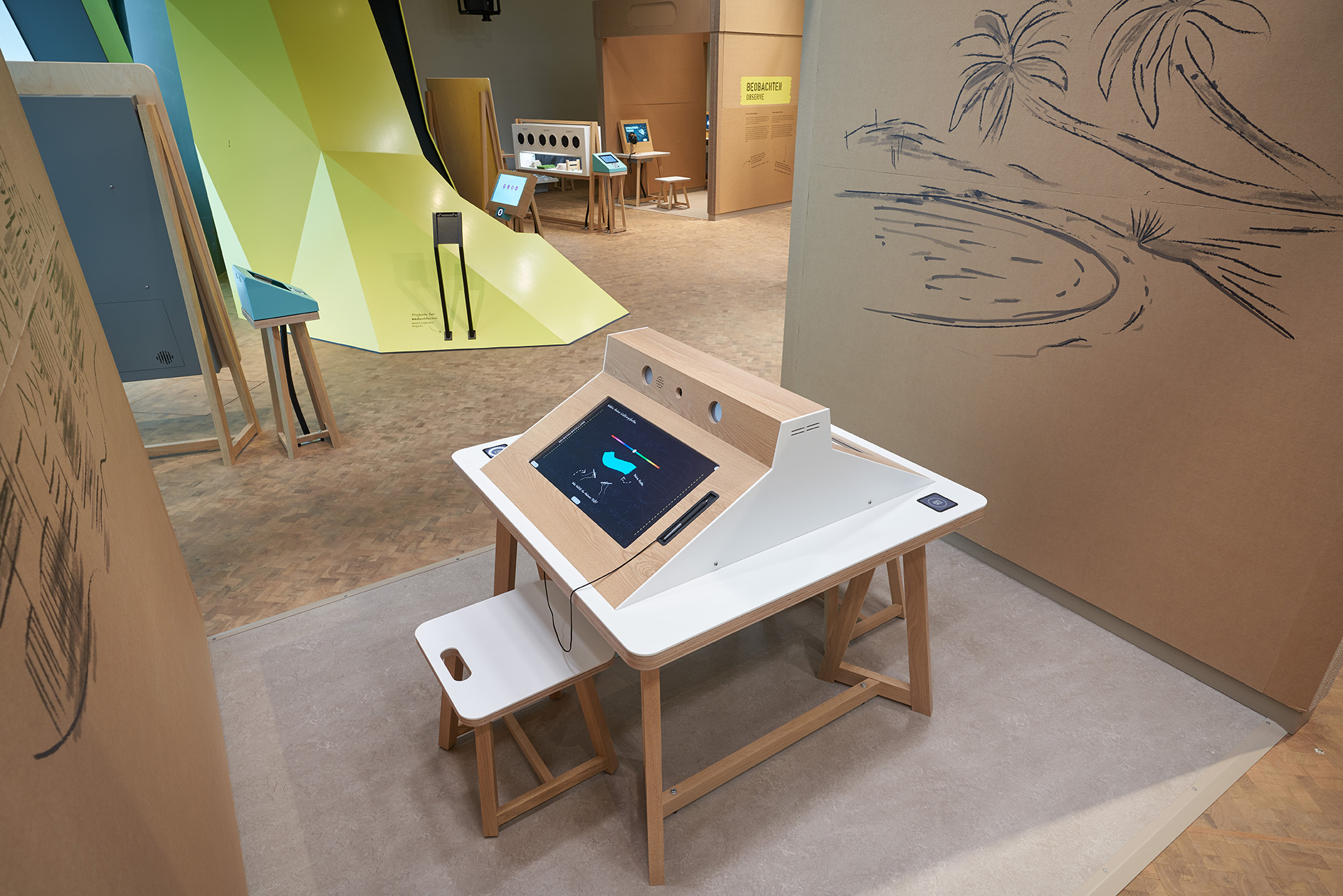
Light produces drawings on this special wall. The wall gives off the absorbed light with a slight delay as a green glow. The phenomenon is called phosphorescence and is what produces these fascinating works of light art.
Duration:5 min
Floor:OG 1
Keywords:Light
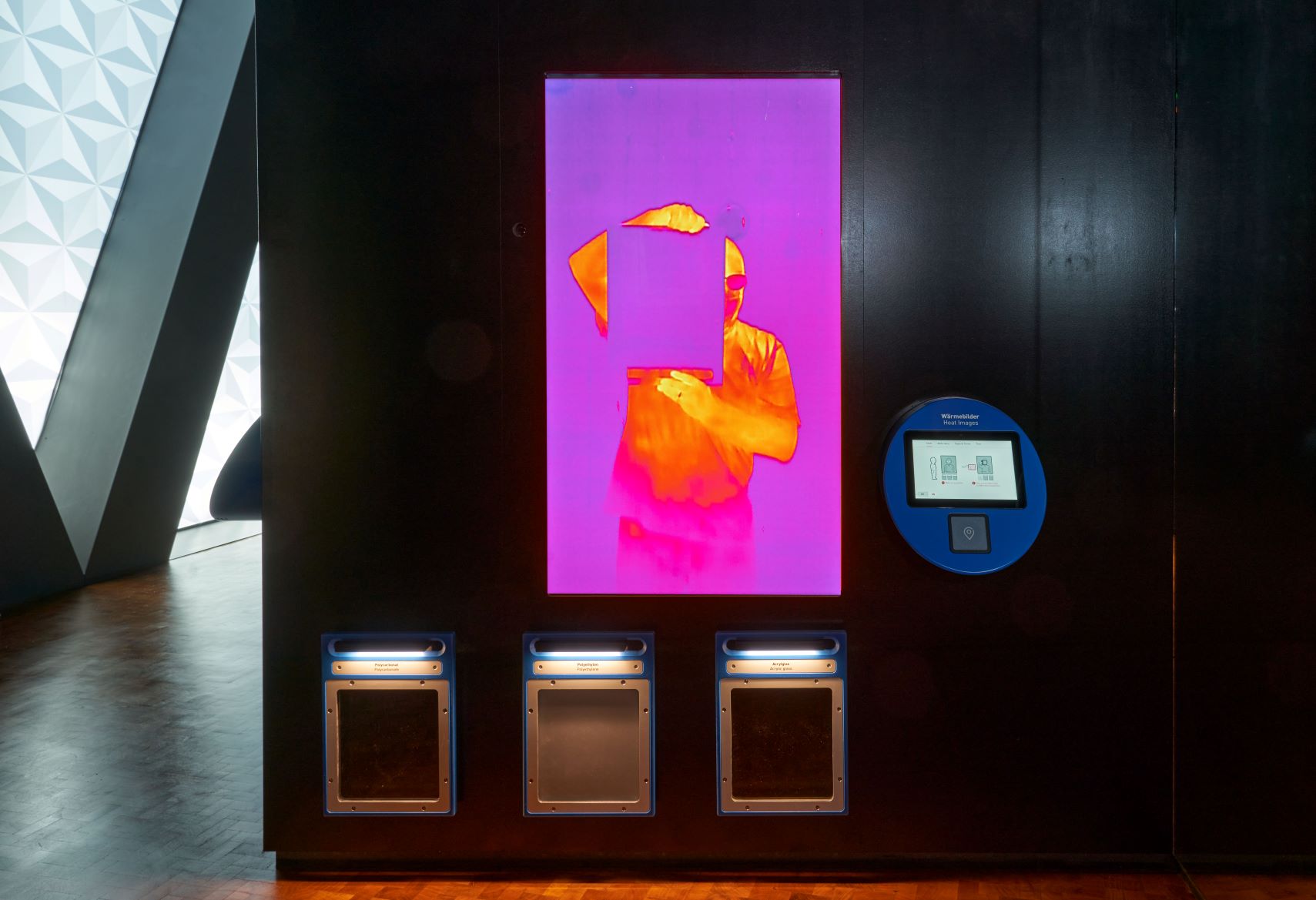
Heat Images

Heat Images

You glow! That's because you are warm. All warm objects give off heat. But this is light our eyes cannot see. A thermal imaging camera, however, sees the long-wave infrared light where you are radiating heat.

Duration:5 min
Floor:OG 1
Keywords:PhysicsScience
Beams of Light

Beams of Light

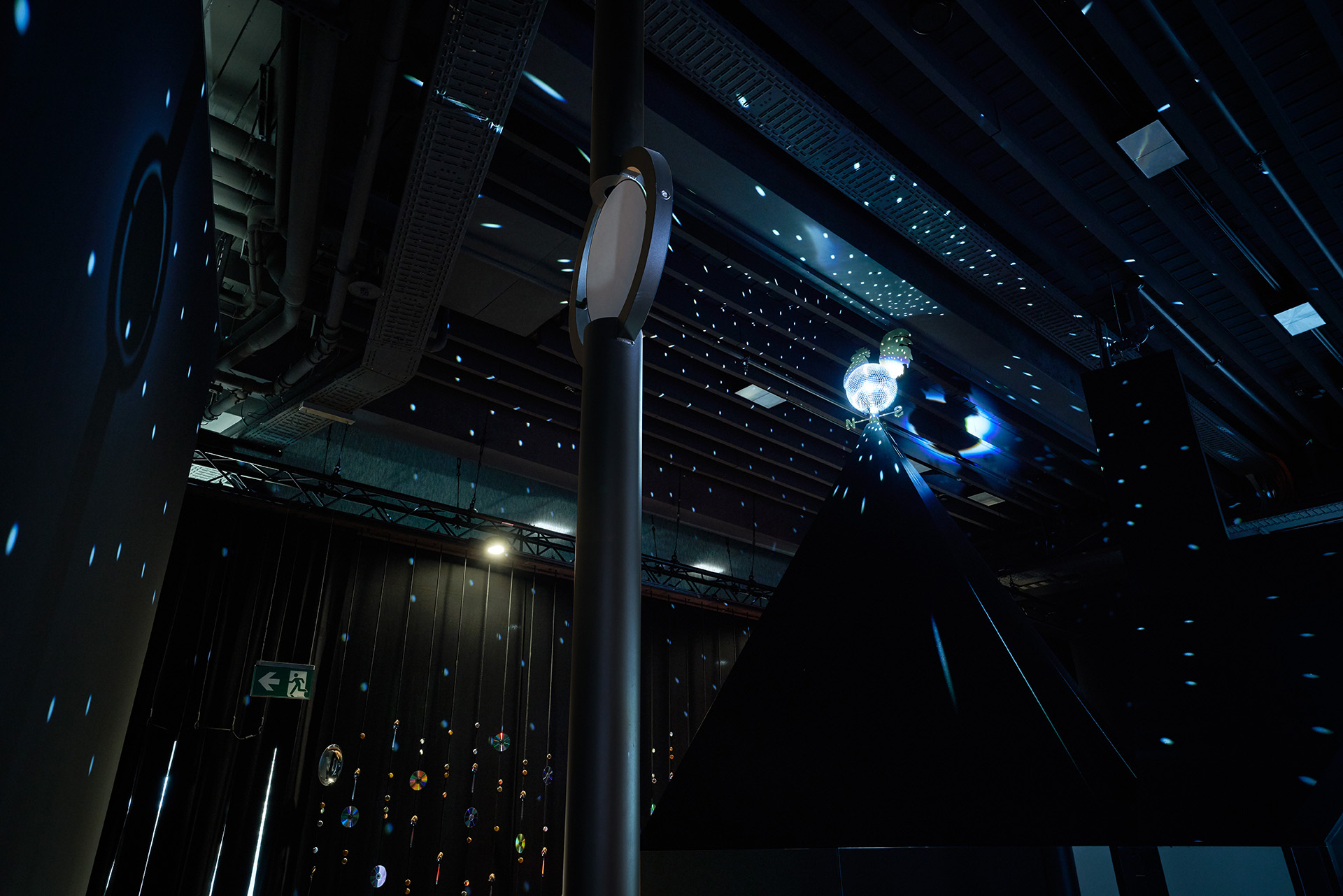
Light propagates linearly. Using mirrors, we can change the path of light and send a beam around a corner. If the mirror surfaces point in different directions, the beams can be seen throughout the room.

Duration:5 min
Floor:OG 1
Keywords:LightMaterialsOptics
Roll with it

Roll with it

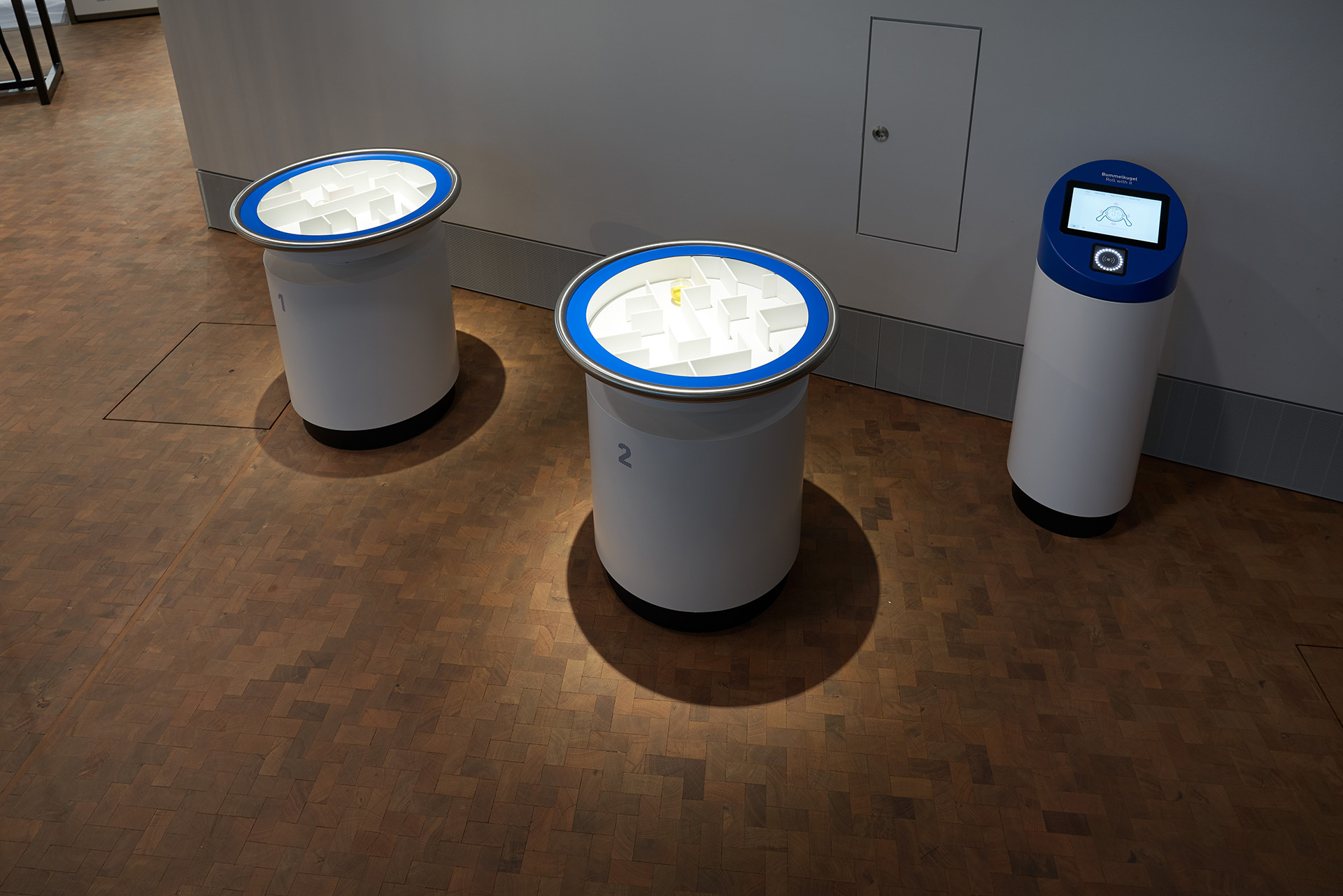
We know what water is. But not all liquids are like water. This is demonstrated by these balls. They are filled with different viscous fluids. This has consequences for the movement of the balls. Discover how viscous fluids roll.

Duration:5 min
Floor:OG 1
Keywords:MaterialsMechanicsWater +2
Sense and Sensibility

Sense and Sensibility

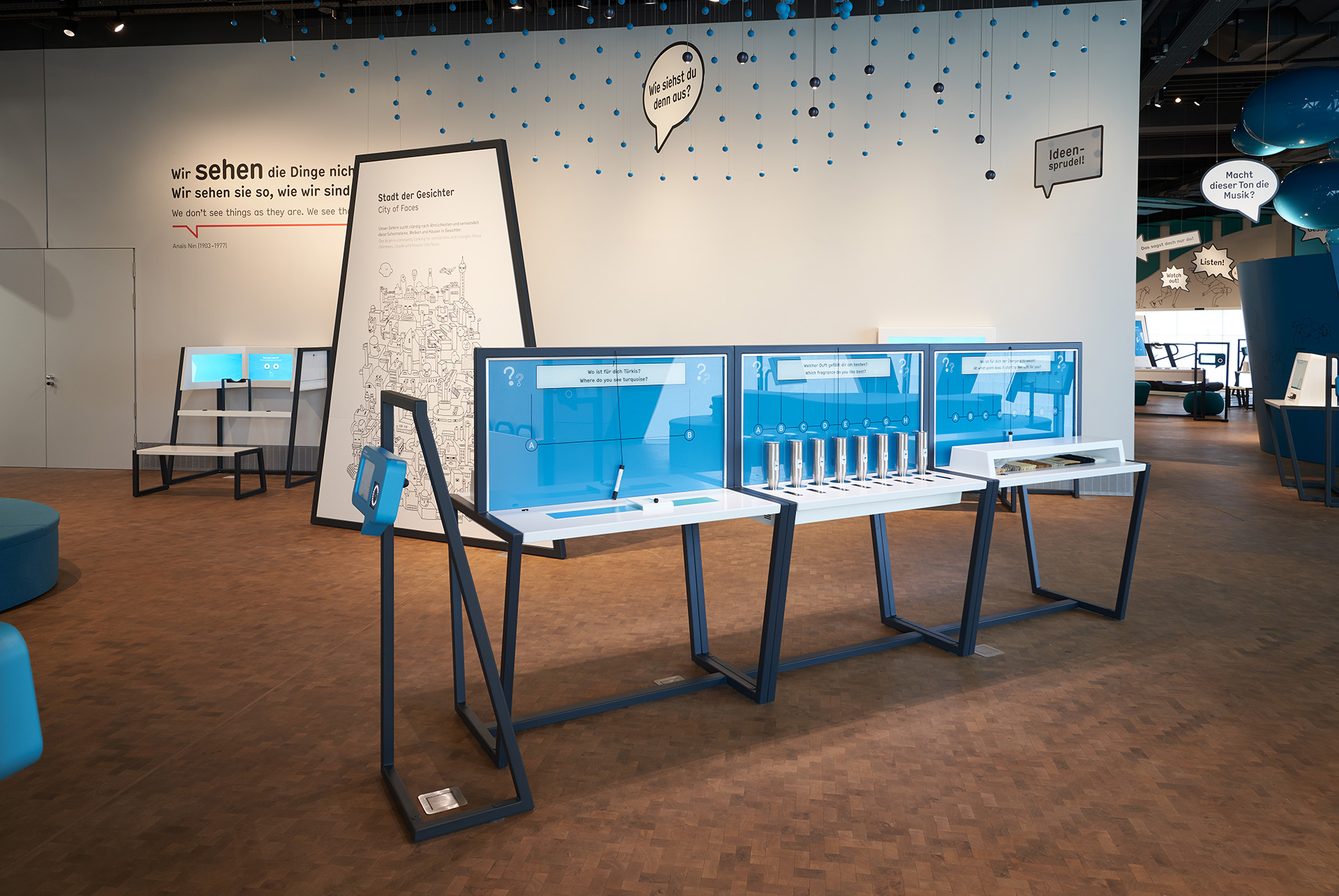
We perceive our environment with the help of our sensory organs. At the same time, the brain links the sensory stimuli with past experiences. We don't all perceive the same thing even when the sensory stimulus seems to be the same for everyone.

Duration:15 min
Floor:OG 2
Keywords:SensesSensory nervous systemStatistics +1
Add an Accent

Add an Accent

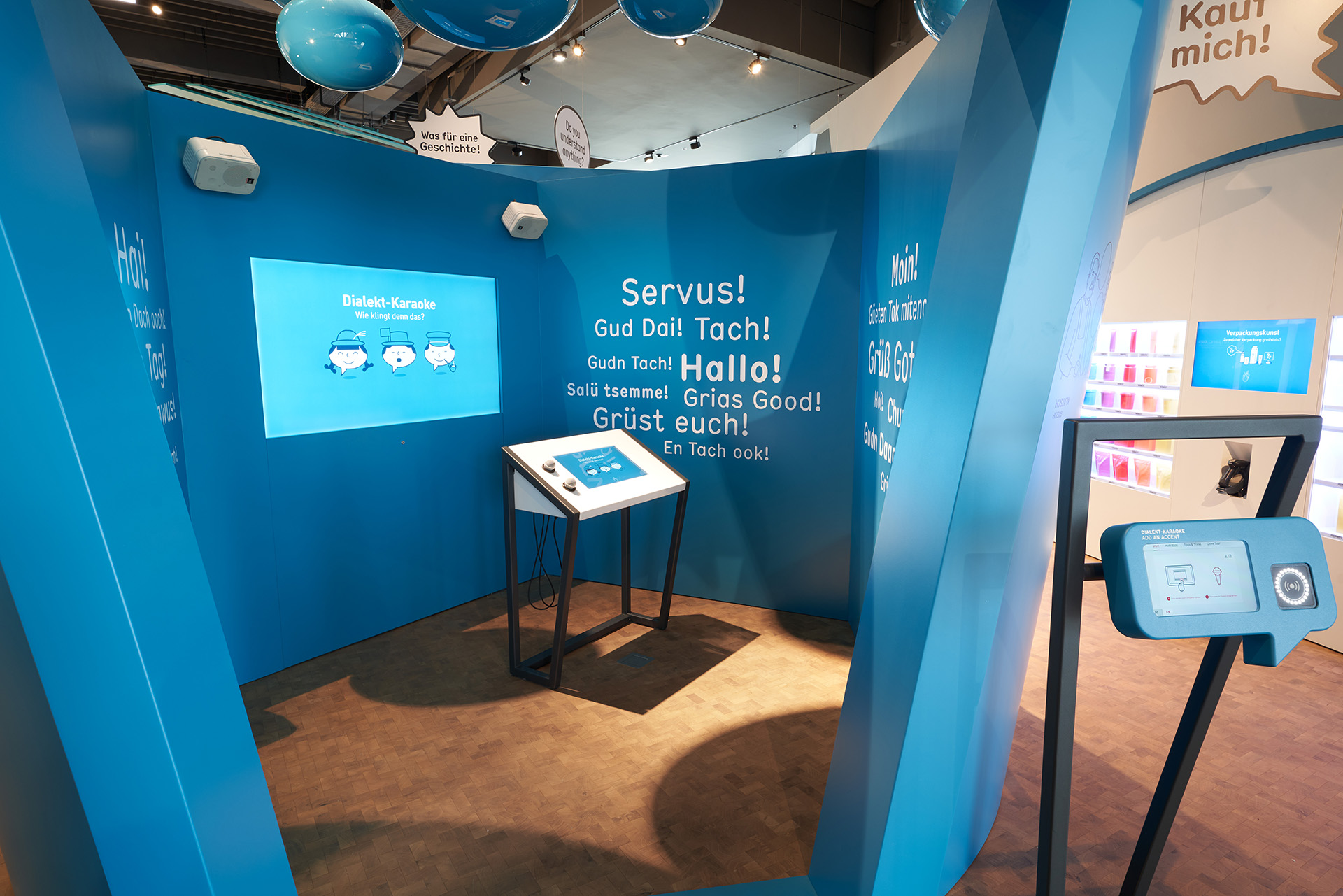
Movie scenes can change considerably with a new voice. The voice significantly influences the figure's emotional impact. Provide a new voiceover in a dialect for a selection of popular film scenes at this station.

Duration:10 min
Floor:OG 2
Keywords:CultureCommunicationLanguage
Hear Home

Hear Home

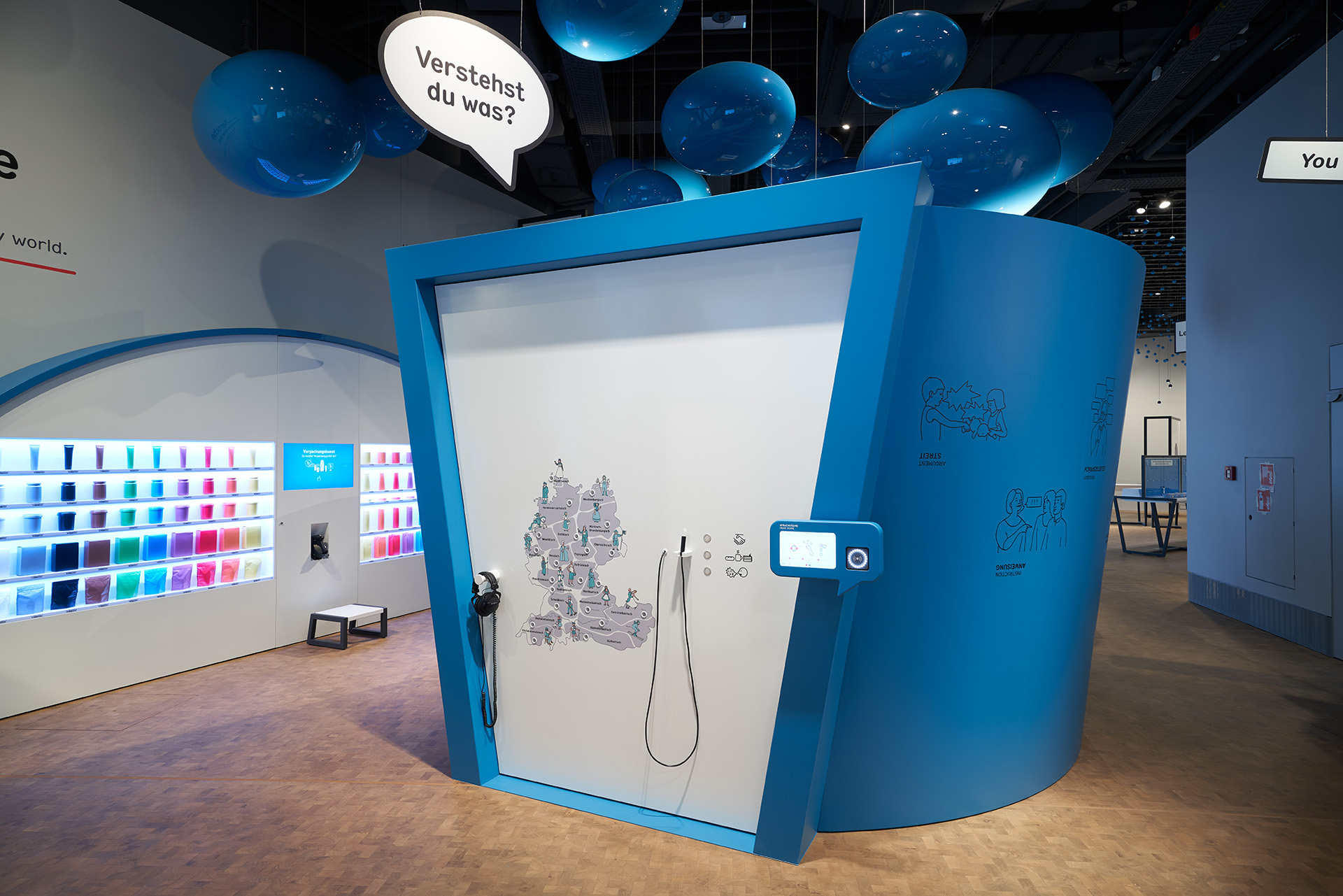
A variety of dialects influences how we speak. They are usually much older than High German. Many regions in past times had a typical dialect. Travel through the German dialects using the map.

Duration:15 min
Floor:OG 2
Keywords:SocietyCommunicationCulture +3
What was that?

What was that?

Language is full of images and sayings. At the same time, what is said is also accompanied by many gestures. Still, it is often difficult to translate them into another language. This is demonstrated in the Memory game of sayings and gestures.

Duration:10 min
Floor:OG 2
Keywords:SocietyCommunicationLanguage
Letter Jumble

Letter Jumble

Our brain perceives words as a whole, like a picture. This complex process speeds up reading enormously and makes it insensitive to minor disruptions. This is clearly demonstrated at this station.

Duration:10 min
Floor:OG 2
Keywords:BrainCommunicationPatterns +2
Face Fun

Face Fun

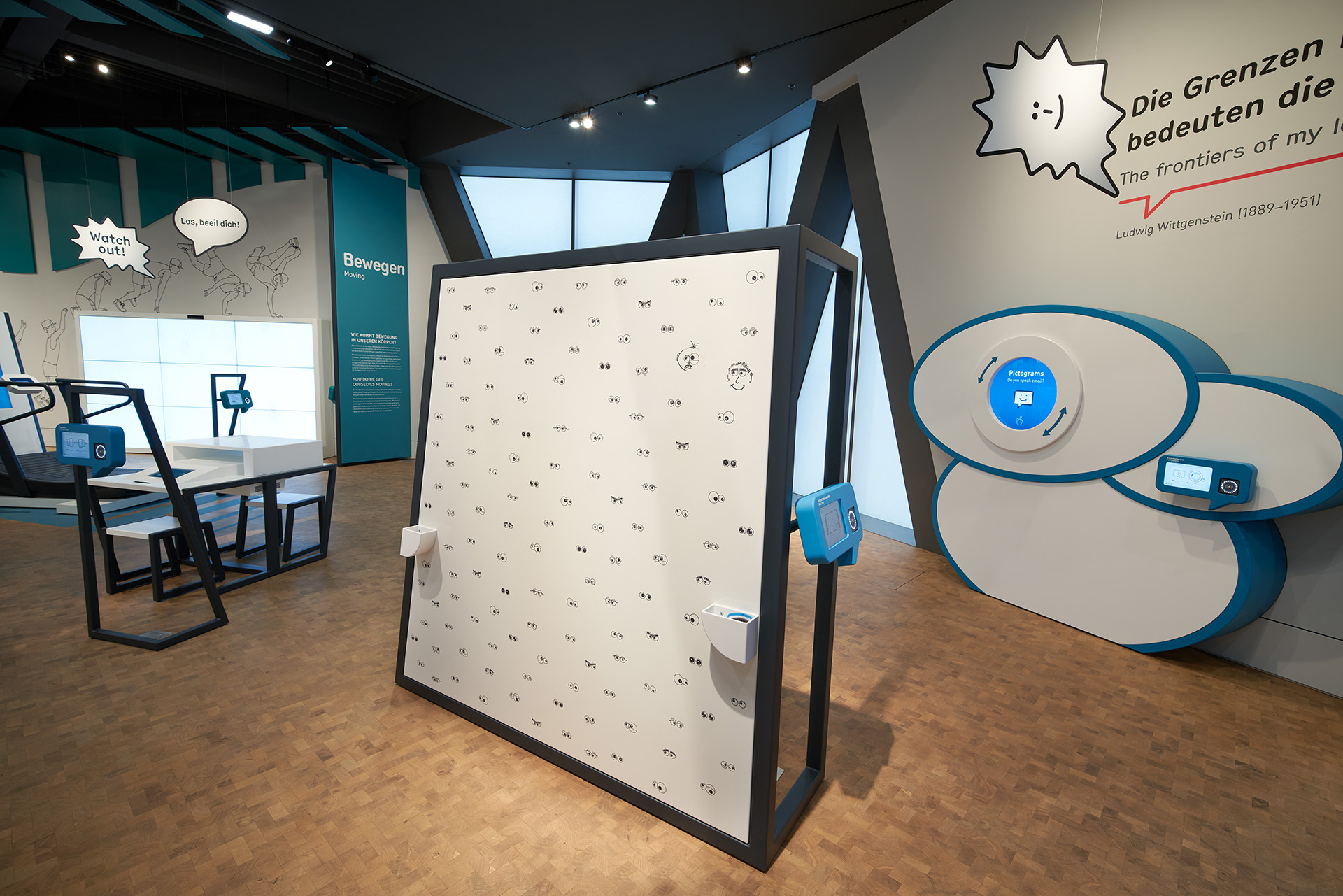
The eyes allow us to look deep inside another person. They reveal so much about our feelings, expectations, and thoughts in our facial expressions. Numerous pairs of eyes here can become part of a comic strip using the pen.

Duration:5 min
Floor:OG 2
Keywords:SocietyCommunicationCreativity
Set the Tone

Set the Tone

The shortest musical clip is enough to create moods in a movie. Sound effects and music speak directly to the emotions. This station tests the impact of different scenes with difference pieces of music.

Duration:10 min
Floor:OG 2
Keywords:MusicSociety
Buy me!

Buy me!

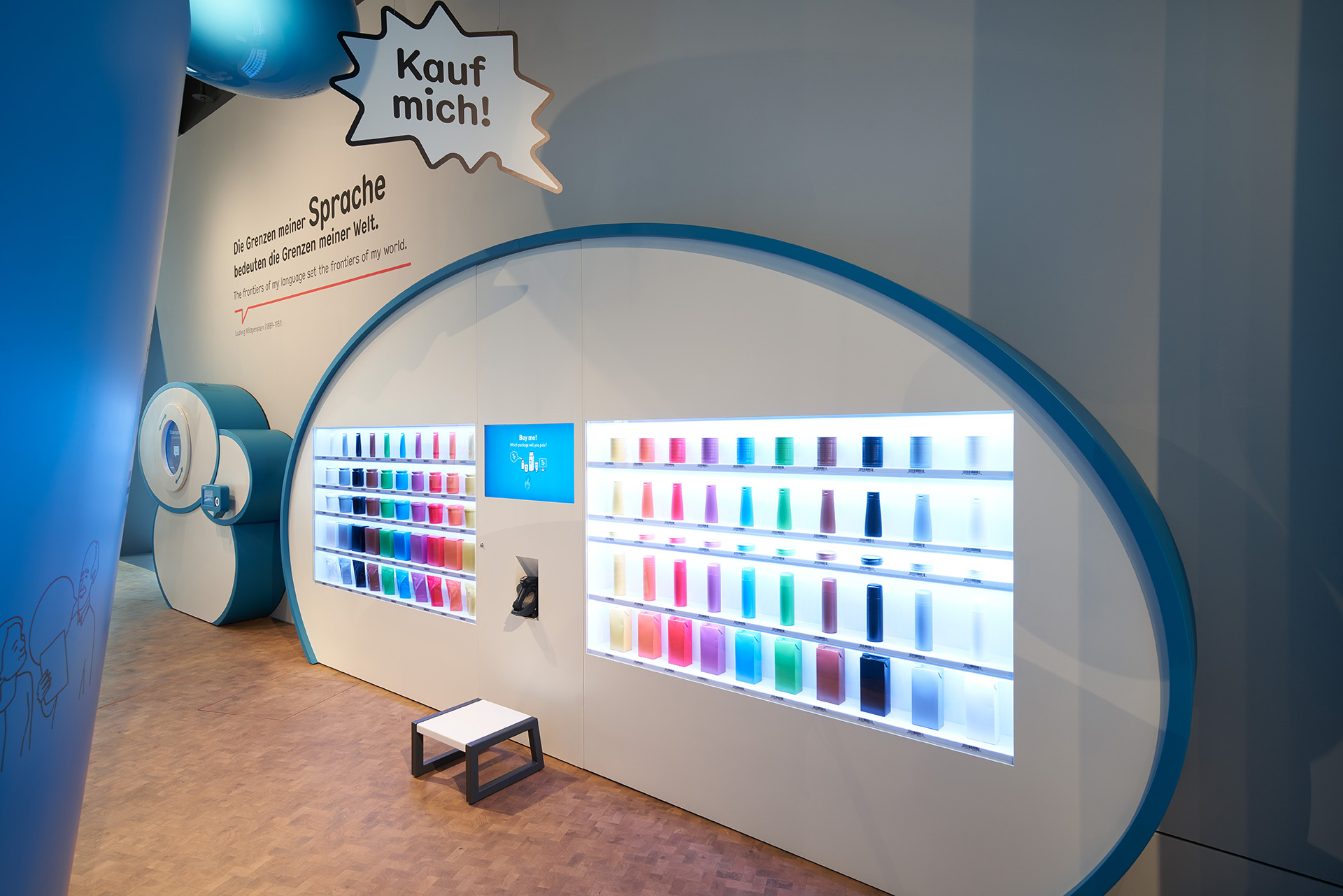
Shape, material, color, font: packaging today is often a meticulously developed work of art. Packaging sends numerous direct signals of which we are often virtually unaware. Investigate how this works at this station.

Duration:5 min
Floor:OG 2
Keywords:PsychologyColourSociety +1
It takes two

It takes two

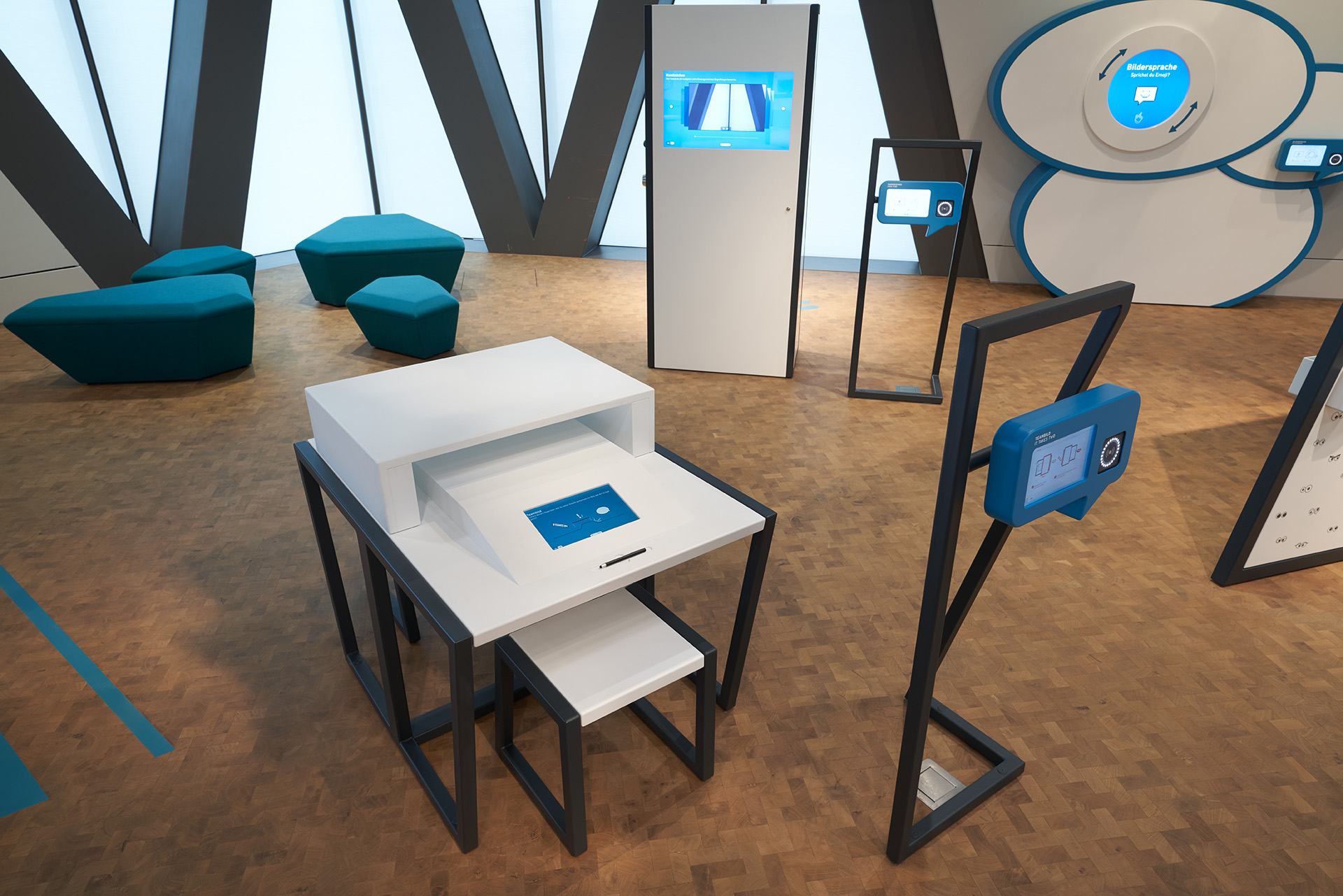
Hand-eye coordination is what allows us to make finely coordinated movements. This process is interrupted at this station. The person drawing has to follow the instructions of their partner.

Duration:10 min
Floor:OG 2
Keywords:CommunicationCreativityLanguage
Smartphone Zombie

Smartphone Zombie

To save time, we often want to be able to do several things at the same time. But are we really able to multitask? Errors can frequently occur when we need to concentrate. Try it yourself on this city rally.

Duration:10 min
Floor:OG 2
Keywords:MotionHealthSociety +1
High five

High five

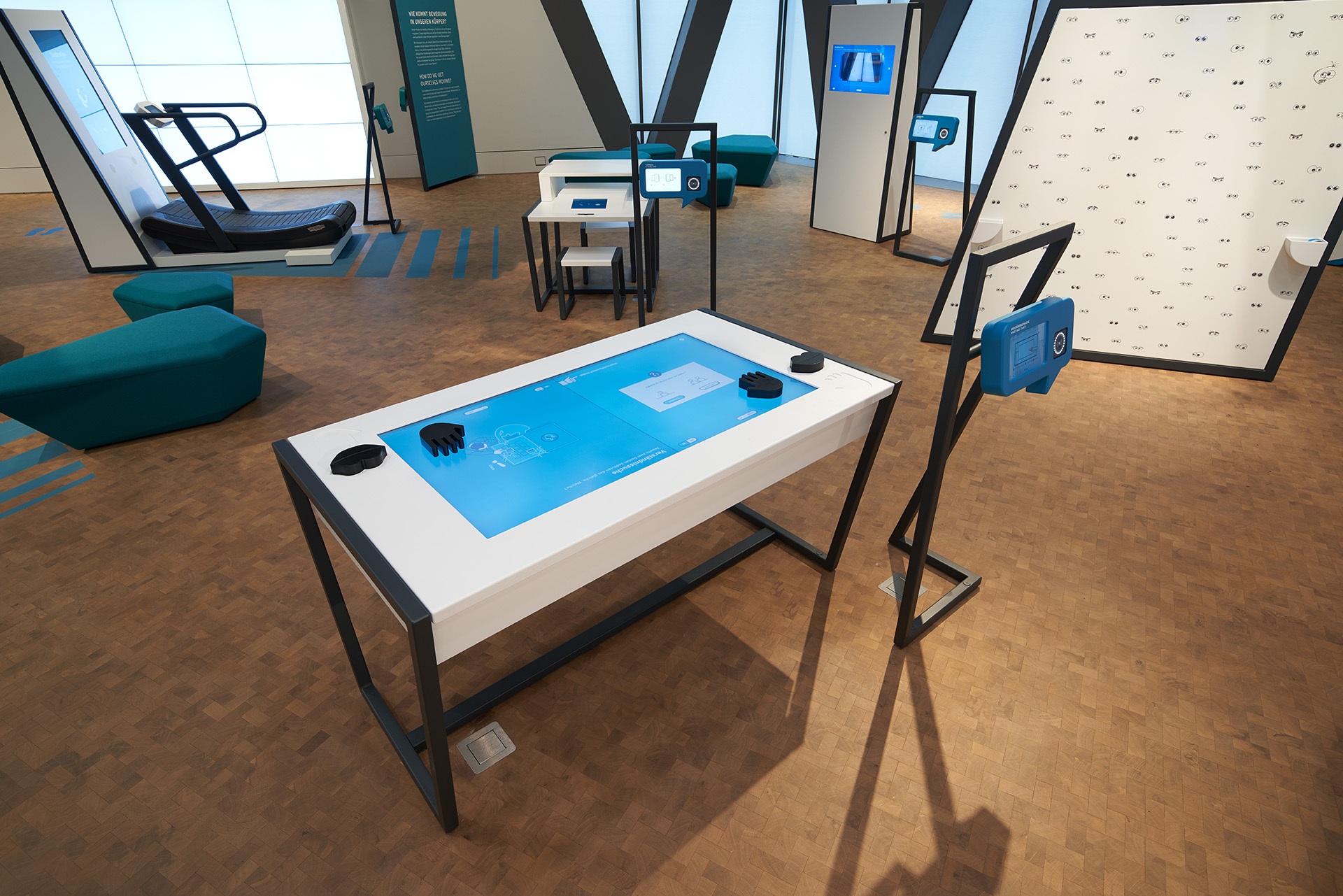
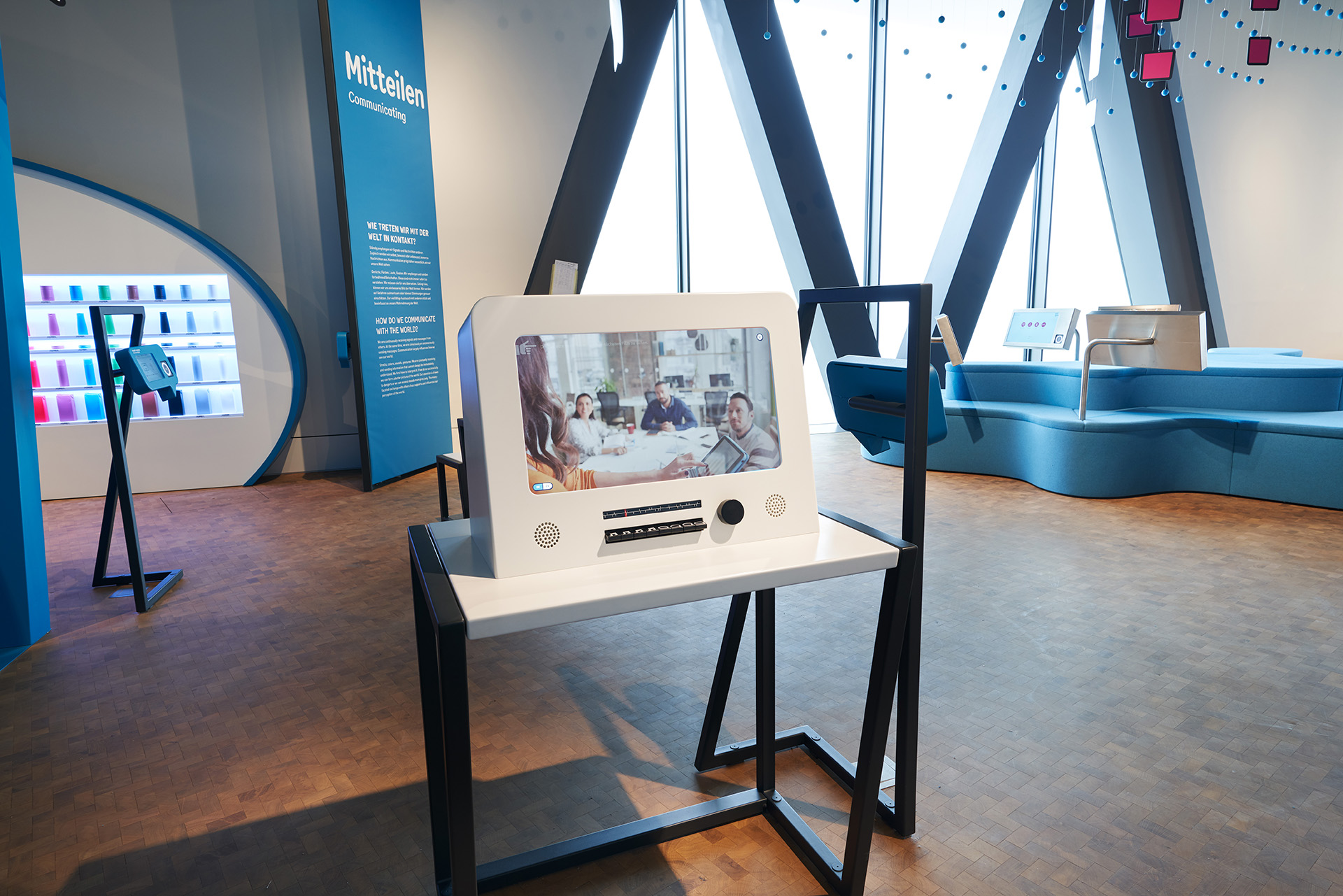
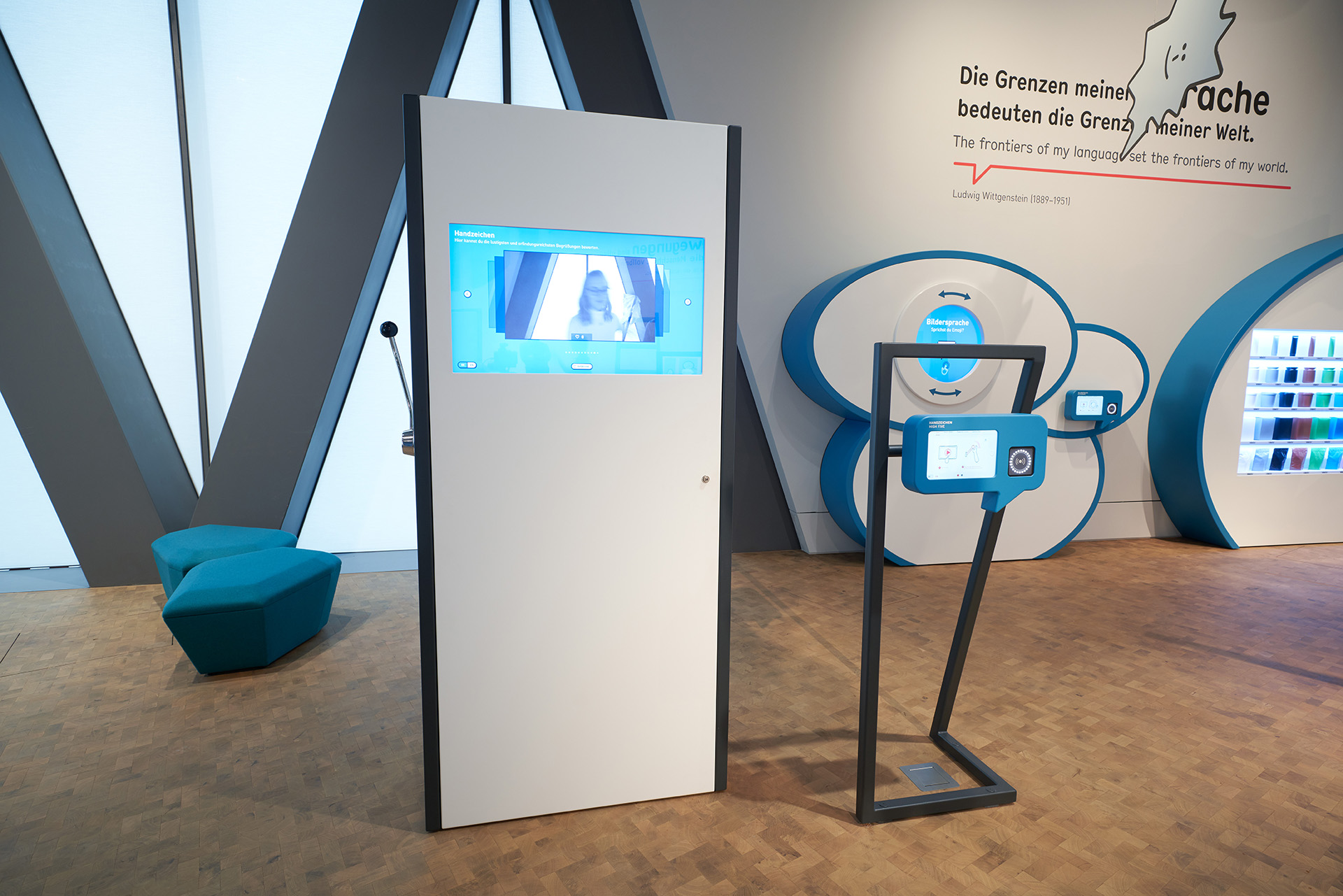
We greet another person with a gesture. How we do it is important for any further communication. In a greeting, we provide a framework for a conversation and express our appreciation of the other person.

Duration:10 min
Floor:OG 2
Keywords:MotionSocietyCommunication +1
Keep your Balance

Keep your Balance

We all have them: reflexes. They are intended to protect our bodies if at all possible at all times and everywhere. For this to work, reflexes need to be extremely fast. This pushing machine tests how good your reflexes are.

Duration:5 min
Floor:OG 2
Keywords:MotionHealth
Don't blink

Don't blink

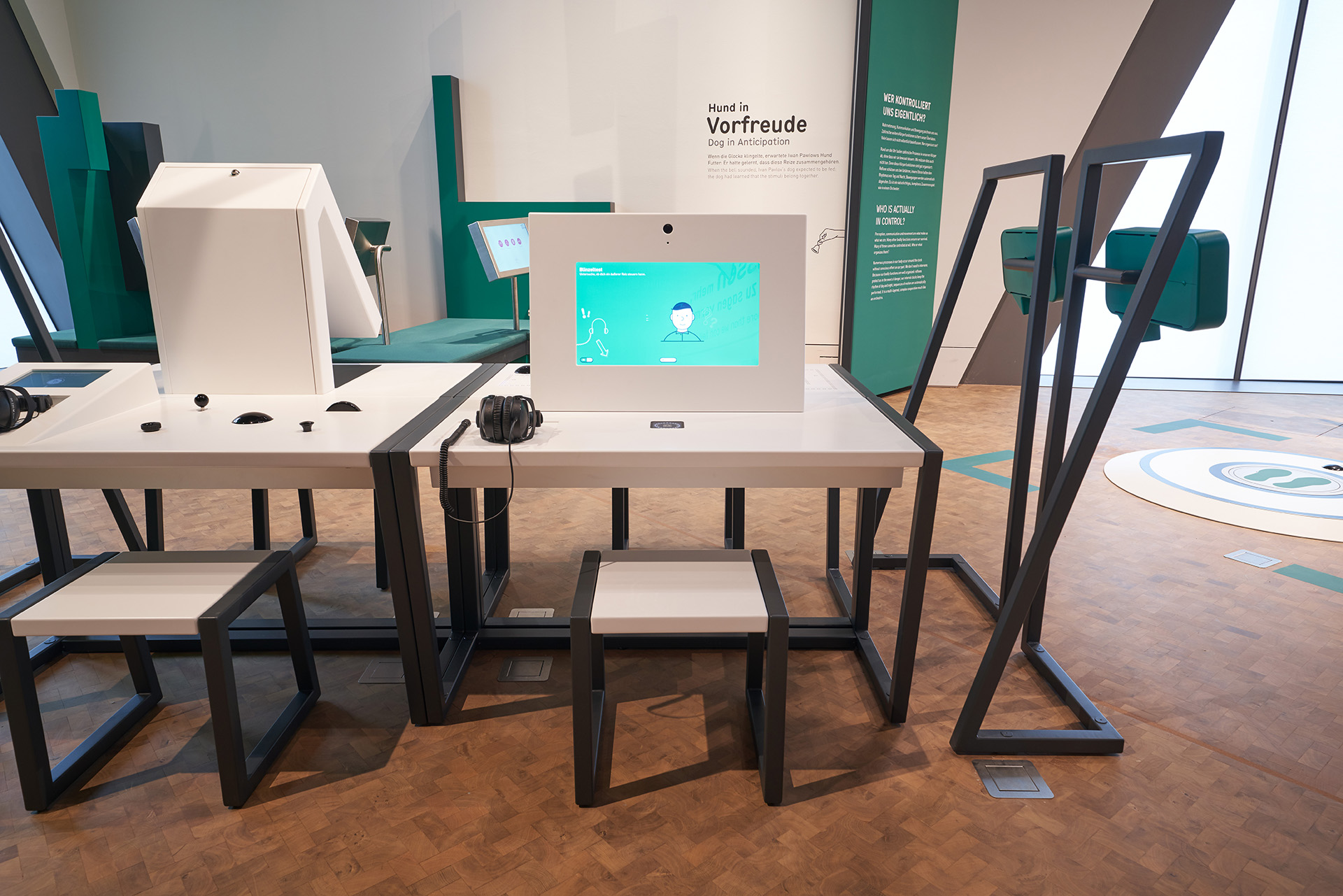
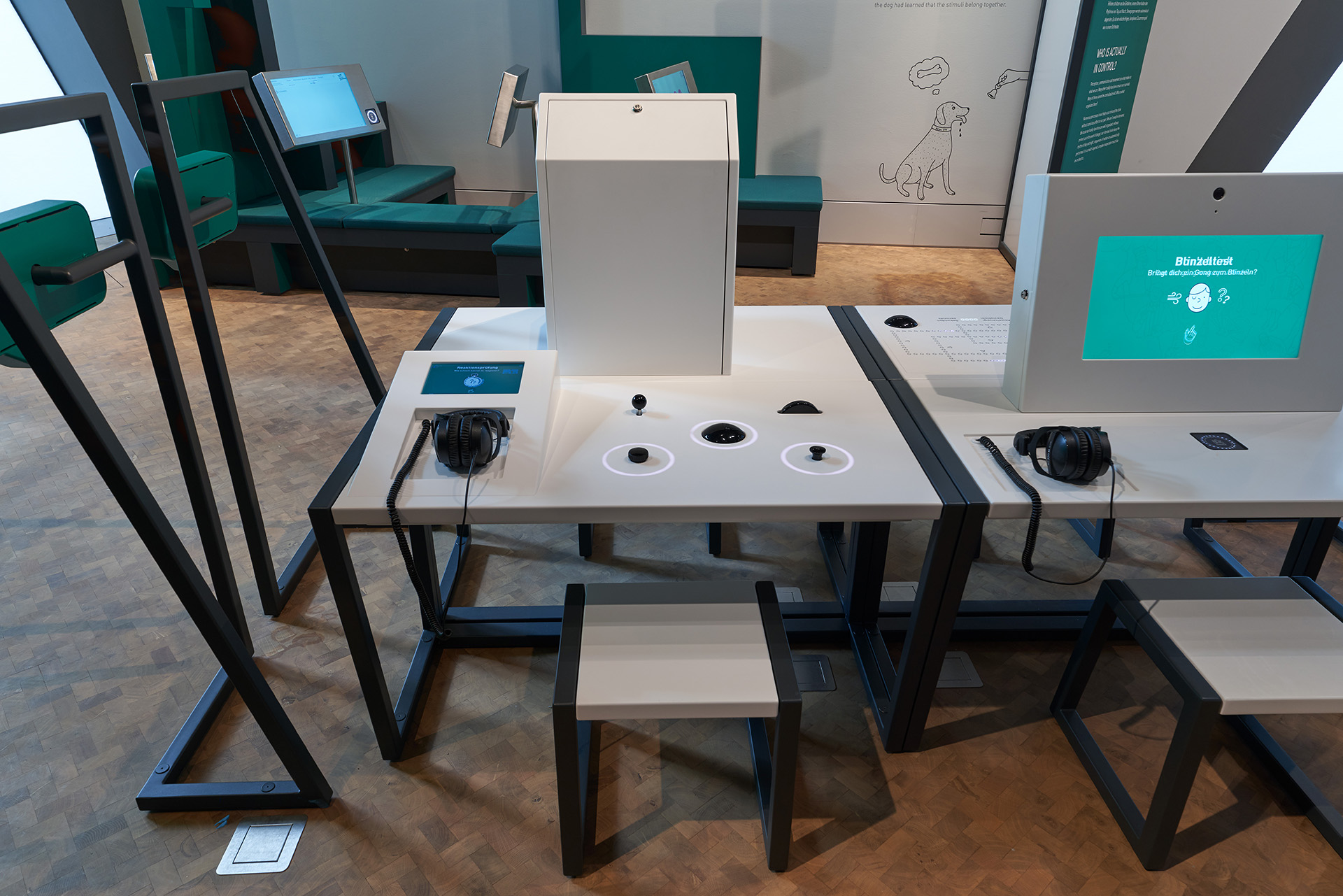
Conditioning is the interaction of two different stimuli which are associated together by means of training. We adapt after a relatively short period of time - and automatically close our eyes in response to the gong.

Duration:5 min
Floor:OG 2
Keywords:HealthMedicineBrain
Sound Boxes

Sound Boxes

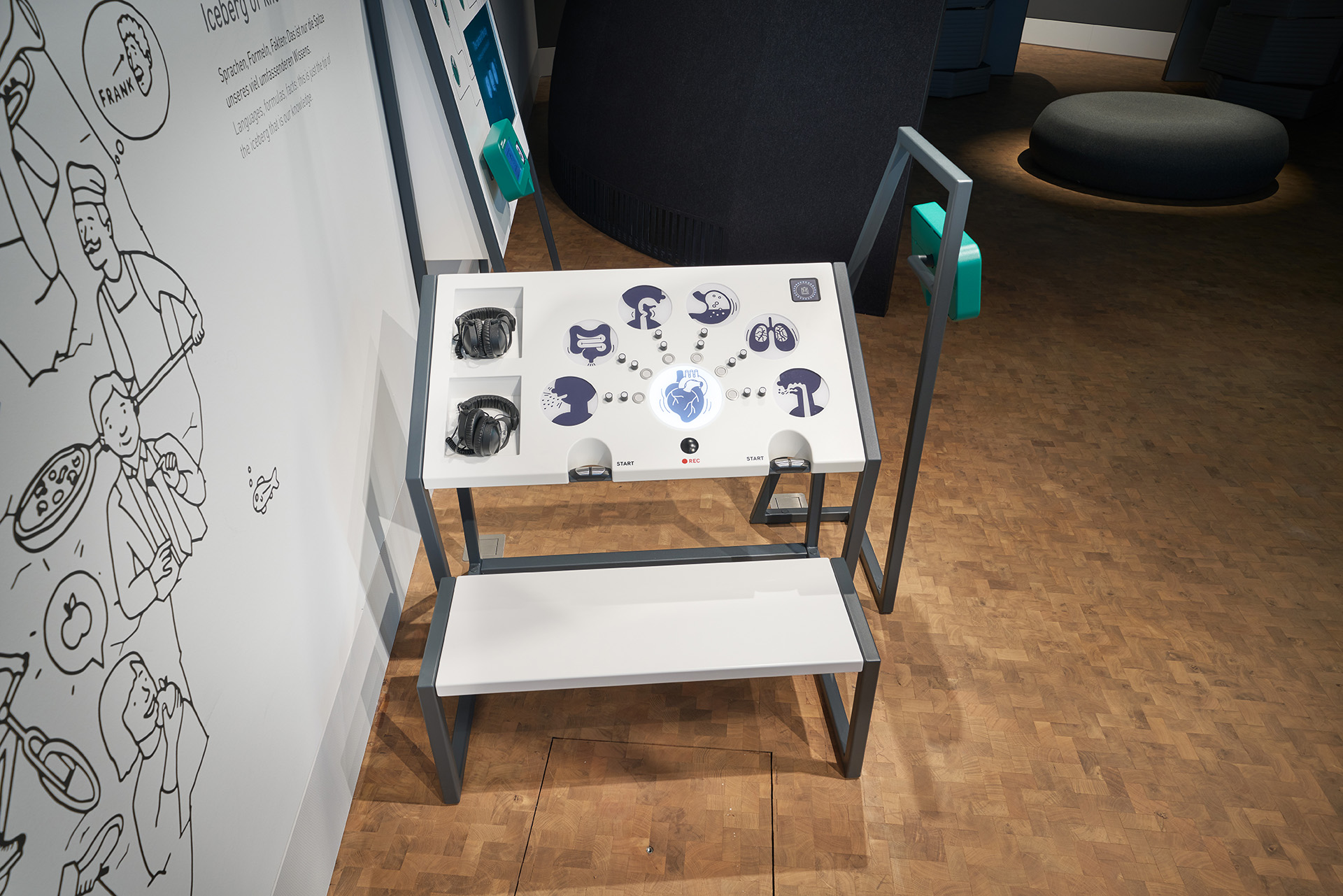
Our body is constantly producing a wide range of sounds. Many of them are awkward. Yet we have very little control over them. At this station, the body's sounds become a piece of music.

Duration:10 min
Floor:OG 2
Keywords:SocietyHealthMusic +1
Can you feel it?

Can you feel it?

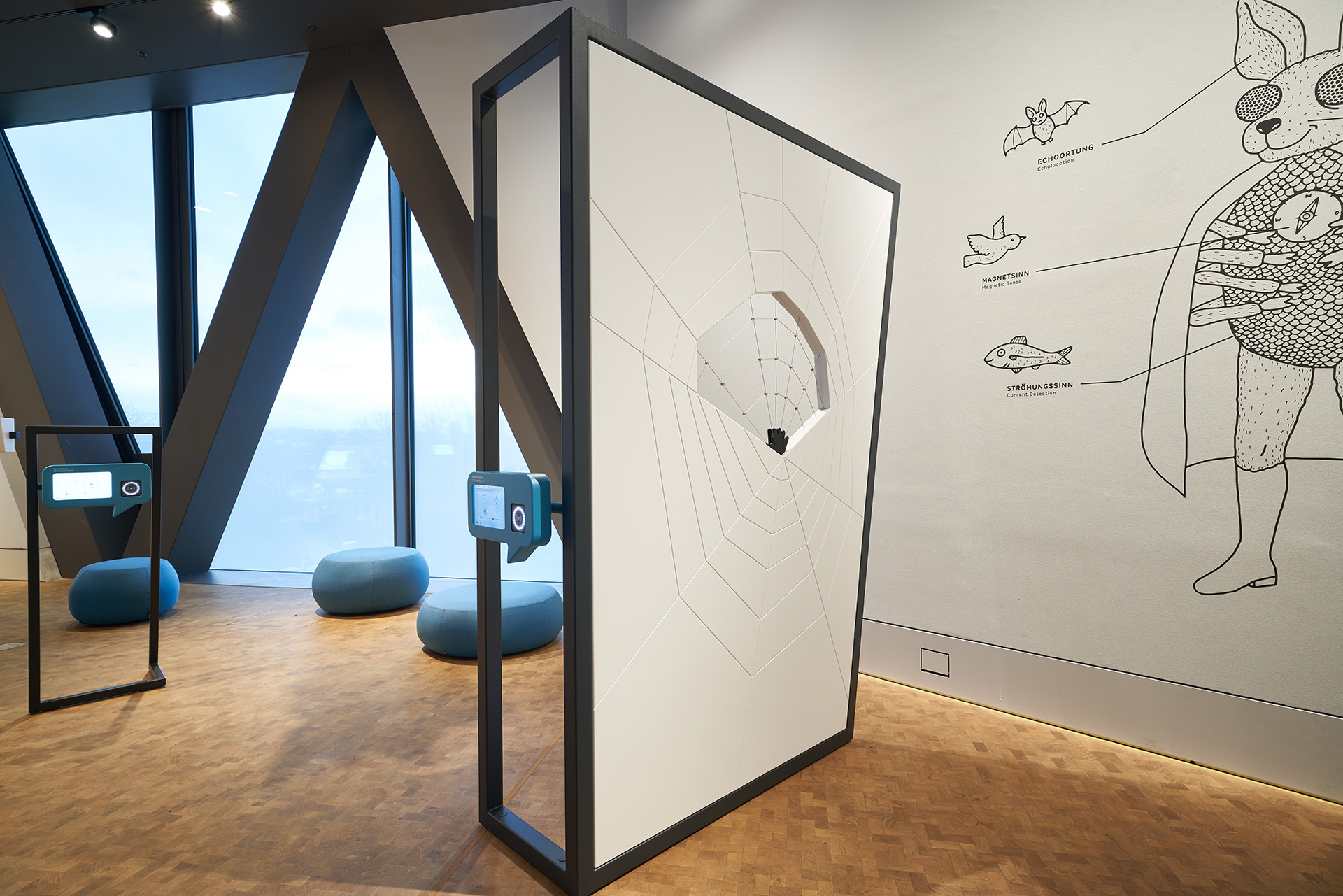
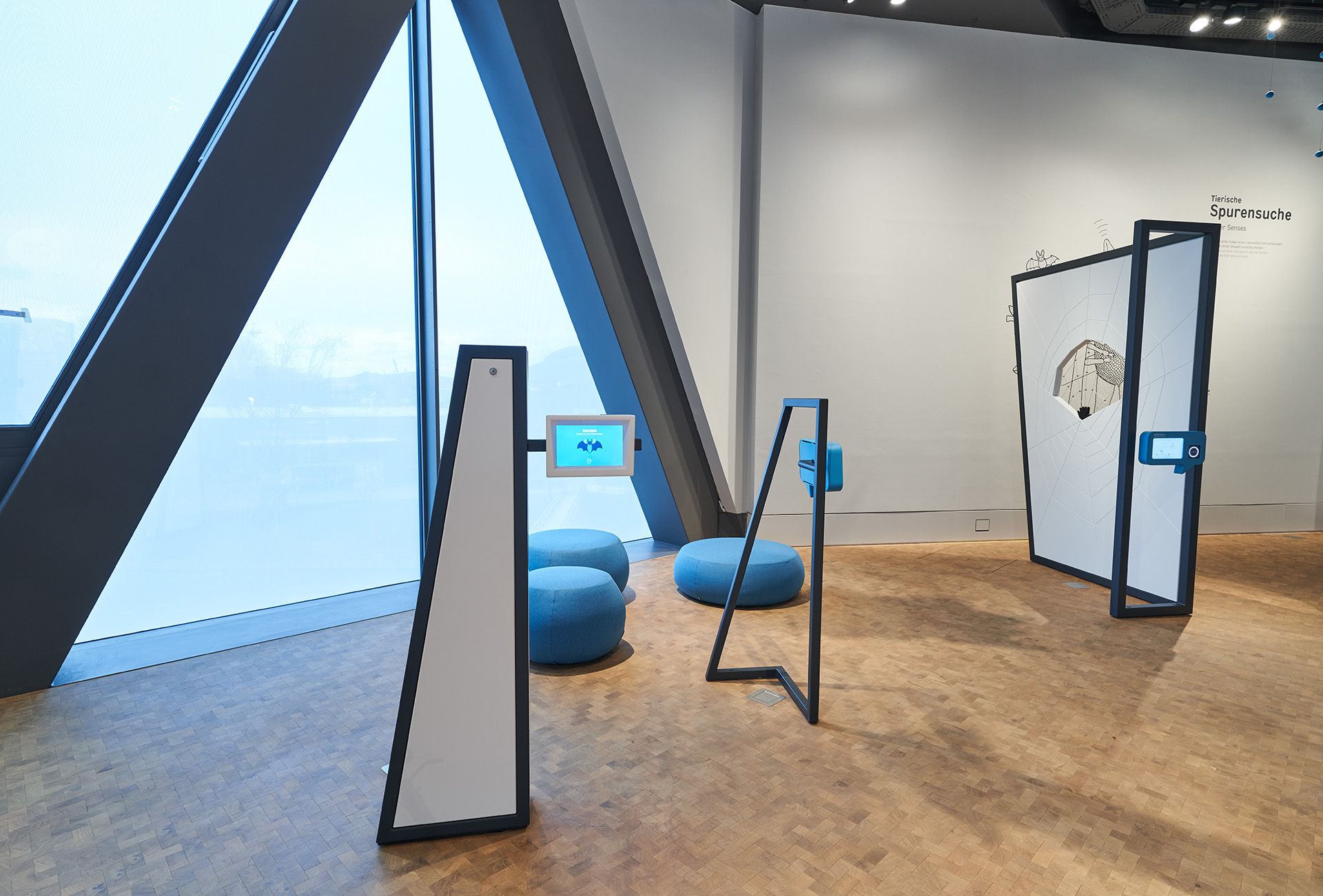
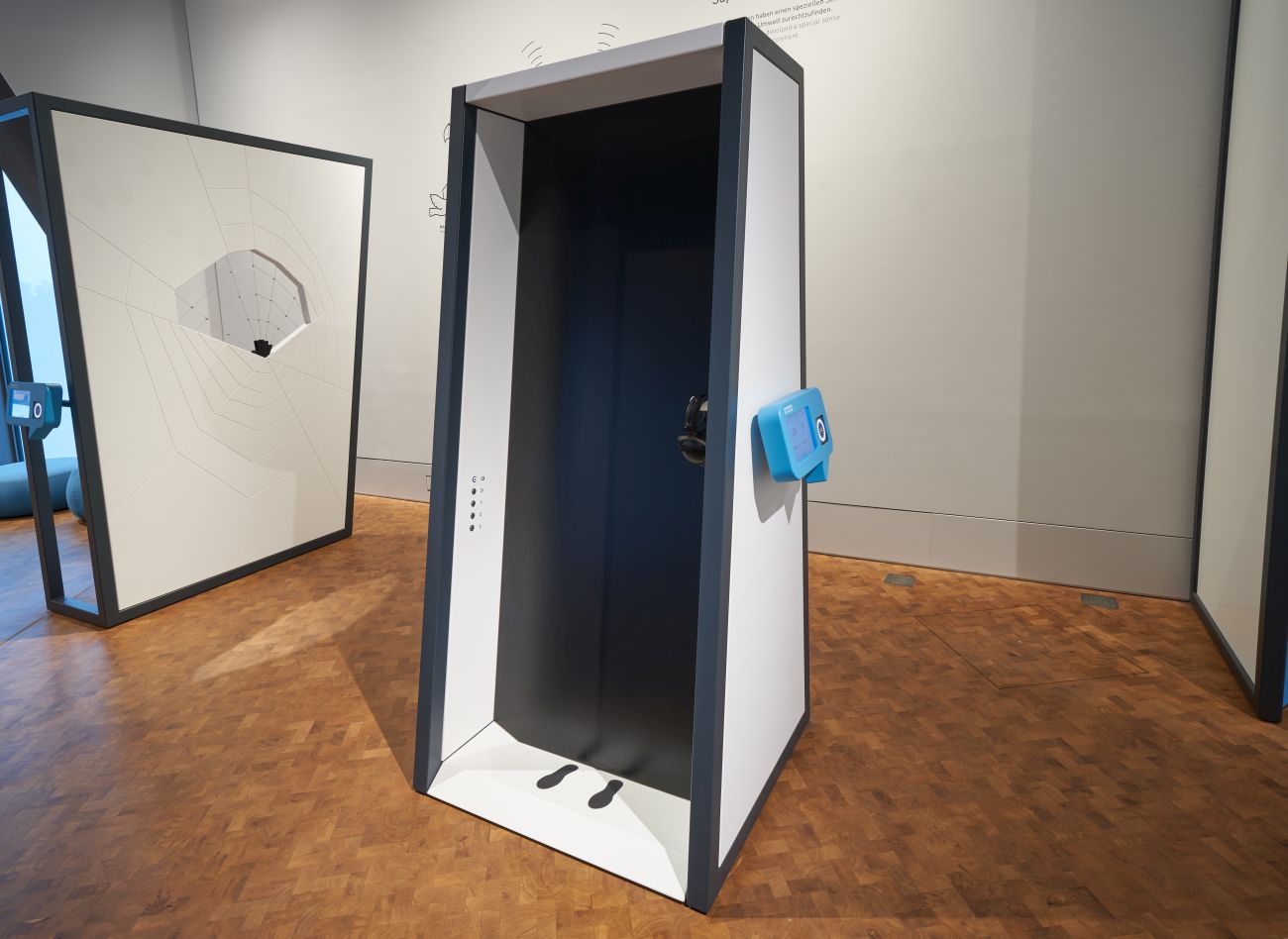
Spiders perceive every vibration that spreads through the ground, leaves or the spider's web. They have special sensory organs. How well are our fingers able to perceive slight vibrations?

Duration:5 min
Floor:OG 2
Keywords:AnimalsSensesSensory nervous system +2
Echolocation

Echolocation

A number of animals use a special type of seeing for orientation and capturing their prey: echolocation. Even some blind people can also actually obtain an impression of their surroundings by clicking. At this station, the sound waves are generated by clapping.

Duration:5 min
Floor:OG 2
Keywords:SensesAnimalsBrain +3
The Noise of the Crowd

The Noise of the Crowd

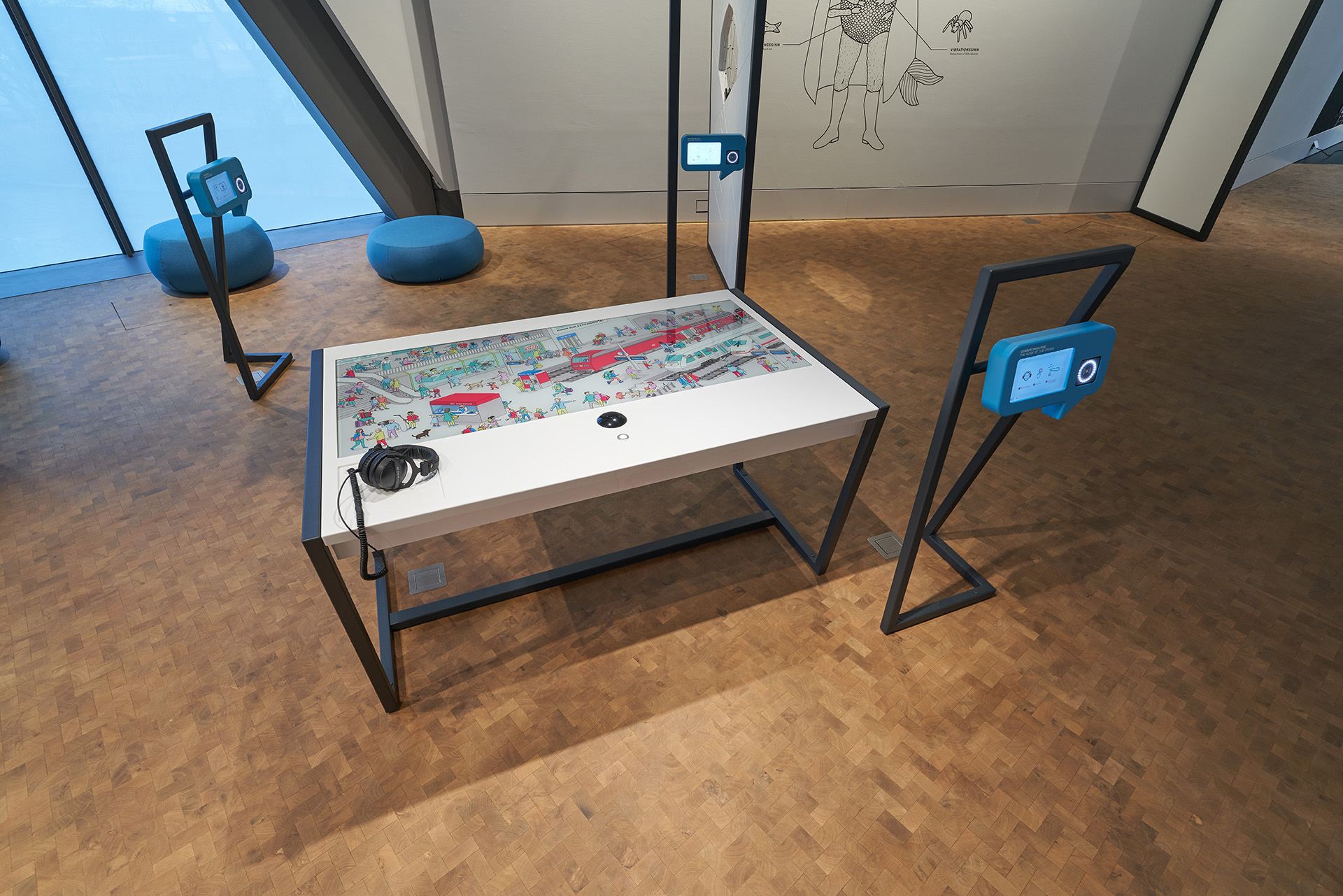
Our sense of hearing is astonishingly powerful. We are able to tell certain sounds apart from a cacophony of other sounds. This selective hearing is an active filtering process that takes place in the brain and is the subject of this station.

Duration:10 min
Floor:OG 2
Keywords:SensesSensory nervous systemPerception
Voice Test

Voice Test

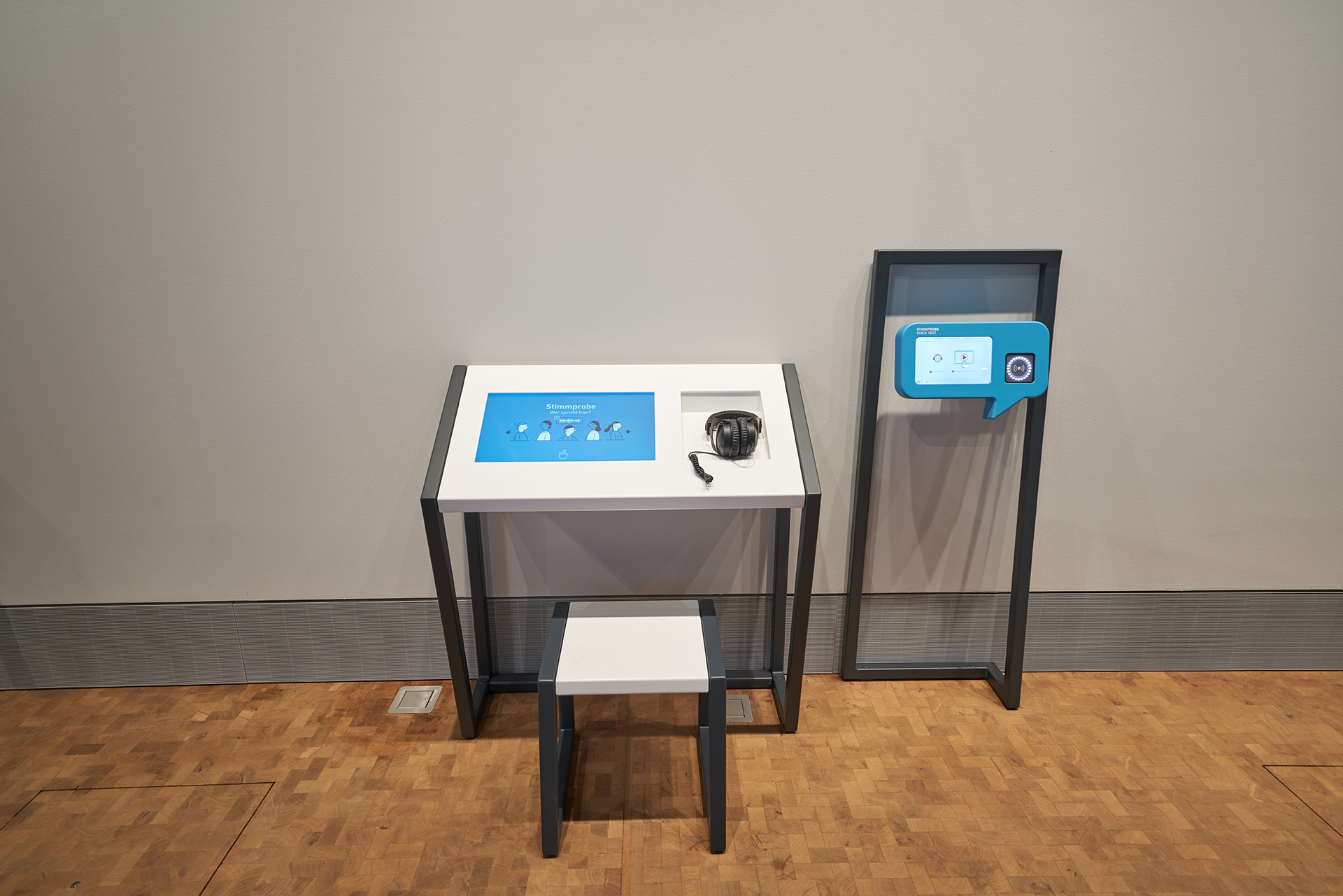
When we hear someone's voice, we rapidly compose a picture of that person. We are often quite good at it. This is demonstrated at this station at which voice samples are to be assigned to possible speakers.

Duration:10 min
Floor:OG 2
Keywords:LanguageSensesPerception +1
Set it straight

Set it straight

We see a large colorful image. If we use a color filter to mask out part of the information, we see previously hidden details. Our brain filters the information delivered by sensory organs in a similar way.

Duration:5 min
Floor:OG 2
Keywords:Sensory nervous systemAnimalsPerception +2
Living Language

Living Language

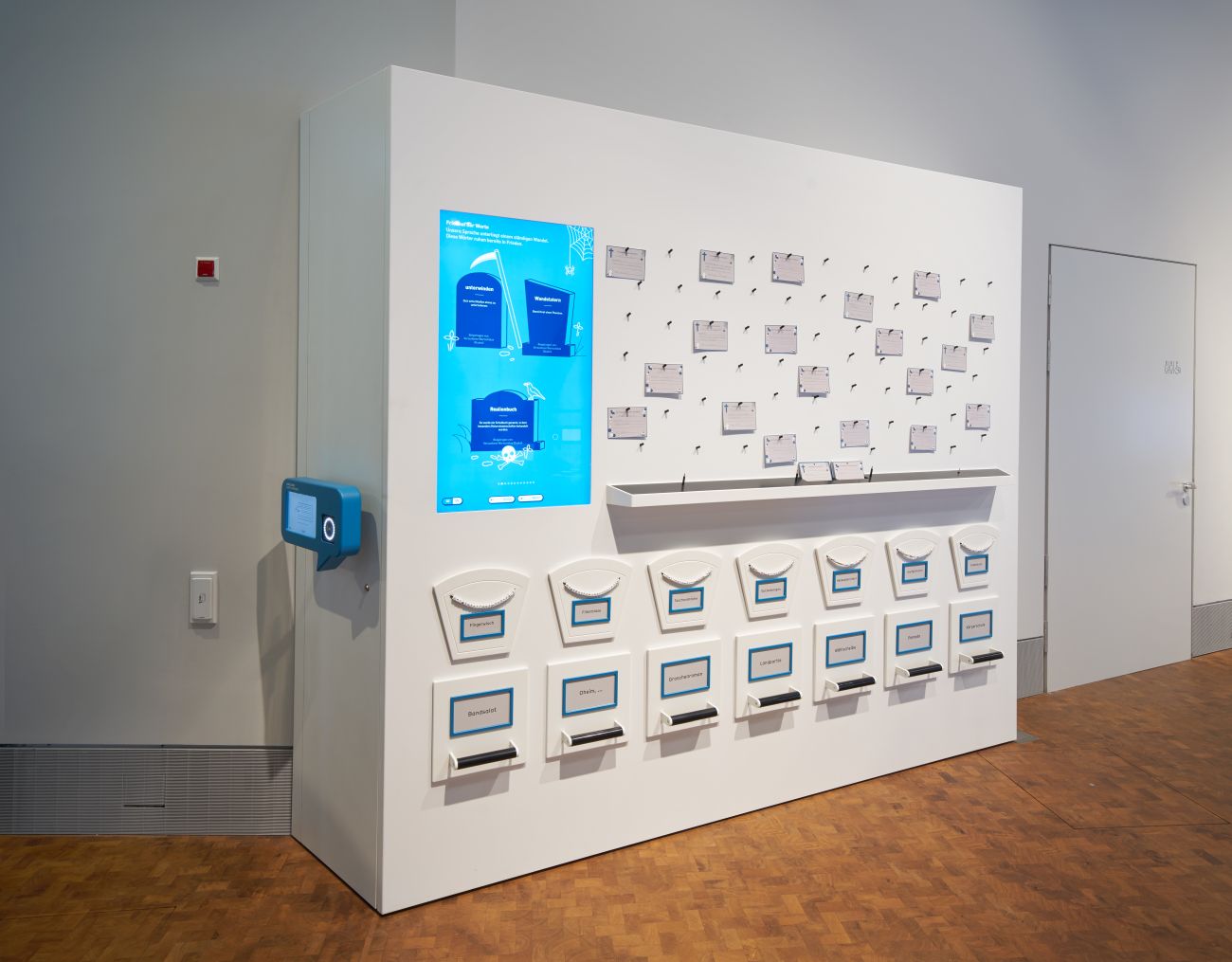
Languages are constantly evolving. New words suddenly begin to be sued, others are forgotten. Discover and propose new and old words at this station.

Duration:8 min
Floor:OG 2
Keywords:LanguageSocial changeCulture +1
Pictograms

Pictograms

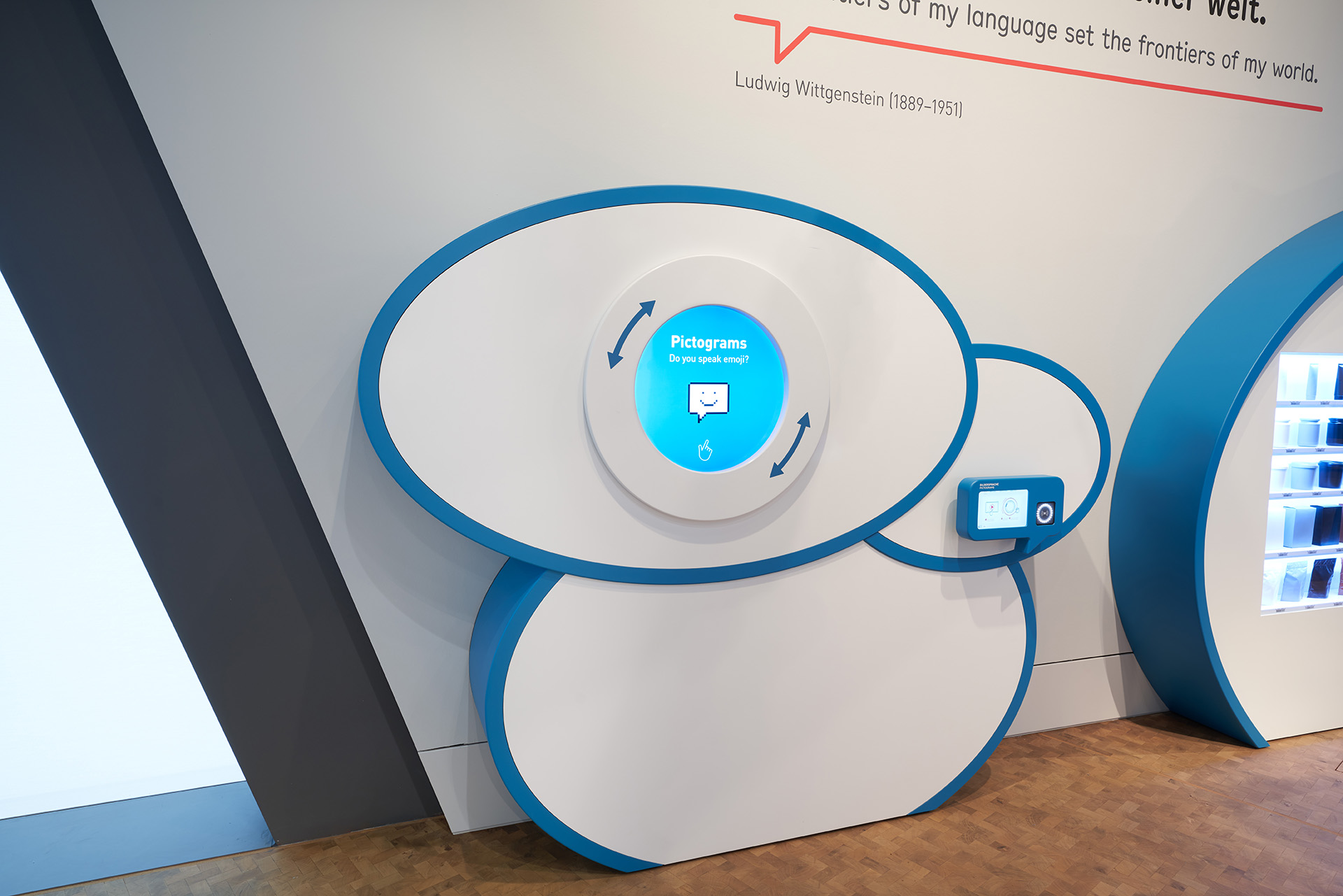
Emojis have spread around the world since the end of the 1990's. A type of Internet unicode commission defines the standard images. How easy this new language of images is to understand can be tested at this station.

Duration:10 min
Floor:OG 2
Keywords:SocietyCommunicationMedia +2
Move and paint

Move and paint

Our body is constantly in motion. Our body and our brain perform extraordinarily remarkably every day. At this station, our movements paint digital works of art.

Duration:5 min
Floor:OG 2
Keywords:MotionHealthBody functions +4
Follow the Steps

Follow the Steps

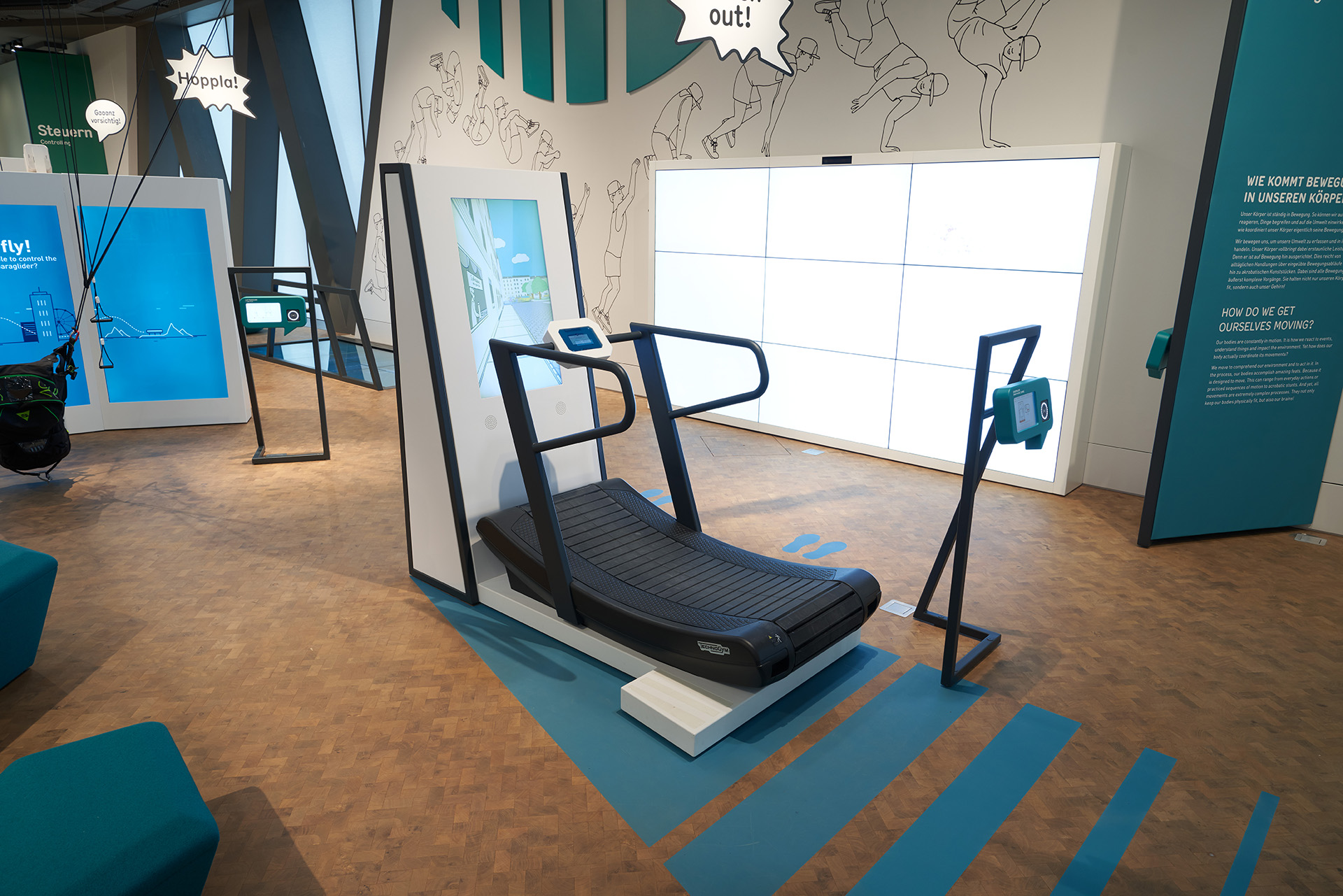
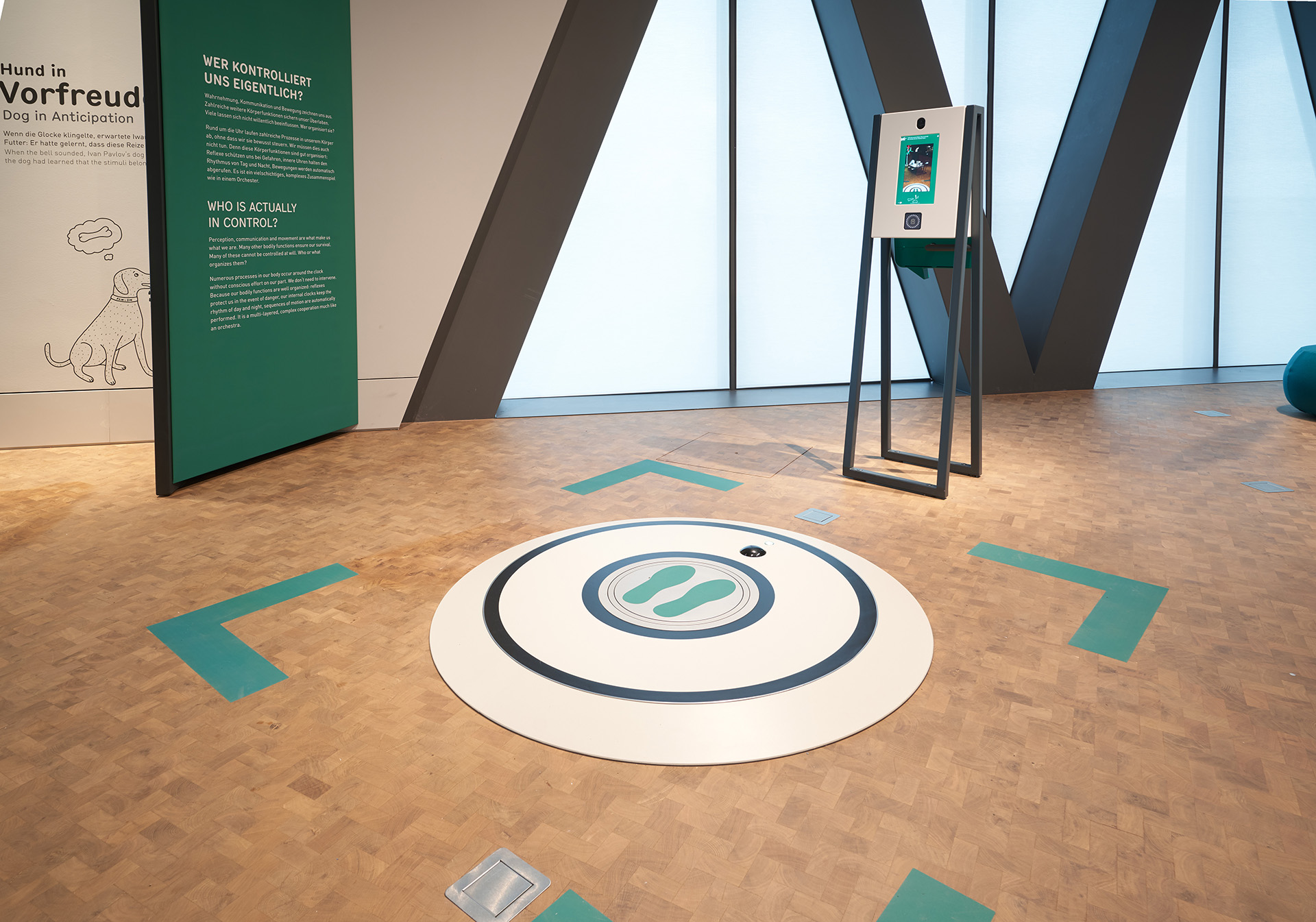
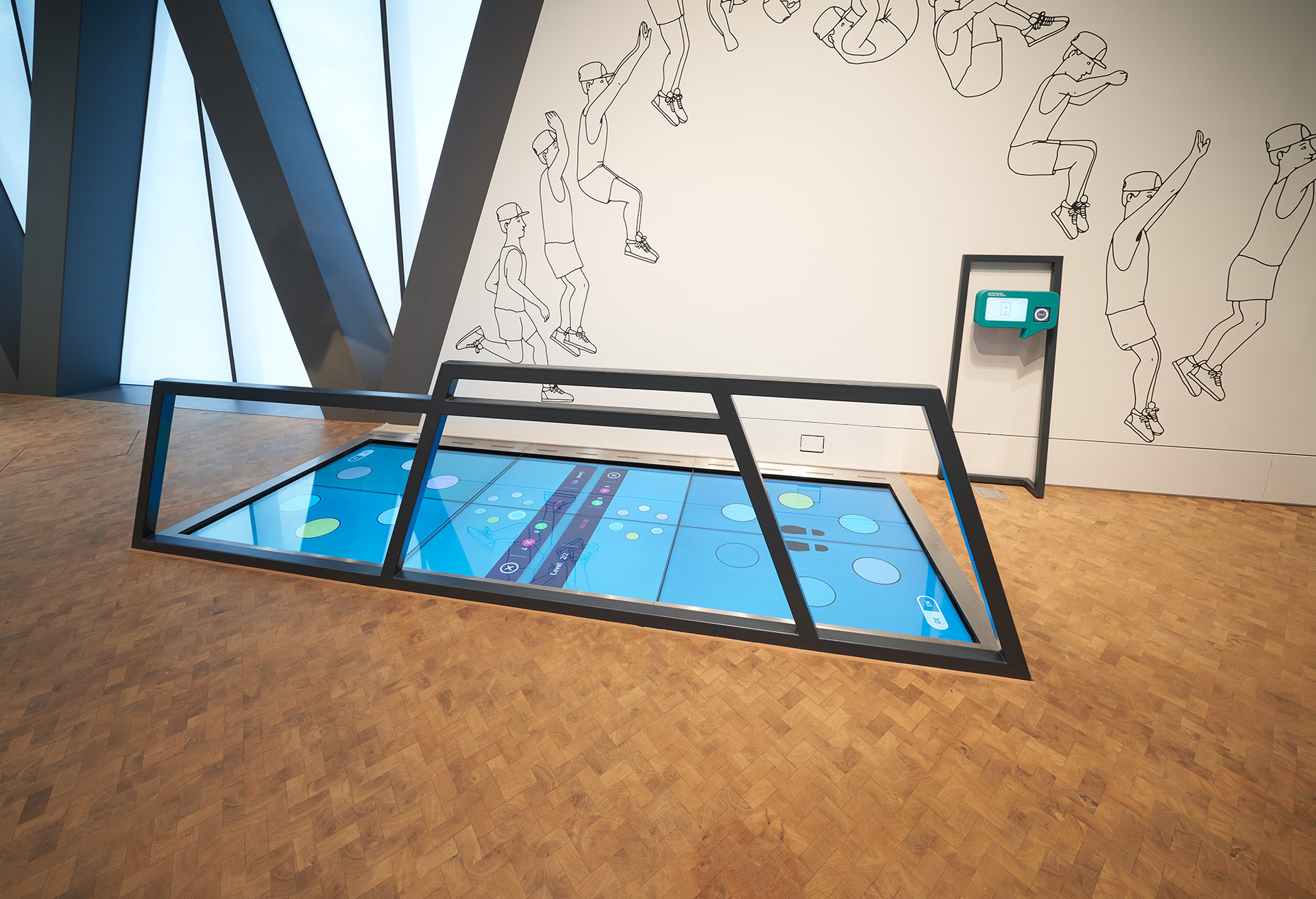
At this station, we look at the movement of our feet. We are given a direction or know what we want to do. Our brain now has to plan the movement instantly and initiate its execution

Duration:10 min
Floor:OG 2
Keywords:MotionBrain
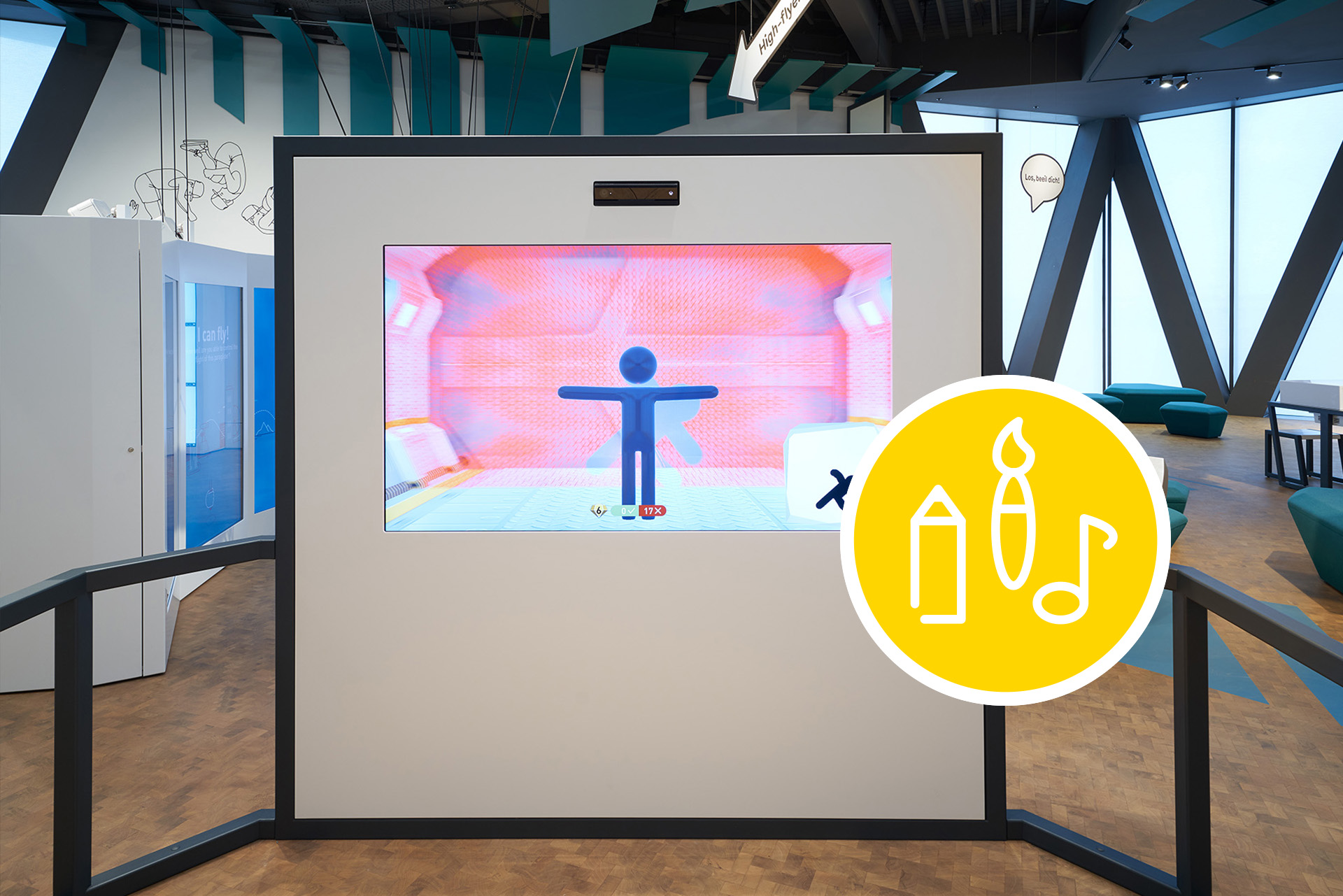
I can fly!

I can fly!

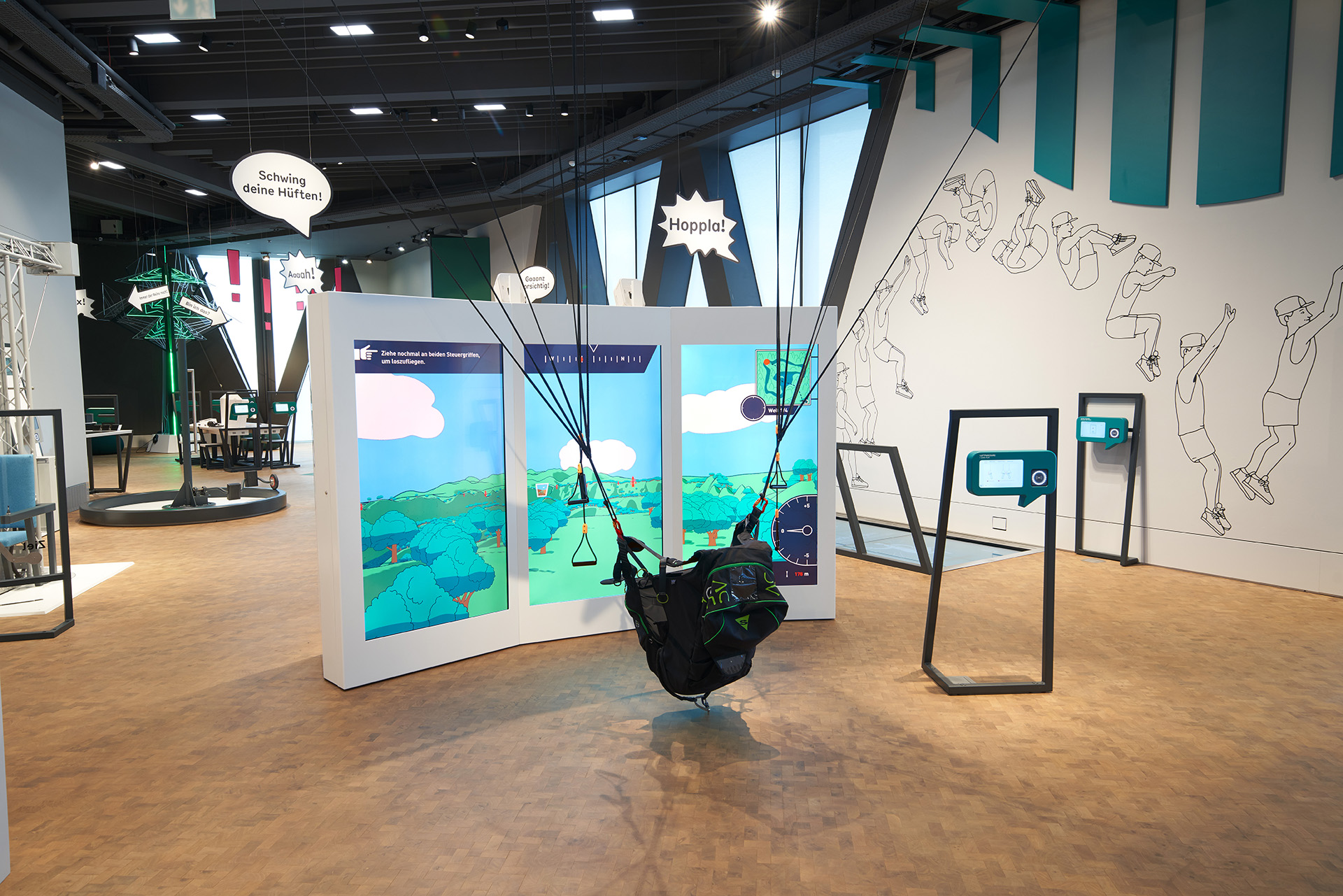
When we fly a glider, we find ourselves in an unfamiliar situation. This is because our feet are no longer on the ground and the body's perception is impaired. Yet those who dare here can fly through many fascinating worlds.

Duration:10 min
Floor:OG 2
Keywords:VehiclesHistorySociety +4
Is it real?

Is it real?

We learn very early in life where the outer limits of our body are. These limits are not static, but are influenced by what we see. We let ourselves be "deceived". Experience it at this station.

Duration:6 min
Floor:OG 2
Keywords:BrainAnthropologyBody functions +2
Step by Step

Step by Step

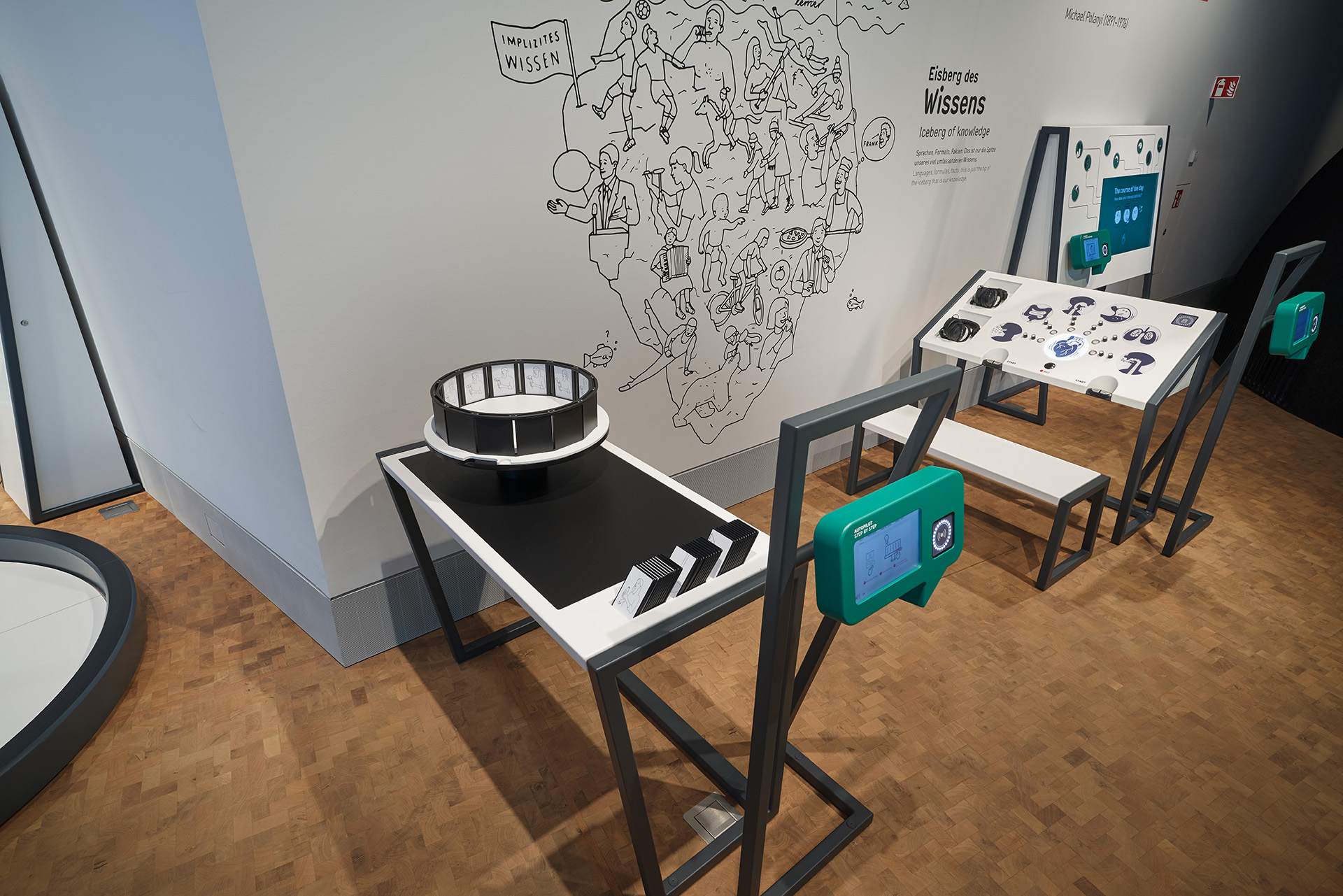
When we perform countless movements every day virtually automatically, there is something behind it: a long learning phase. Many everyday sequences of motion consist of many small steps - as this station convincingly demonstrates.

Duration:10 min
Floor:OG 2
Keywords:BrainMotion
Follow the Directions

Follow the Directions

We don't always react at the same speed. A number of factors influence our reaction time. These include external influences such as loud music. You can test your reaction time at this station.

Duration:5 min
Floor:OG 2
Keywords:HealthMusicScience +6
A Sense of Time

A Sense of Time

We don't have an organ that we can use to perceive the duration of time directly. The perception of time is a complex process. How well we are able to guess short periods of time is the topic of this station.

Duration:5 min
Floor:OG 2
Keywords:SocietyHealth
As the Day progresses

As the Day progresses

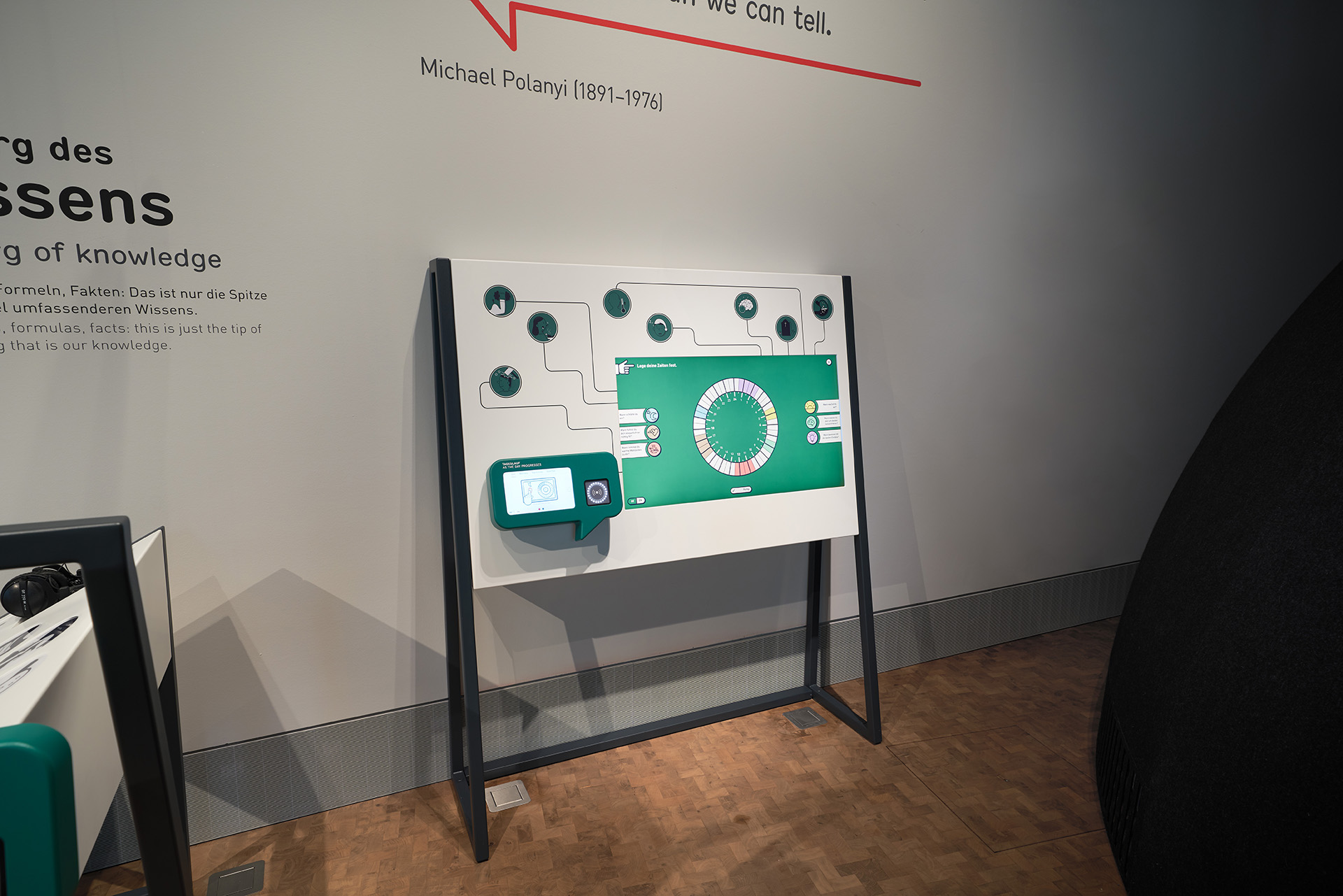
Many connected internal clocks organize numerous processes in our body. Daylight helps synchronize bodily processes with the environment. This is the basis of our body's daily rhythm.

Duration:5 min
Floor:OG 2
Keywords:StatisticsSensesScience +2
Camera Traps

Camera Traps

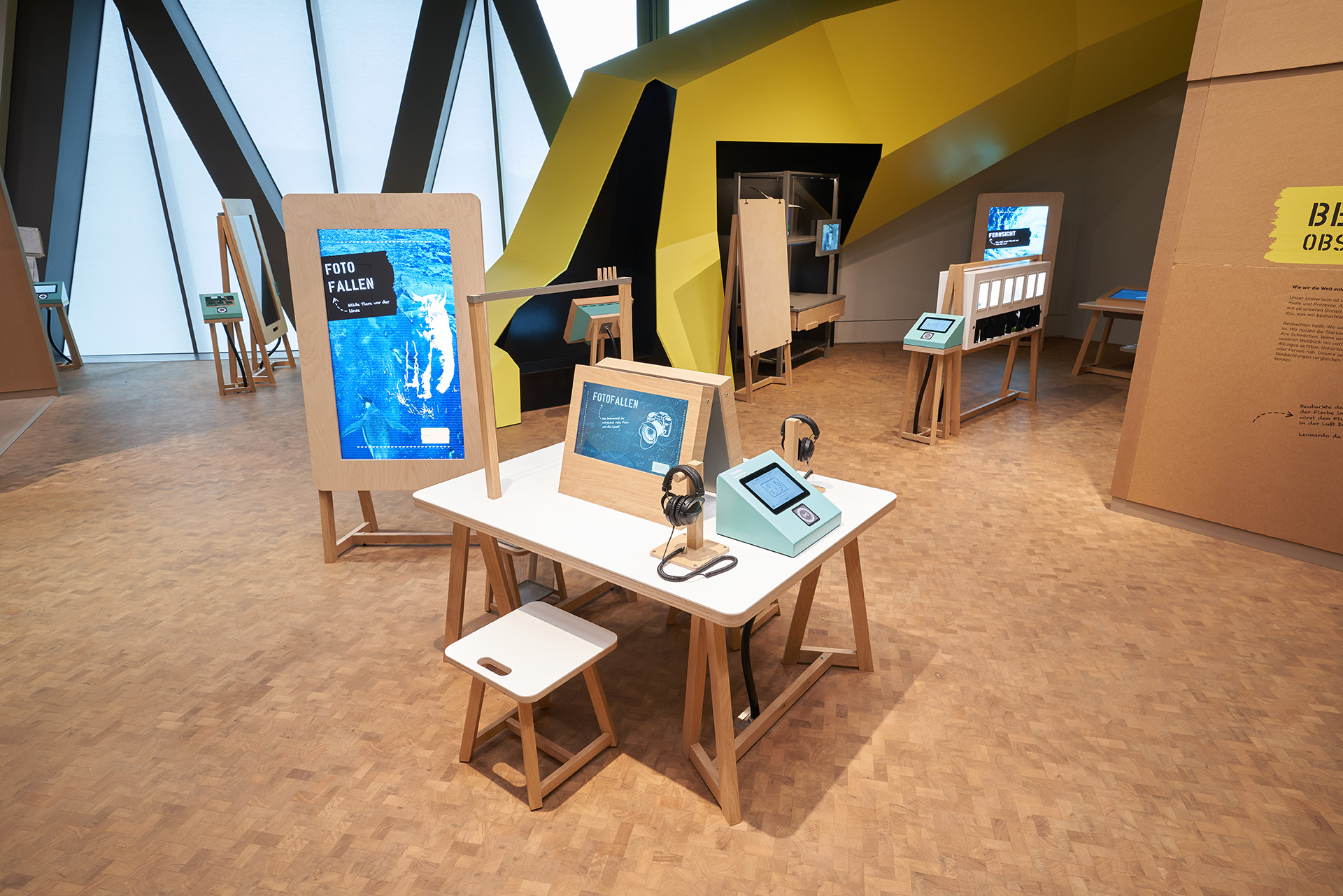
Camera traps provide surprising glimpses of animal behavior that would otherwise be unobserved. They thus play an important role in the observation of nature. At this station, your job is to install camera traps in a fictitious world.

Duration:10 min
Floor:OG 3
Keywords:MotionBiologyData +1
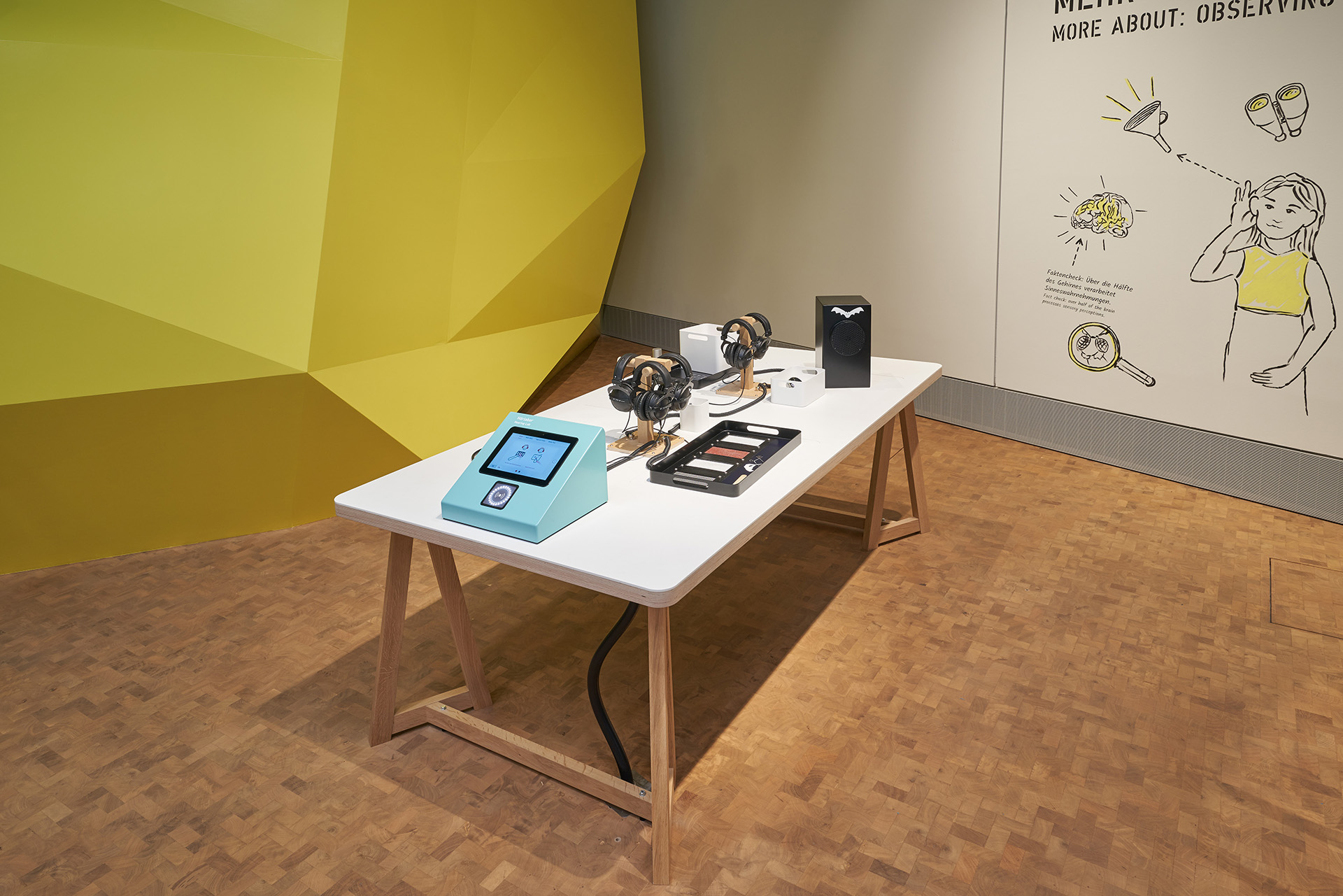
Hearing Lab

Hearing Lab

At this station, electronic amplification makes soft sounds audible, the frequency range of hearing is shifted and you can experiment with structure-borne sound.

Duration:10 min
Floor:OG 3
Keywords:AcousticsBrainHealth +4
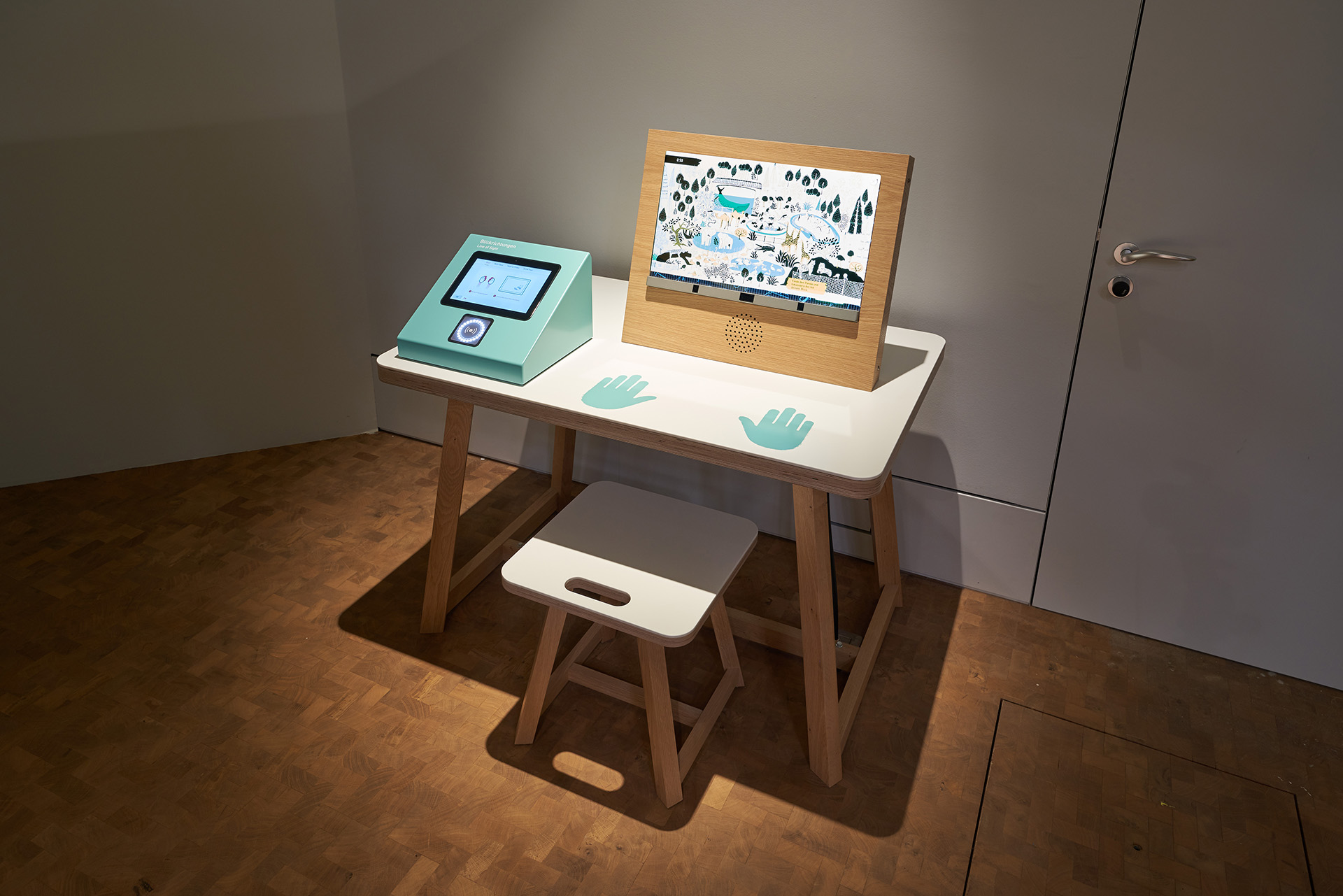
Line of Sight

Line of Sight

Which way do we look first? Many factors influence the movements of the eye. Eyetracking has become a very important area of research in recent years. Examples at this station demonstrate how it works.

Duration:5 min
Floor:OG 3
Keywords:DataHealthBrain +3
Sense of Touch

Sense of Touch

Using our hands, we perceive the very different information about the world around us, such as an object's size, weight, shape, solidness, surface and temperature. This station has several tests of our sense of touch.

Duration:10 min
Floor:OG 3
Keywords:BrainHealthSenses +1
Distant Vision

Distant Vision

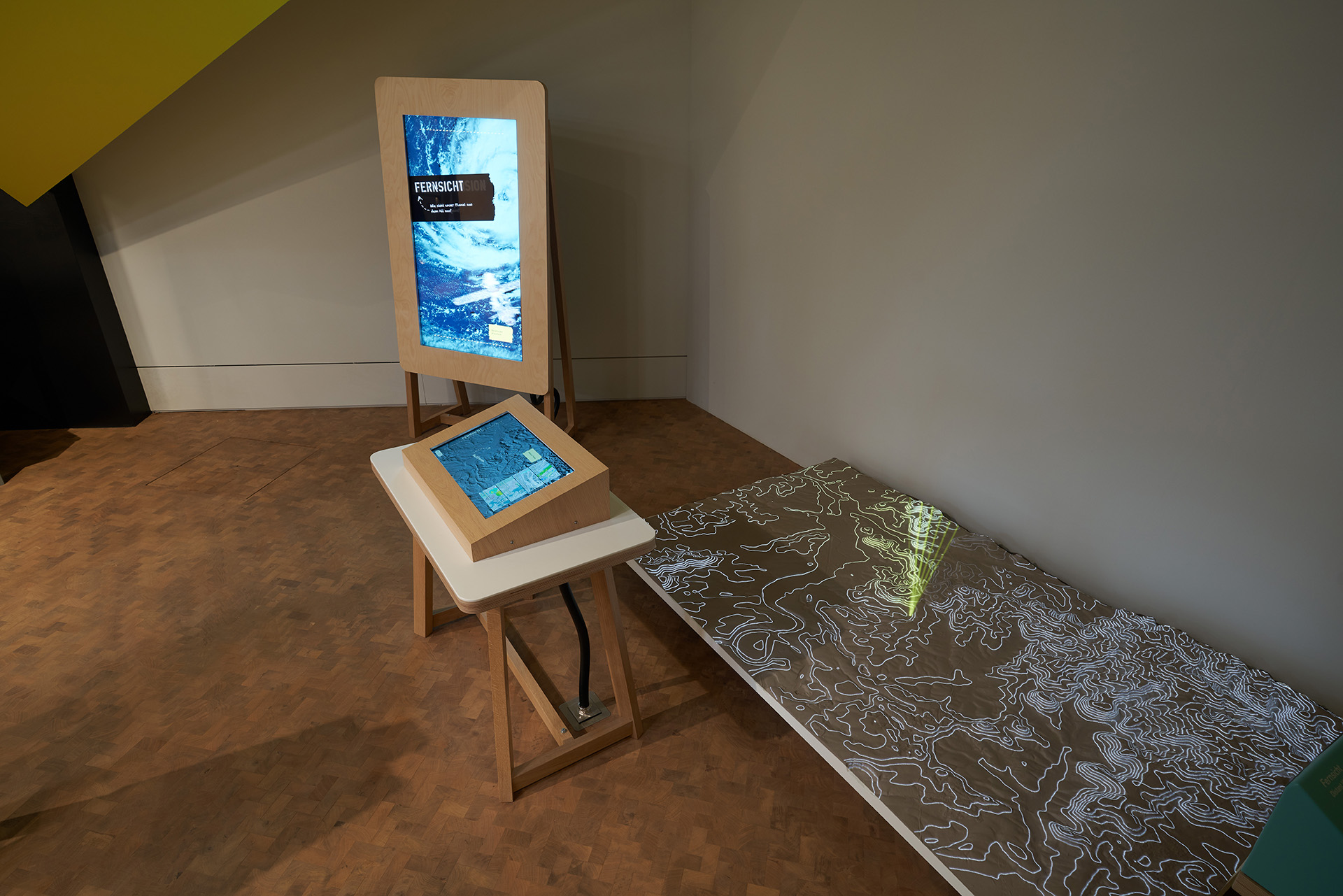
Satellite observations have considerably changed how we see our earth over the past decades. The wide range of information these satellites provide today is shown at the station using the example of the Heilbronn region.

Duration:10 min
Floor:OG 3
Keywords:AstronomyDataEarth processes +5
The shrinking Machine

The shrinking Machine

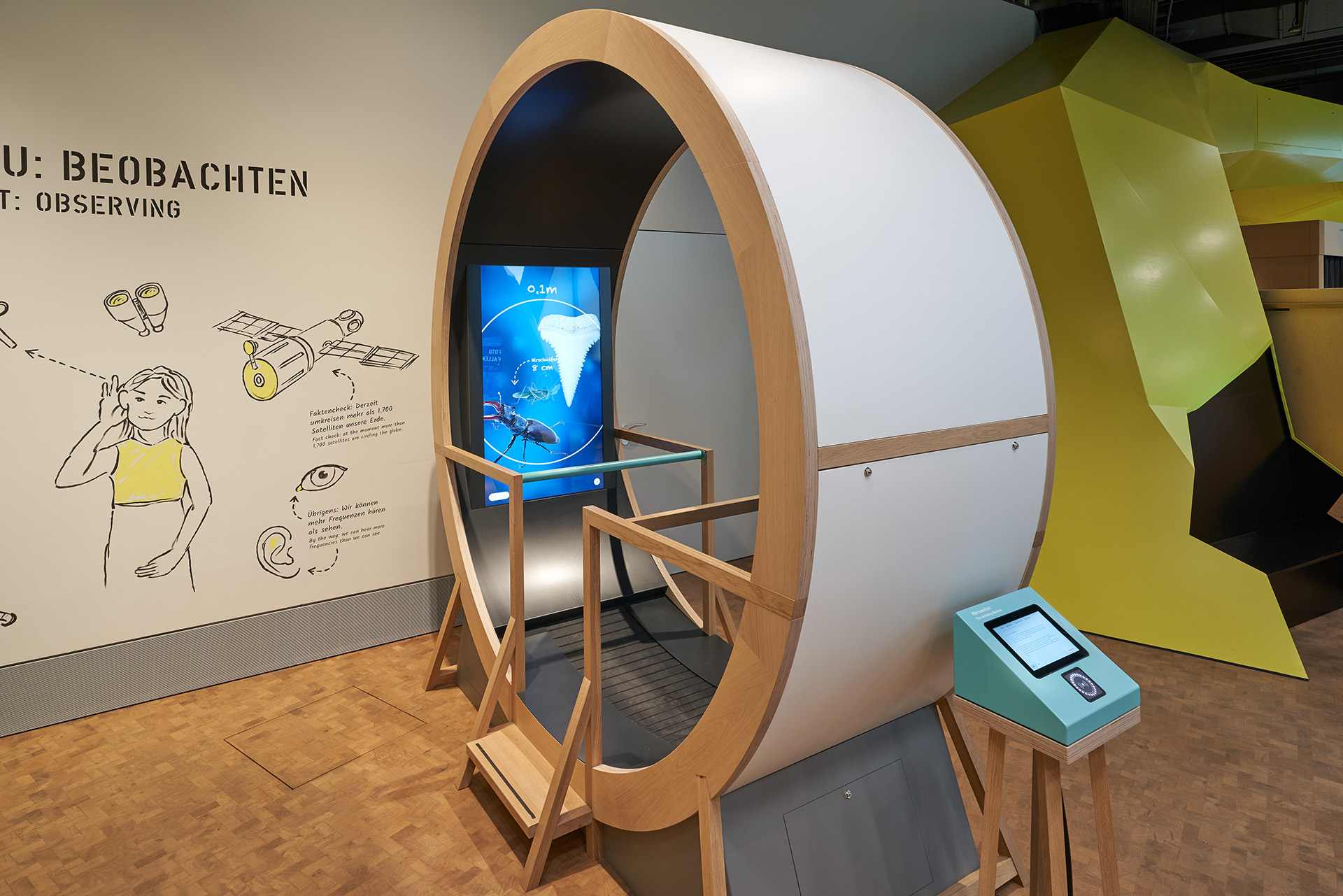
The microscopic world spans many orders of magnitude. A specific size gives objects their special characteristics. This walk through the microscopic world provides fascinating insight.

Duration:5 min
Floor:OG 3
Keywords:BacteriaBiologyData +7
Is that me?

Is that me?

A drawing is very different from a photograph. Only the essential is depicted or important information added. This is readily apparent in this depiction of yourself.

Duration:8 min
Floor:OG 3
Keywords:FormBrainSociety +5
Reflected Motion

Reflected Motion

At this station simple geometric objects and our bodies are depicted using only five dots. The challenge is to move the dots until they agree with corresponding position of the body.

Duration:5 min
Floor:OG 3
Keywords:MotionBiophysicsForm +2
Inside the Earth

Inside the Earth

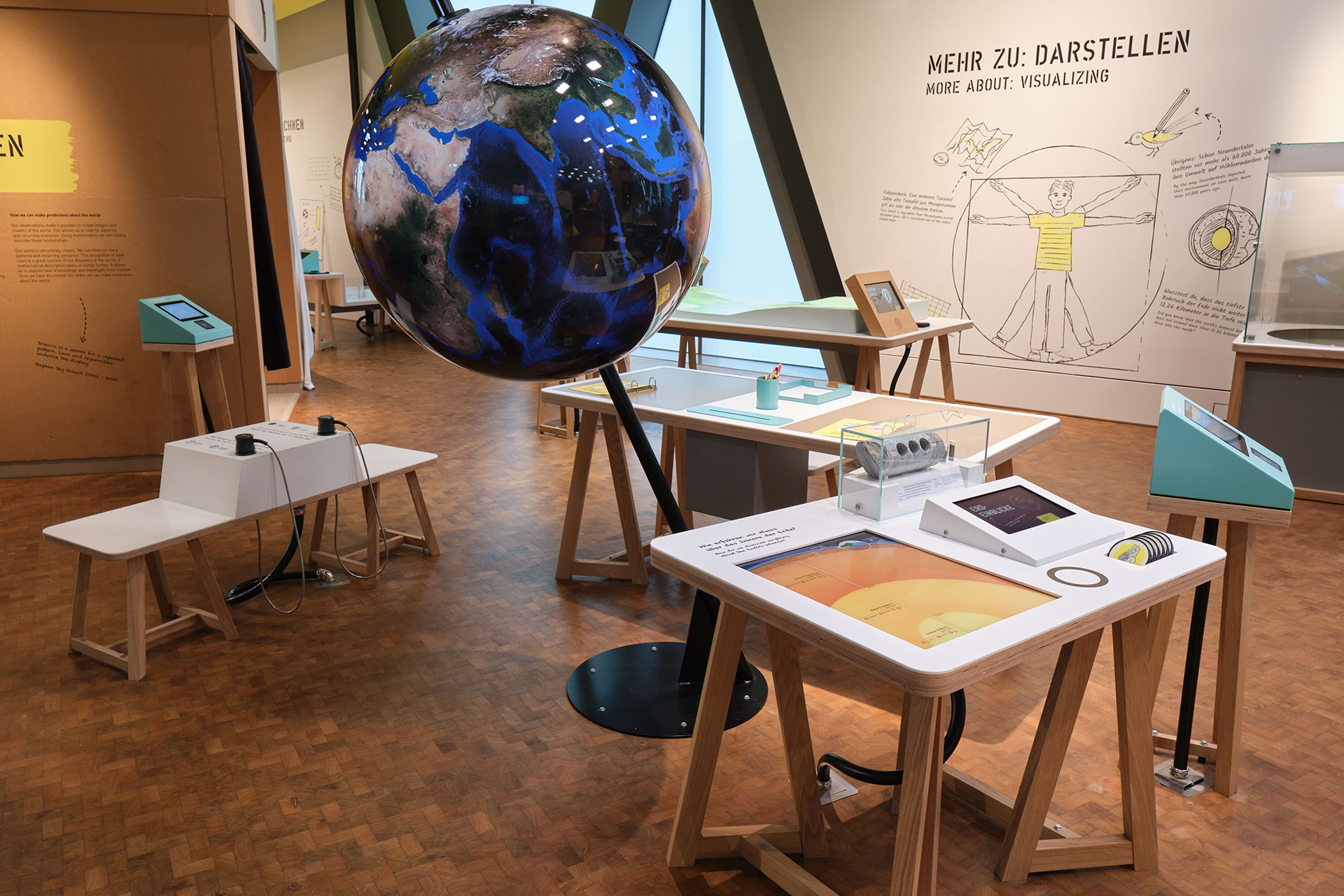
The interior of the Earth is inaccessible to us humans. Discover how we can nevertheless learn something about the inside of the Earth, listen to the sounds of the Earth and develop your own thoughts about what is going on deep inside our Earth.

Duration:5 min
Floor:OG 3
Keywords:EducationSoilEarth processes +7
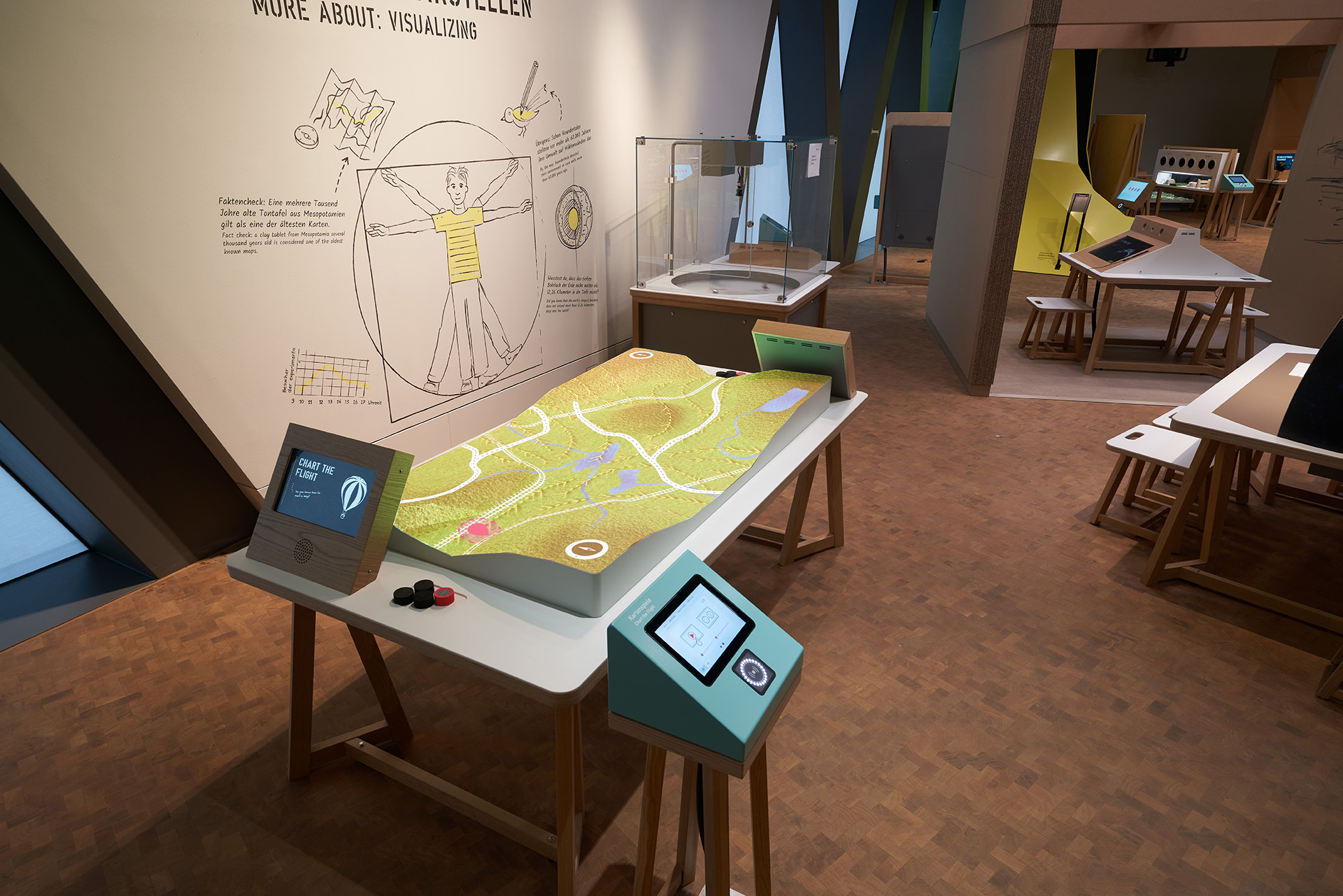
Chart the Flight

Chart the Flight

Maps are not true representations of our environment. The mission balloonist will only be found by the person who cleverly combines different maps.

Duration:10 min
Floor:OG 3
Keywords:MotionDataLogic +3
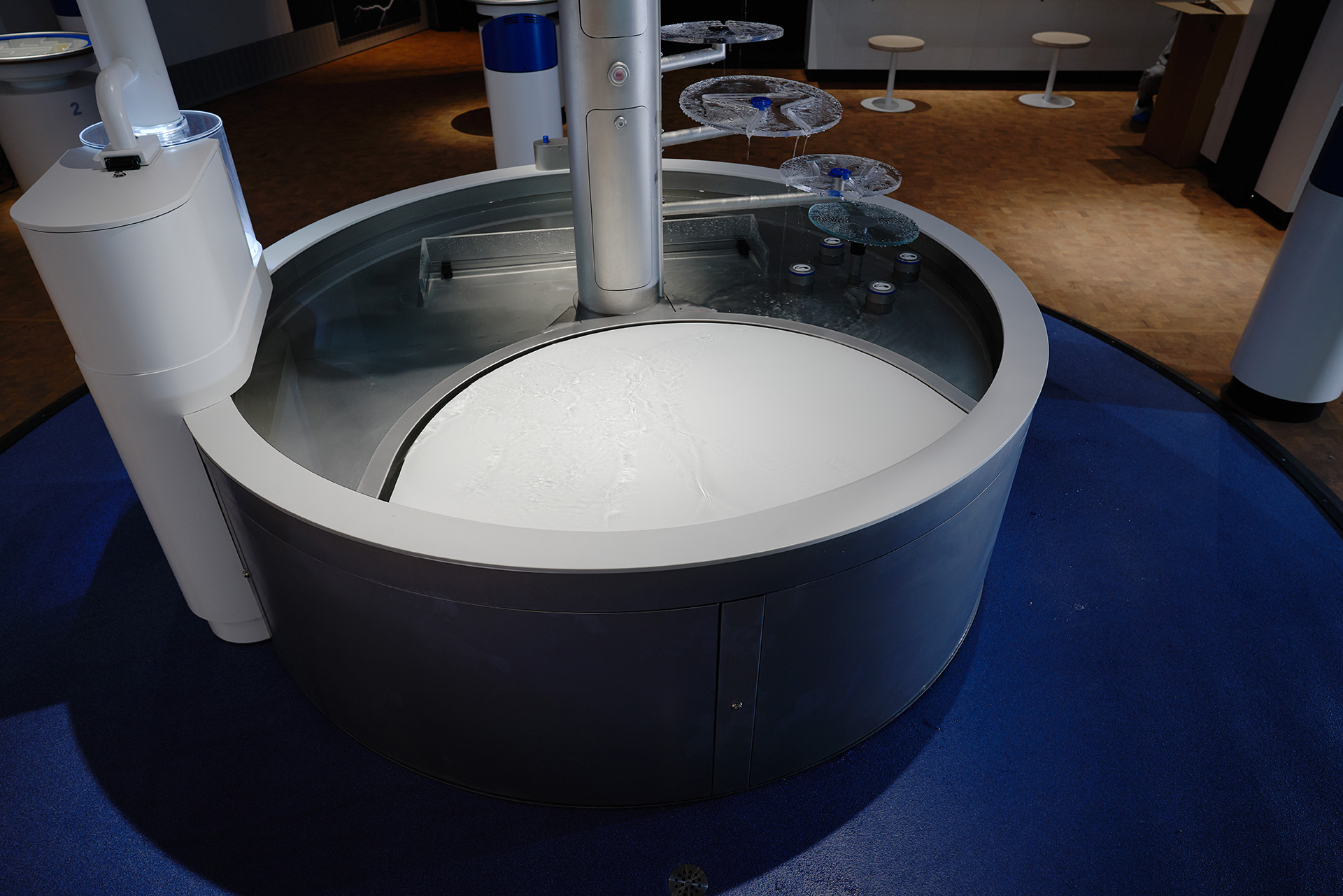
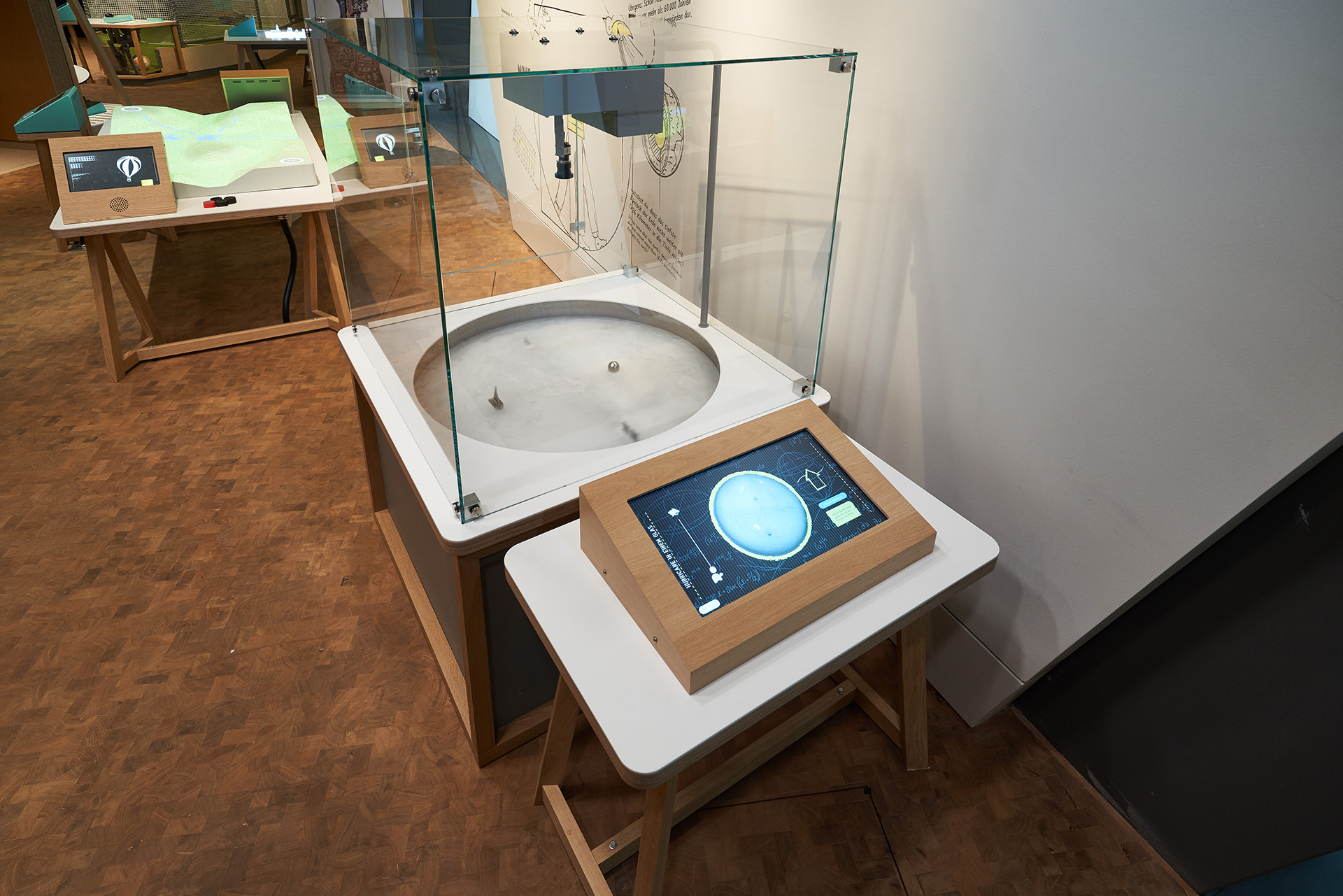
Vortex Studies

Vortex Studies

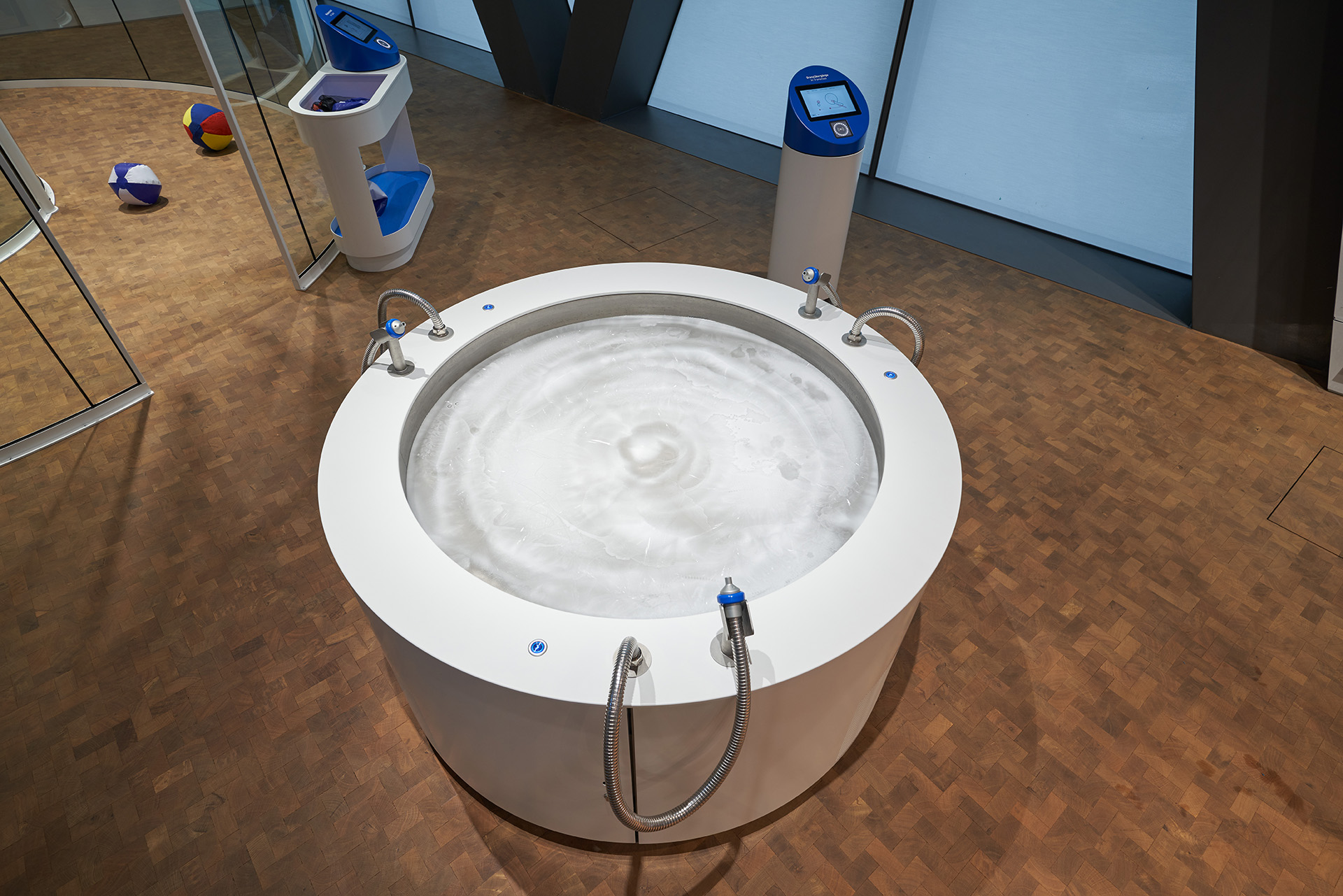
Whether winds or seas: major currents influence the weather and climate on earth. In the rotating pools, currents and eddies can be observed from outside or from the perspective of the rotating camera.

Duration:10 min
Floor:OG 3
Keywords:MotionDataOceans +3
Test Run

Test Run

An experiment rarely succeeds the first time. Several attempts are generally needed. It is something we are more than familiar with in our daily lives, for example when we train sequences of motion. How many attempts does this task take?

Duration:5 min
Floor:OG 3
Keywords:MotionHealthPhysique +3
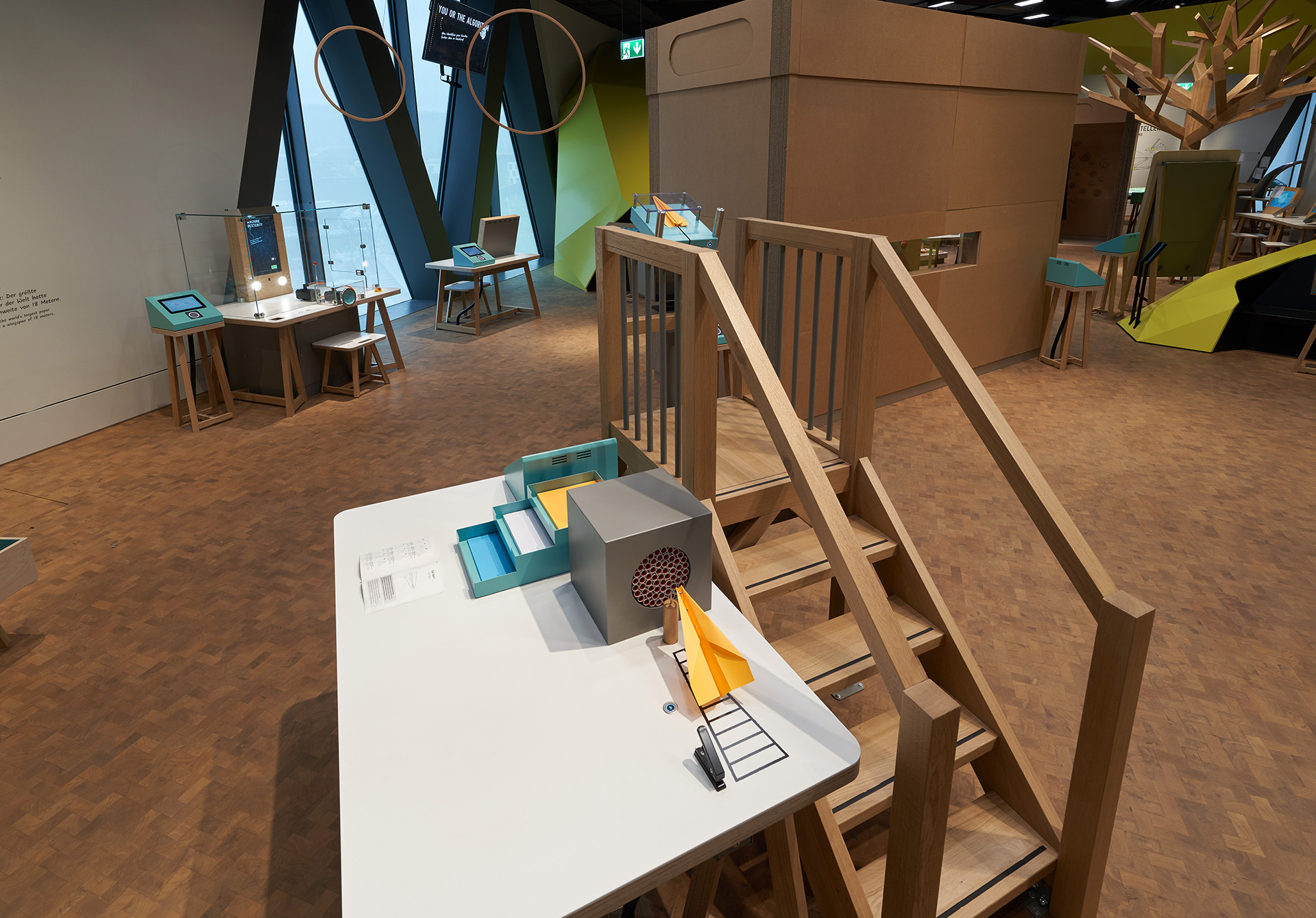
Flight Trials

Flight Trials

Many aviation pioneers studied flight qualities of their aircraft using paper models. After a careful test, the planes can also take off at this station.

Duration:10 min
Floor:OG 3
Keywords:BuildingMotionEnergy +4
A delicate Balance

A delicate Balance

In theory, some things may seem quite simple, like this balance puzzle. The practical implementation, however, requires patience and a careful approach. Occasional failure is not excluded.

Duration:12 min
Floor:OG 3
Keywords:BuildingFormCreativity +3
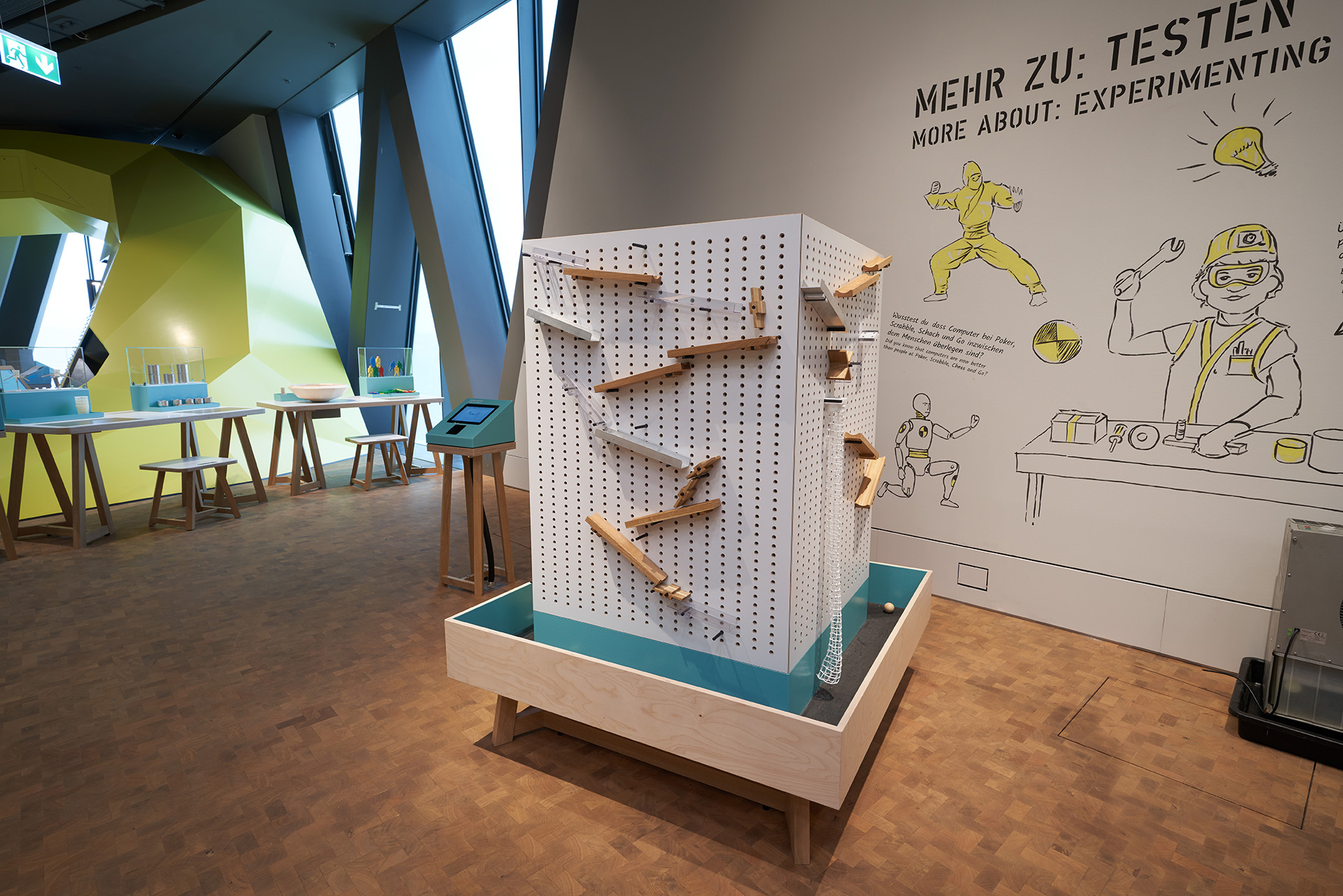
Change the Sequence

Change the Sequence

Many different track elements can be put together to build new ball tracks. Whether the effects all work as anticipated is then seen in the test. Does the ball roll to the end or does it get stuck?

Duration:15 min
Floor:OG 3
Keywords:BuildingMotionDesign +5
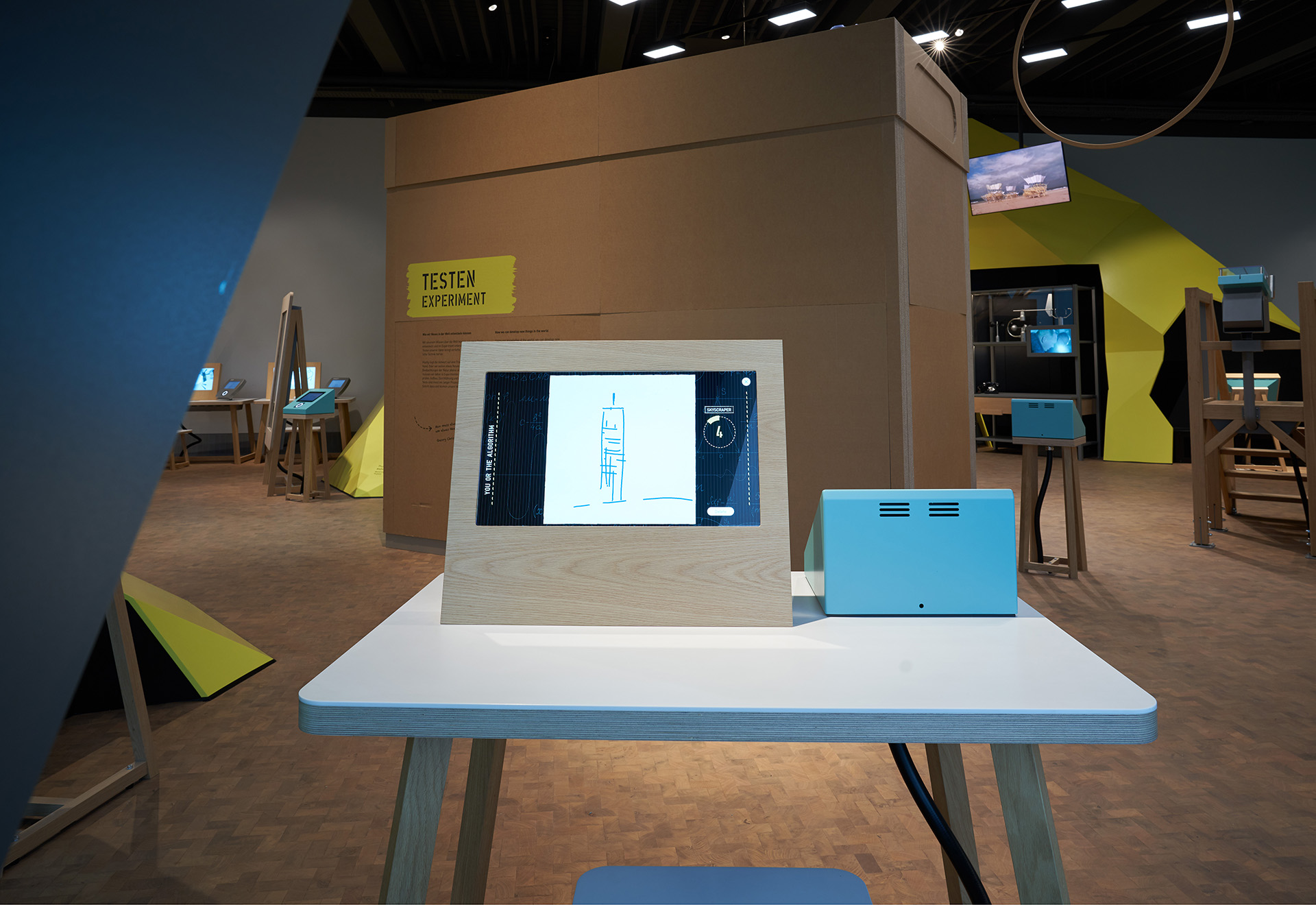
You or the Algorithm

You or the Algorithm

Computers are able to learn. This is reflected in the buzzword "artificial intelligence". This computer system has learned more than 100,000 images. Does it recognize freehand sketches faster than a human?

Duration:5 min
Floor:OG 3
Keywords:DataColourForm +6
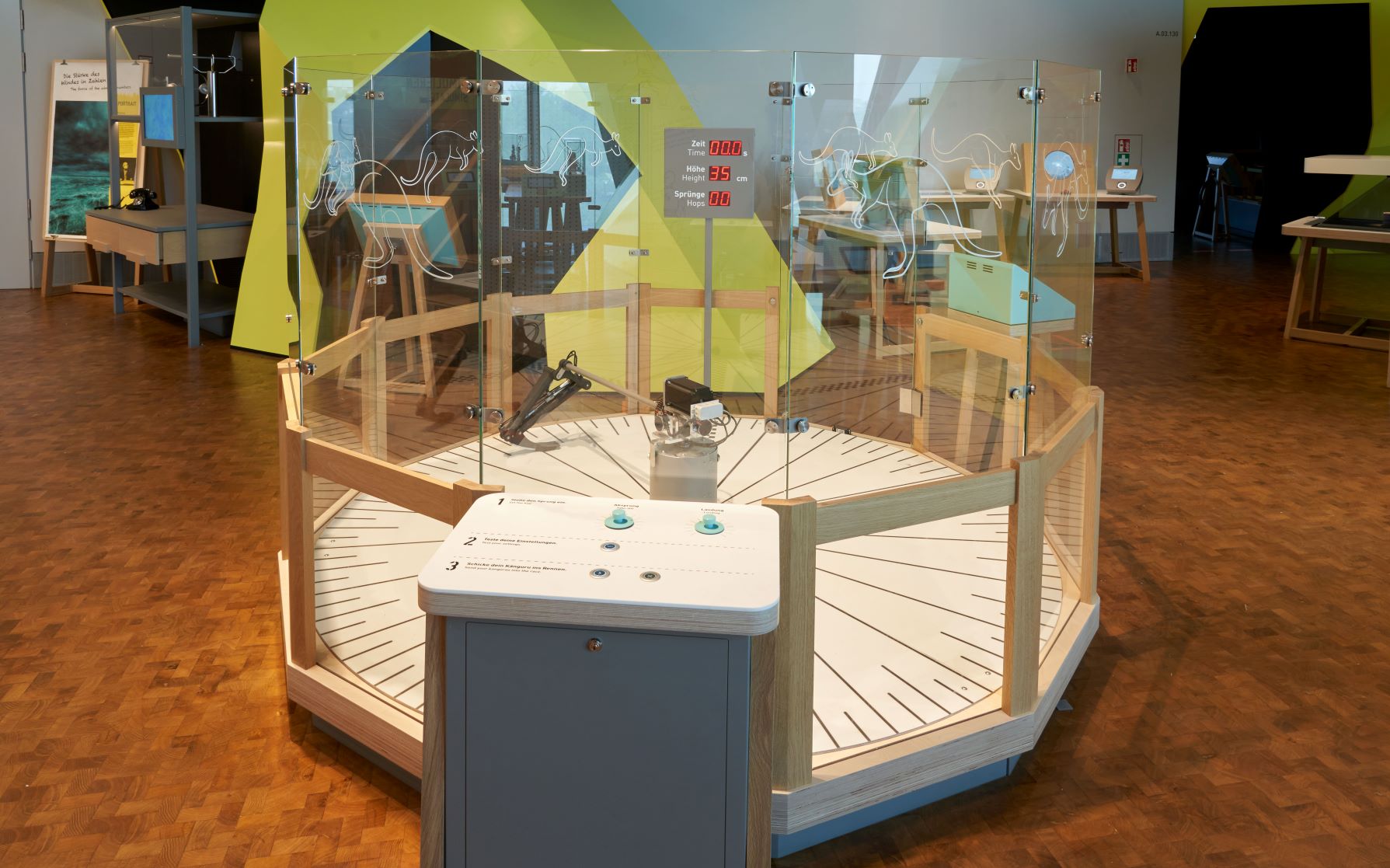
Kanga-bot

Kanga-bot

This experimental model of a kangaroo makes it clear: the setting of various parameters makes it possible for it to make different types of leaps. Several options are now available to implement apparently optimum leaps.

Duration:5 min
Floor:OG 3
Keywords:MotionBuildingBiophysics +5
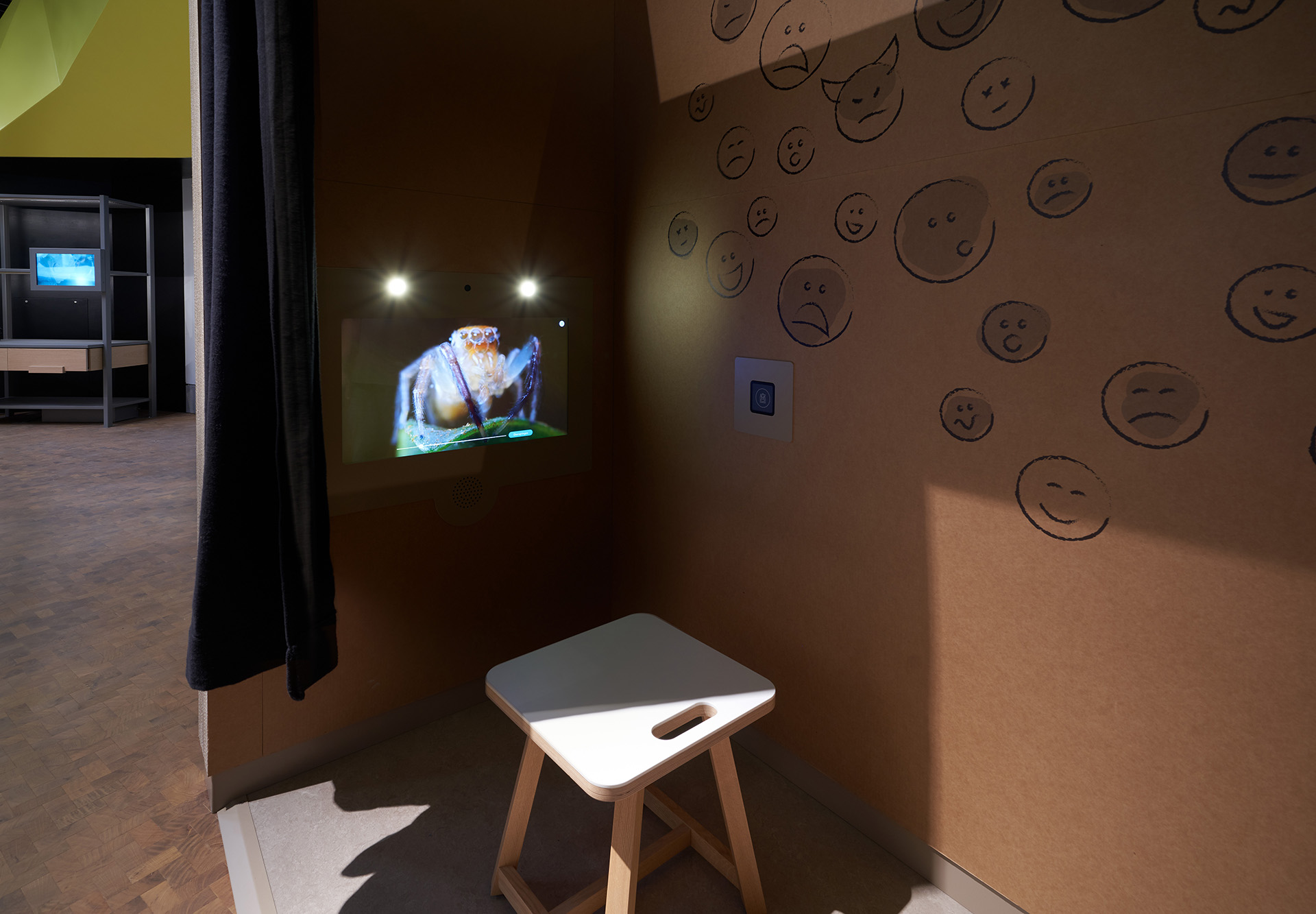
Did you crack a Smile?

Did you crack a Smile?

Joy, anger, revulsion, fear, sadness or surprise: how well are computers able to understand feelings? Slight facial movements can be coded by computers and allocated to different emotions.

Duration:6 min
Floor:OG 3
Keywords:MotionDataCommunication +3
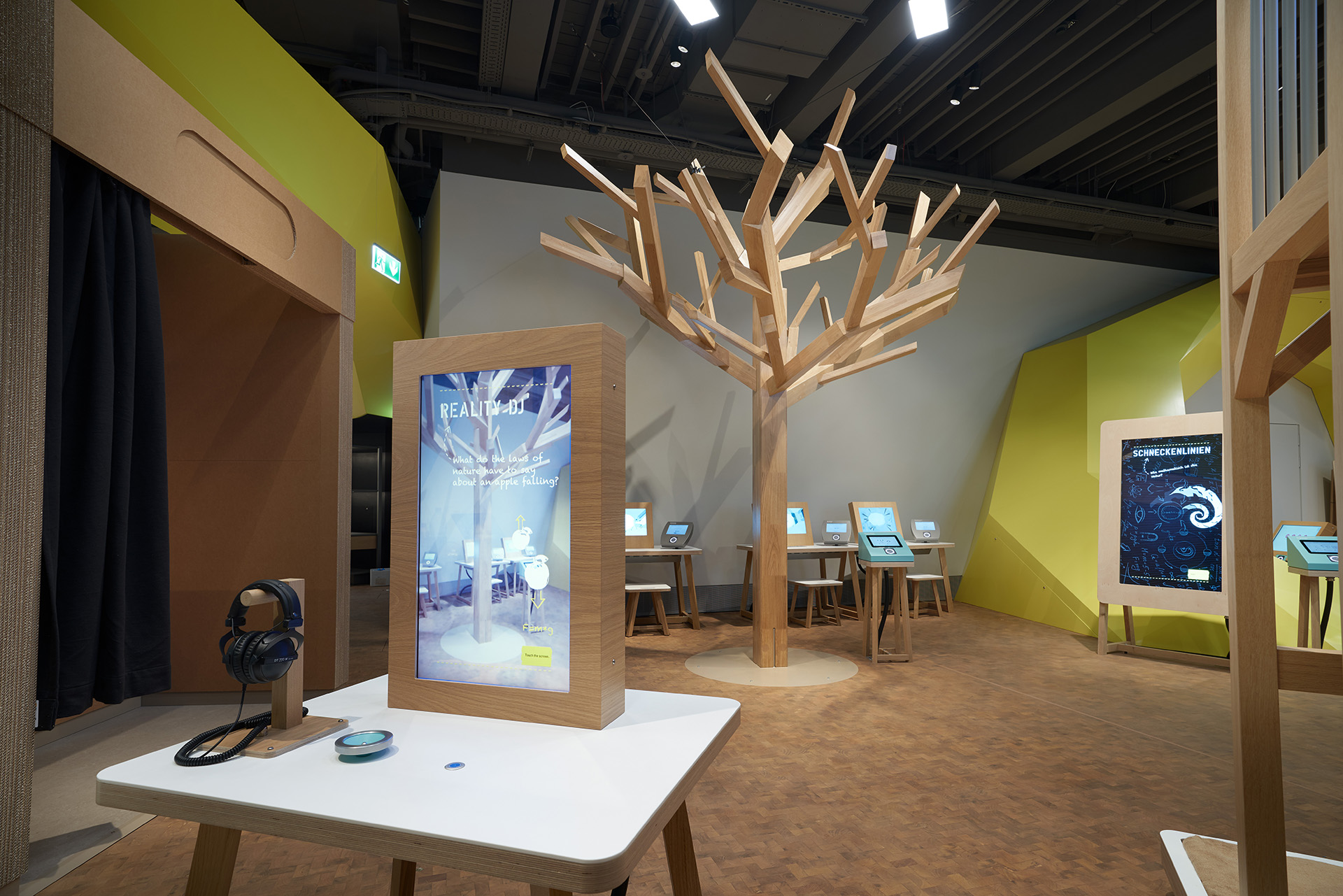
Newton's Apples

Newton's Apples

With the help of the laws of nature we can calculate processes in advance. To what extent they accurate is revealed by comparing them to the real world. It can help in this process to change the laws of nature consciously.

Duration:5 min
Floor:OG 3
Keywords:PhysicsPerceptionScience
Statistical Pursuit

Statistical Pursuit

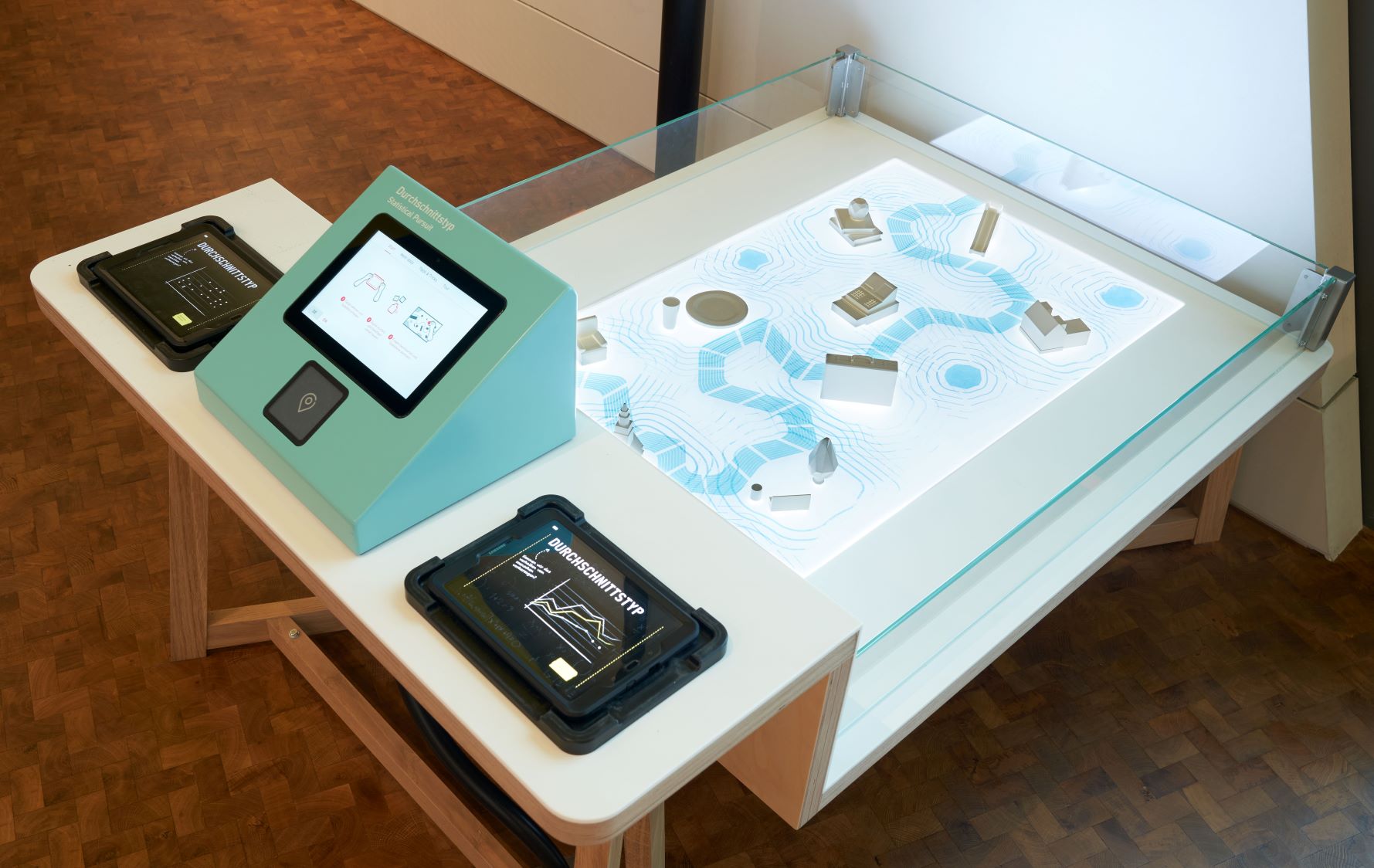
We make countless personal decisions every day. However, when observing a very large number of people, we discover surprising patterns and regularities. Societal trends and developments like these can be experienced at this station.

Duration:10 min
Floor:OG 3
Keywords:DataEvolutionSociety +3
Outsmart the Goalie

Outsmart the Goalie

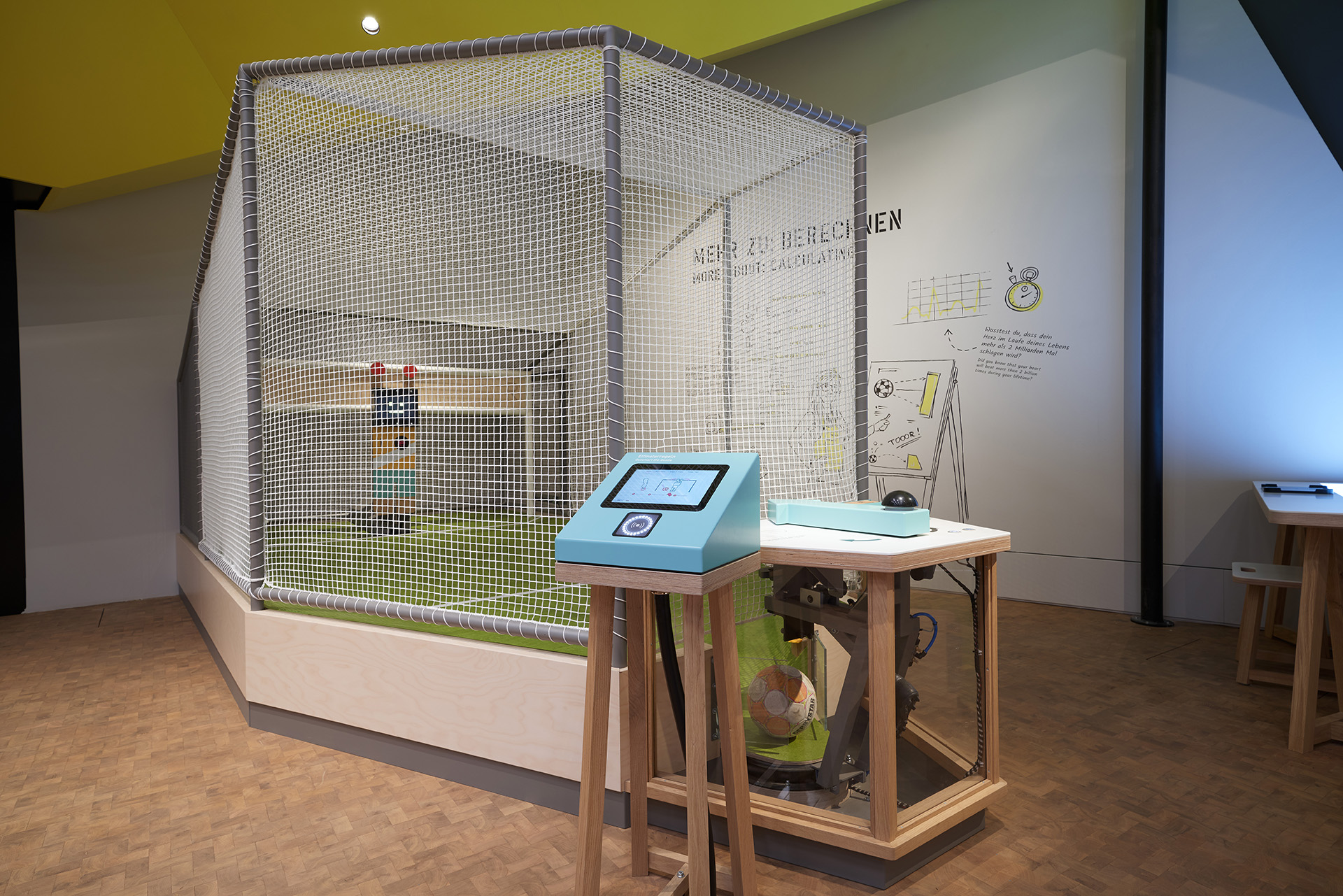
The goalie here follows a rule. To discover it, you need to observe what he does carefully. Individual rules can be excluded by specific shots at goal. What rule applied for your shot?

Duration:5 min
Floor:OG 3
Keywords:BrainPatternsScience
Drop Tower

Drop Tower

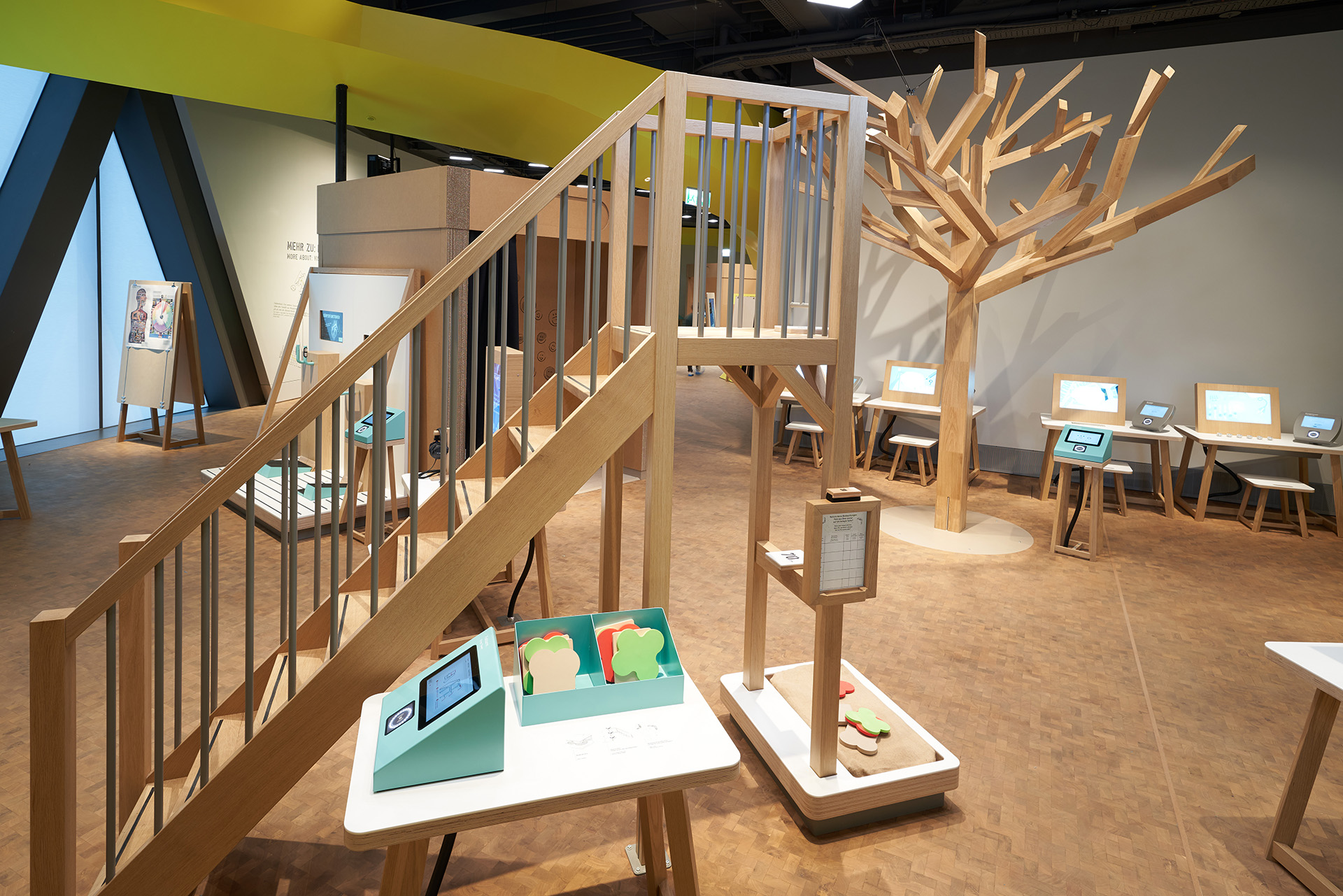
When a piece of bread falls off a plate, it generally lands with the buttered side down. This statement must first be tested by repeated experiments. Additional experiments are then needed to find out why things are the way they are.

Duration:10 min
Floor:OG 3
Keywords:MotionDataForm +4
Snail Trails

Snail Trails

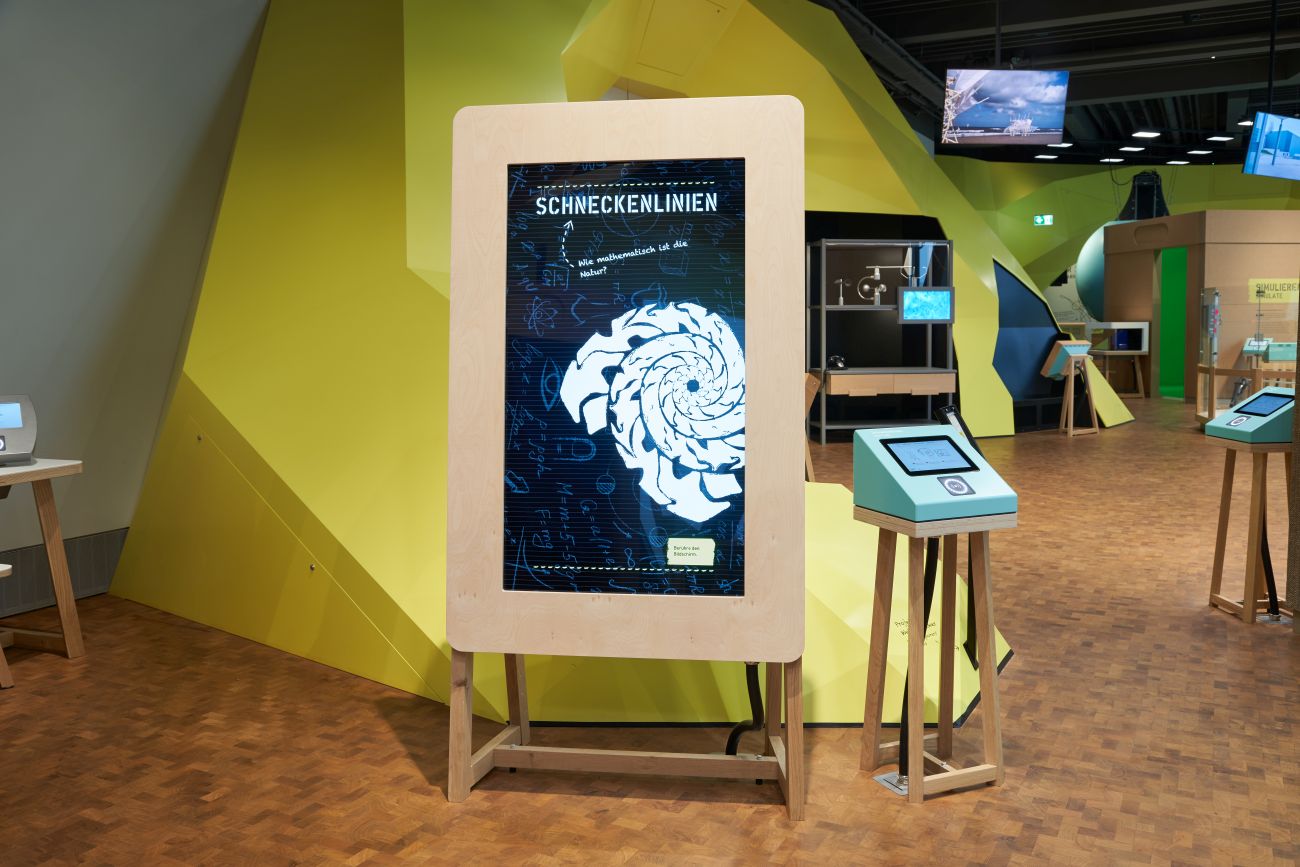
Plants and organisms usually do not follow a "construction plan". Shapes and patterns are the result of gradual growth. And yet there are surprising correlations to mathematics as this station shows.

Duration:5 min
Floor:OG 3
Keywords:BiologyEvolutionForm +6
Me in 3D

Me in 3D

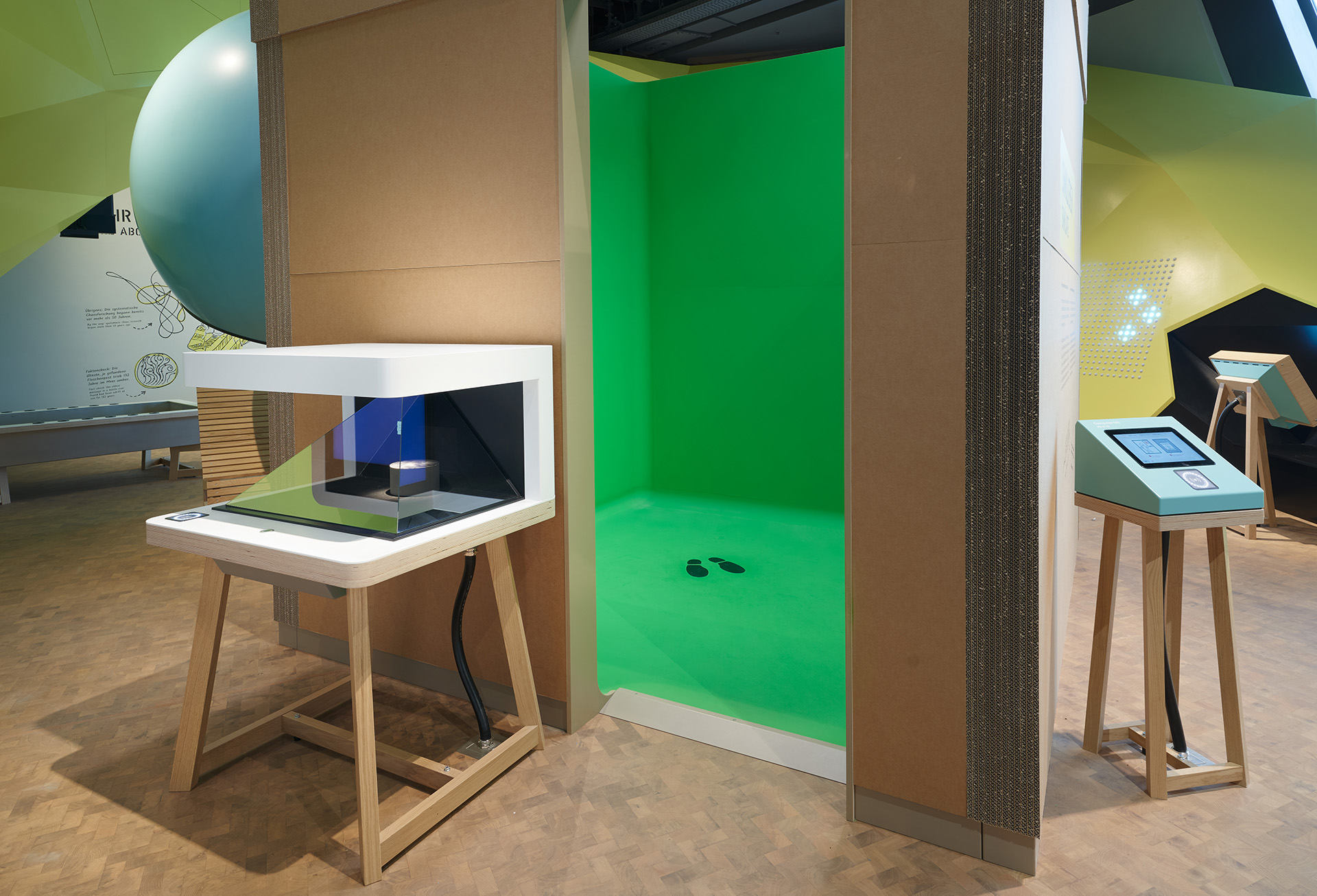
Our world is not flat. Yet in photographs, the information we need about the depth of a space is missing. The computer creates a 3D image of a person from several pictures and adds it to virtual visual worlds.

Duration:5 min
Floor:OG 3
Keywords:DataBrainComputer Science +3
Control the Weather

Control the Weather

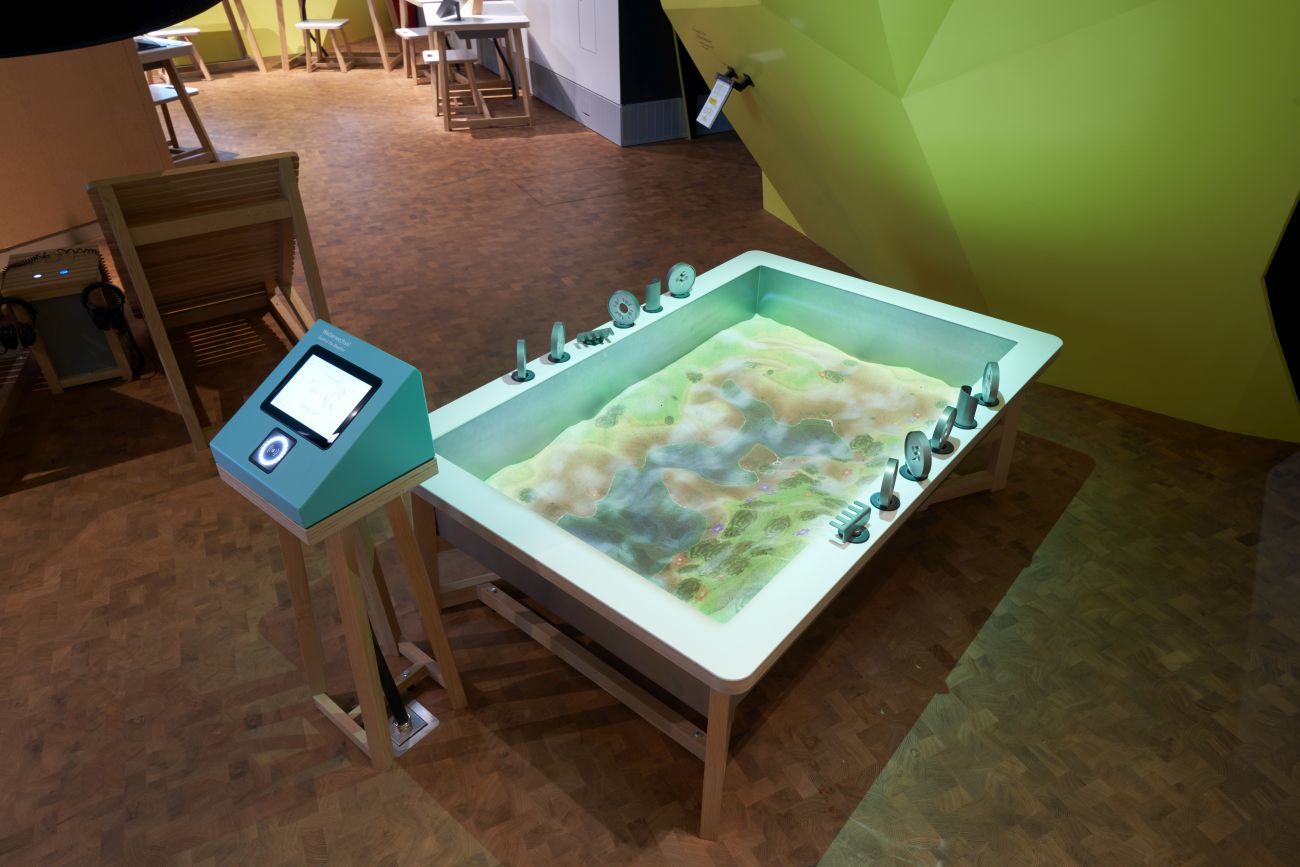
Weather magnifiers trigger a variety effects over the changing sand landscape. The computer adjusts the projection with the help of a camera. We thus see a combination of reality and computer rendering.

Duration:10 min
Floor:OG 3
Keywords:DataFormDesign +4
Control the Crush

Control the Crush

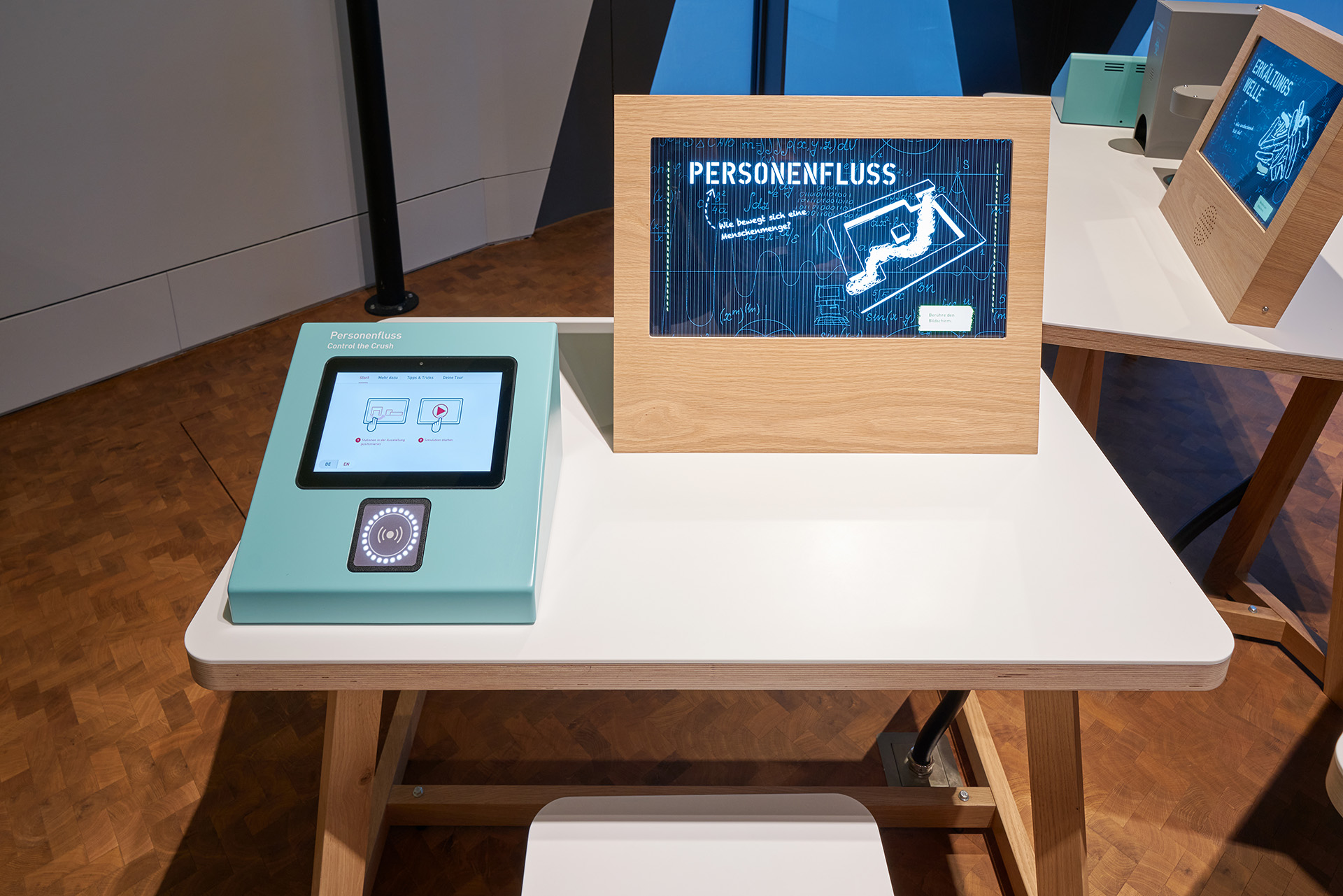
Based on a few basic assumptions, computers today attempt to predict the movement of a large group of people. This can be simulated in the example of changes in an experimenta exhibition

Duration:5 min
Floor:OG 3
Keywords:ArchitectureMotionData +5
Spreading Infections

Spreading Infections

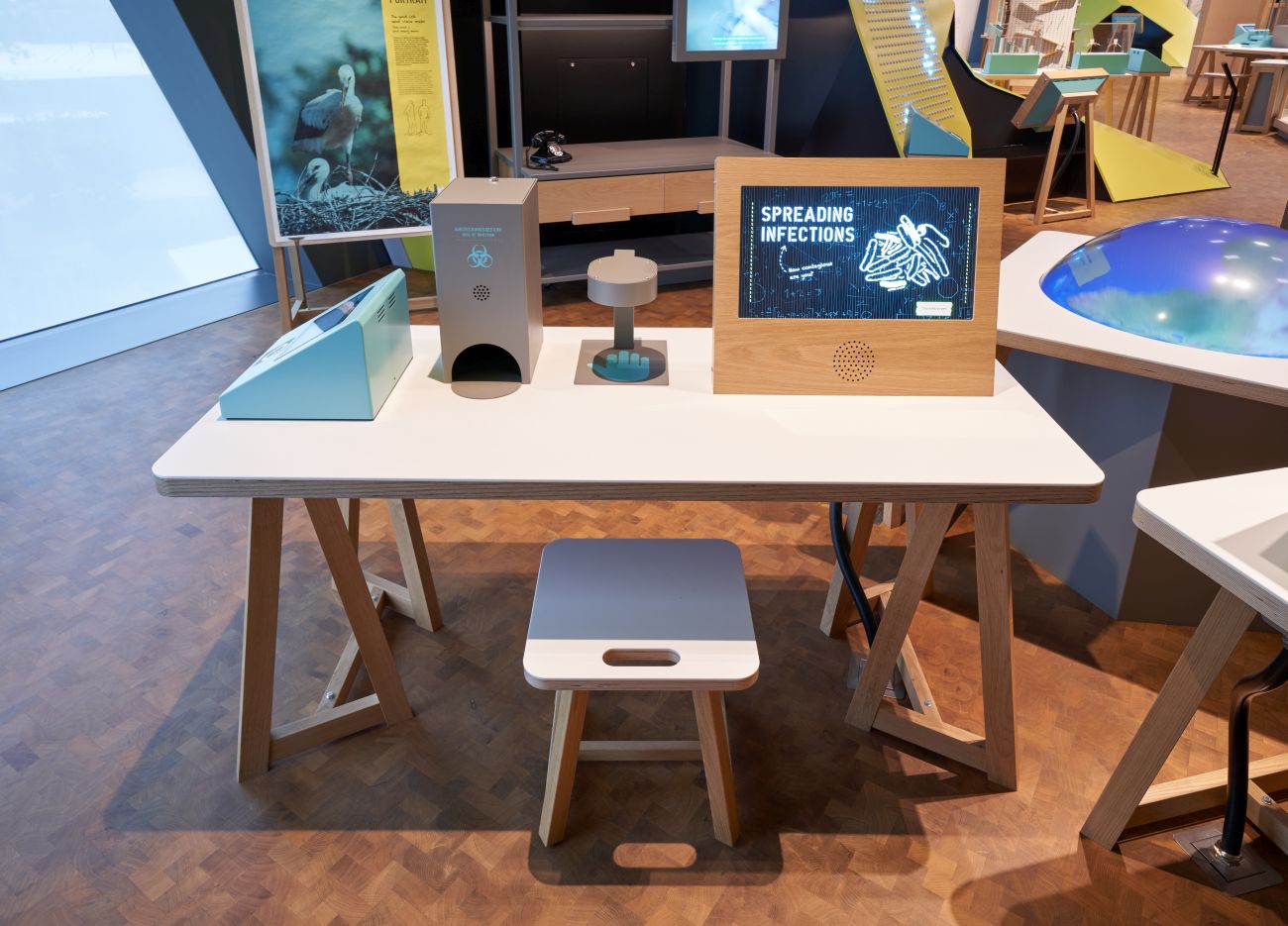
Infectious diseases spread in a different way today than they used to. This is because we behave differently in our daily lives and are much more mobile. Simulations help track the rapid spread of germs more accurately.

Duration:5 min
Floor:OG 3
Keywords:BacteriaMotionData +7
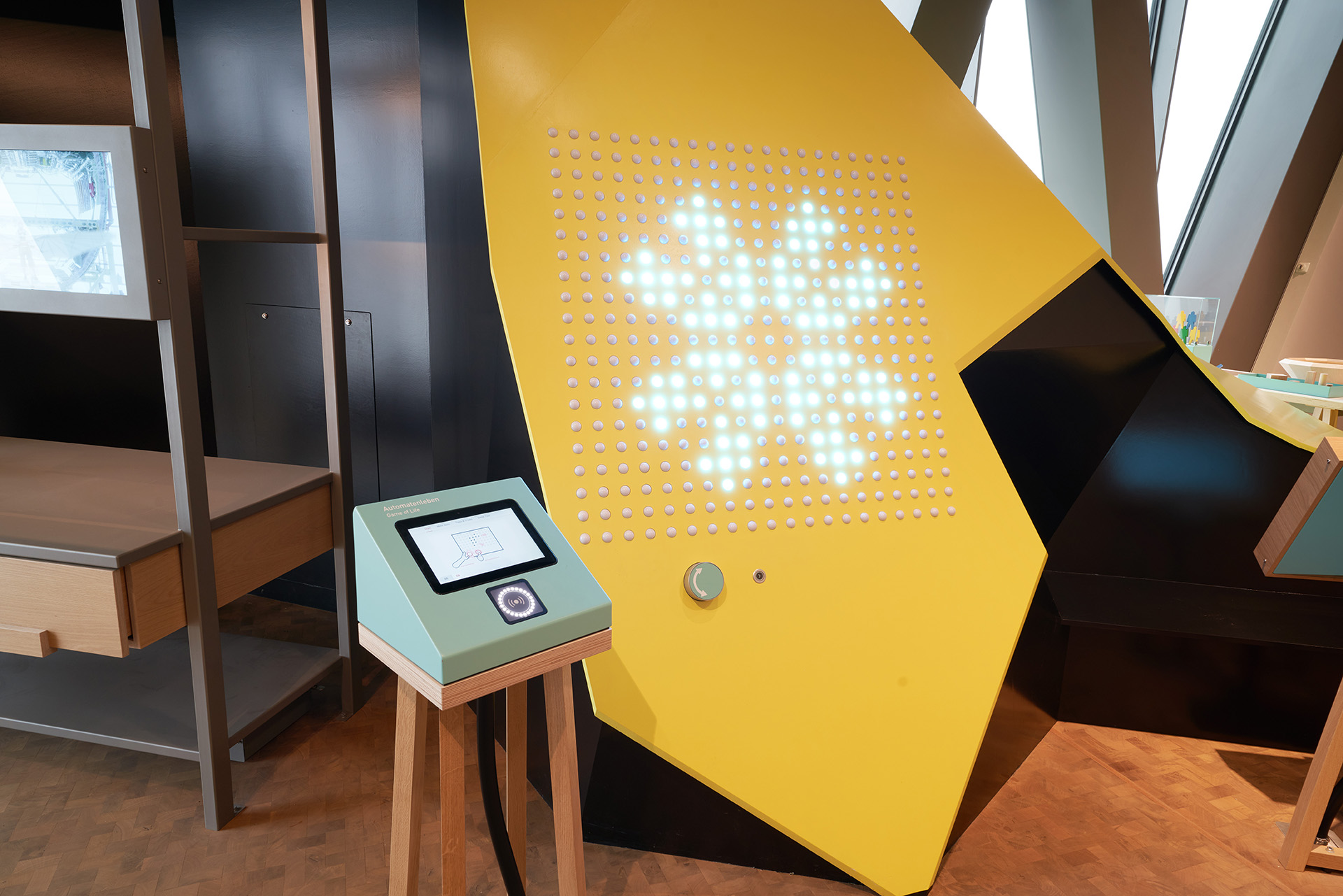
Game of Life

Game of Life

This game was developed by mathematician John Horton Conway in 1970. During the course of the game, a wide variety of sophisticated structures emerge from the original patterns.

Duration:5 min
Floor:OG 3
Keywords:DataFormComputer Science +2
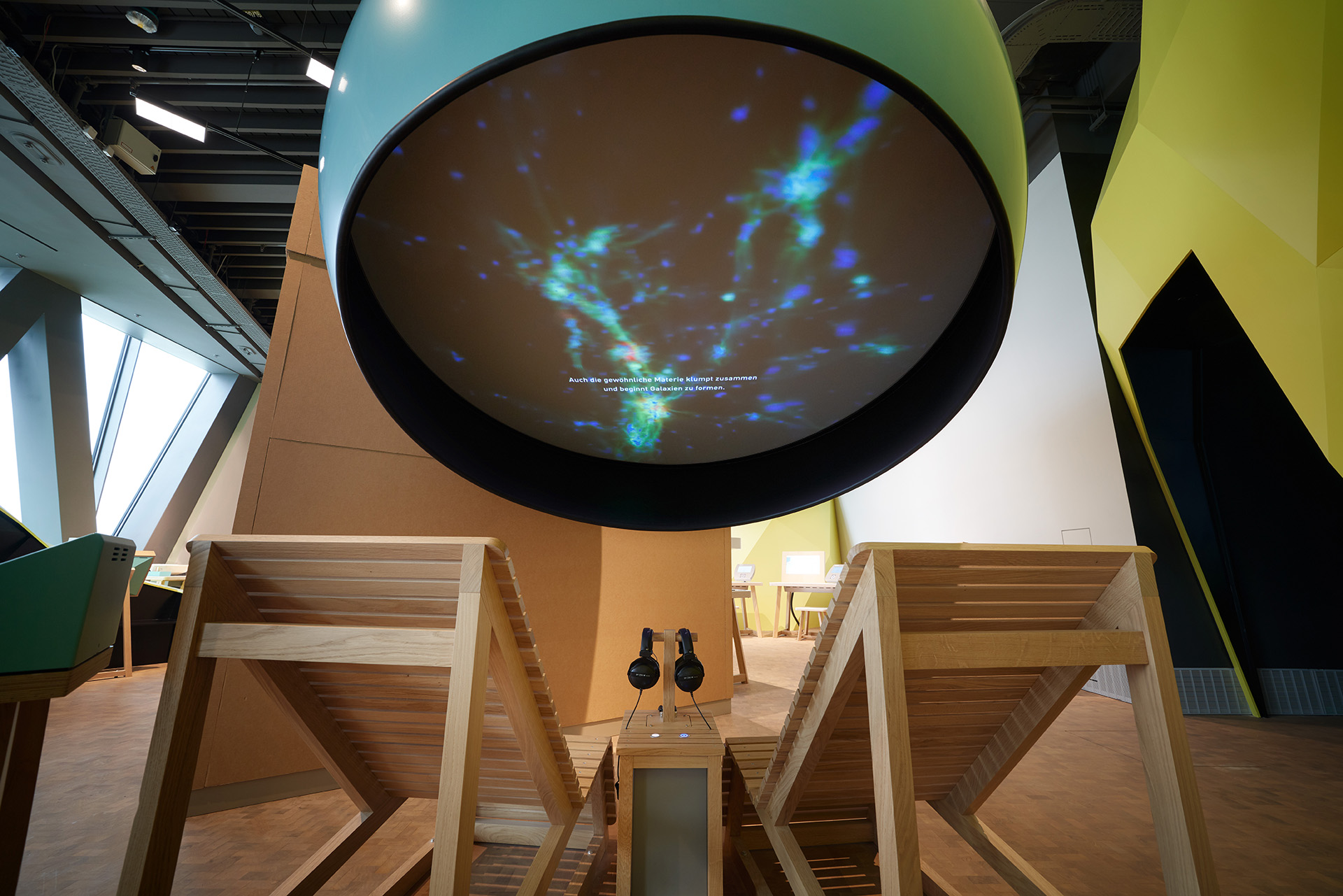
Time Travel

Time Travel

In several months of calculating time, scientists have generated a computer universe in a simulation project. Comparisons to actual observations reveal how well we understand the origin of the universe today.

Duration:6 min
Floor:OG 3
Keywords:AstronomyAstrophysicsData +3
Can you see it?

Can you see it?

We see more than what we focus on in any given moment. This is because we also perceive our surroundings with the edges of the retina. Peripheral vision is an important protective mechanism and is tested at this station.

Duration:5 min
Floor:OG 2
Keywords:HealthSensory nervous systemPerception
Test your perception

Test your perception

Perception is a complex process. Many factors can influence our perception, e.g. our attention. This station demonstrates the hidden factors that influence our powers of perception.

Duration:10 min
Floor:OG 3
Keywords:BrainHealthBody functions +4
Patterns in Chaos

Patterns in Chaos

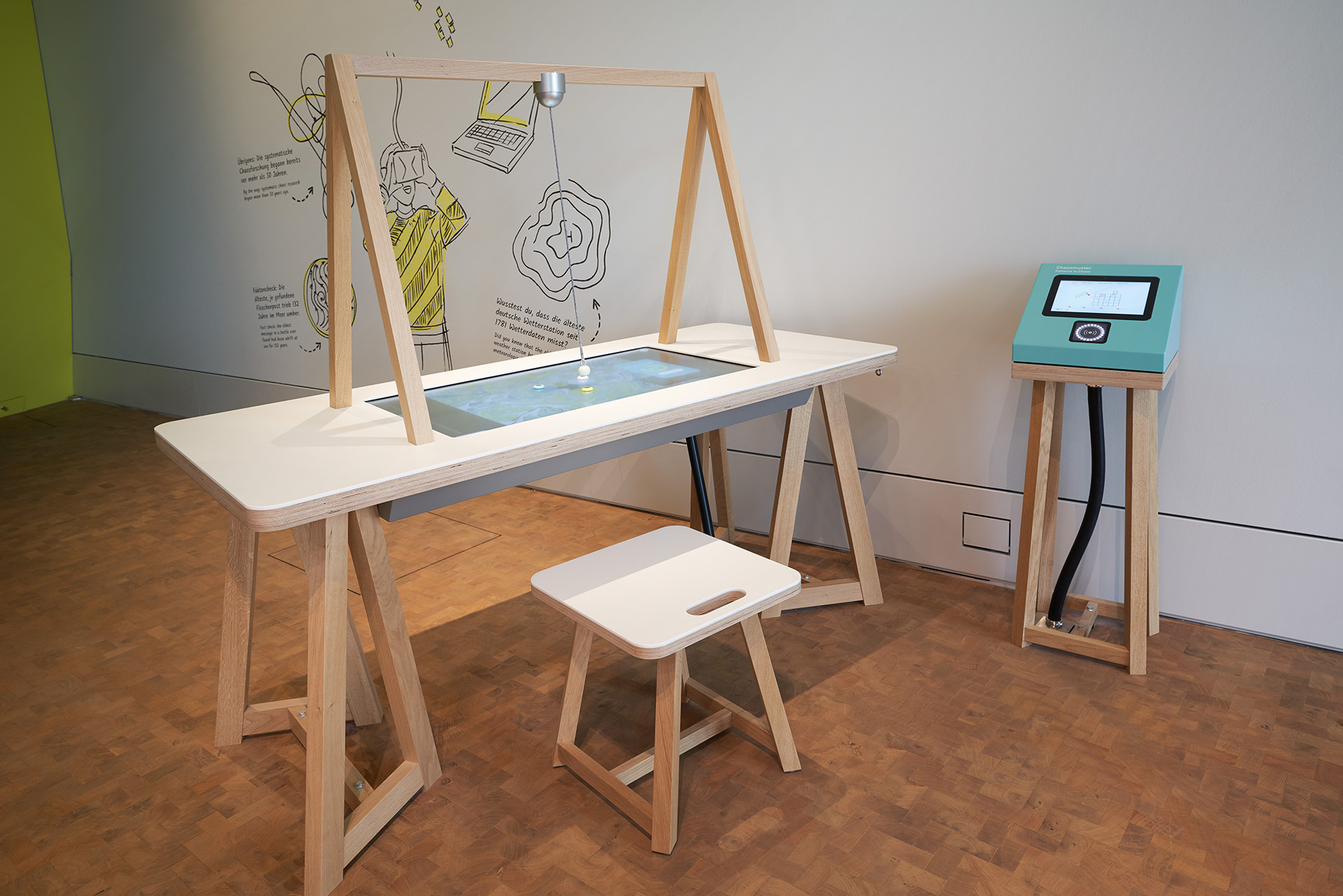
Although there are only three magnets in the middle. the pendulum's trajectory can no longer be predicted. Chaos rules. Computer simulations can help study the path and detect patterns in chaos.

Duration:10 min
Floor:OG 3
Keywords:MotionDataEnergy +6
In Transition

In Transition

Water is liquid and cannot be grasped. Ice is solid and can be shaped. Use this transition point from solid to liquid and create an ice landscape. Melt the ice with your hands or with the help of the warm stream of air.

Duration:5 min
Floor:OG 1
Keywords:Chemical elementsPhysicsWater +1
Feel the Beat

Feel the Beat

We don't just hear with our ears. We also perceive sound as a feeling of butterflies in our stomach. Or the body translates vibrations into a sound senation. You can test what you feel at this station

Duration:5 min
Floor:OG 2
Keywords:MusicSensesPerception +3
Pattern Maker

Pattern Maker

Structures and patterns are not simply present in Nature, but develop over time. This station shows examples of three fascinating pattern makers: how ice crystals grow, how warm air flows and how a liquid has a branch structure.

Duration:12 min
Floor:OG 1
Keywords:WaterLightPatterns +1
Magic Window

Magic Window

In kaleidoscopes, colored glass stones are usually inserted in front of small mirrors. At this station you can look at yourself inside a kaleidoscope.

Duration:10 min
Floor:OG 1
Keywords:LightPatterns
Bouncing Balls

Bouncing Balls

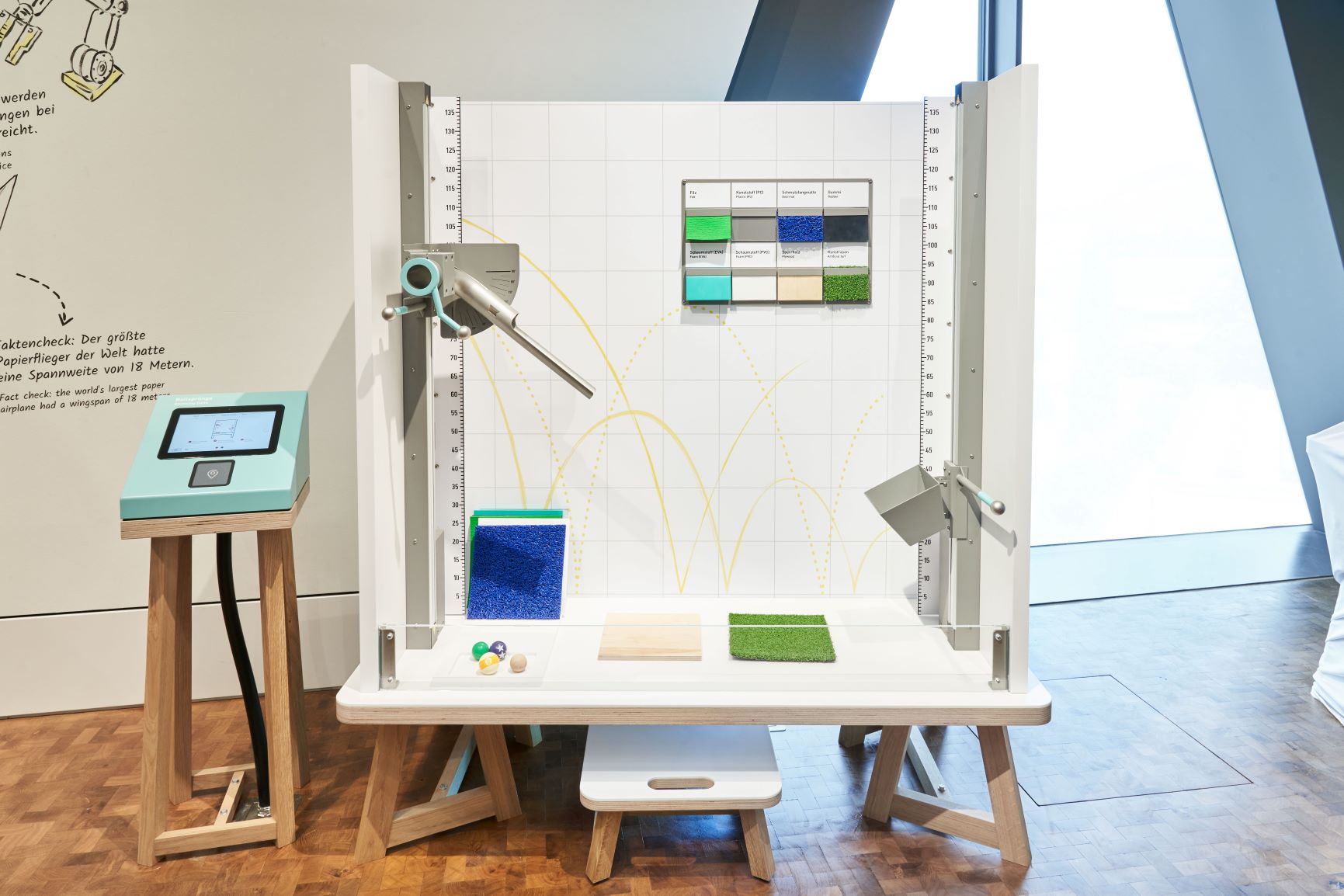
It often takes several attempts to reach a desired goal. How high and how far the different balls bounce depends on several factors. Test which settings you need to make to bounce the balls and hit the target. What influence do the different surfaces have?

Duration:15 min
Floor:OG 3
Keywords:MotionDataPhysics +2
Animated Sculpture App

Animated Sculpture App

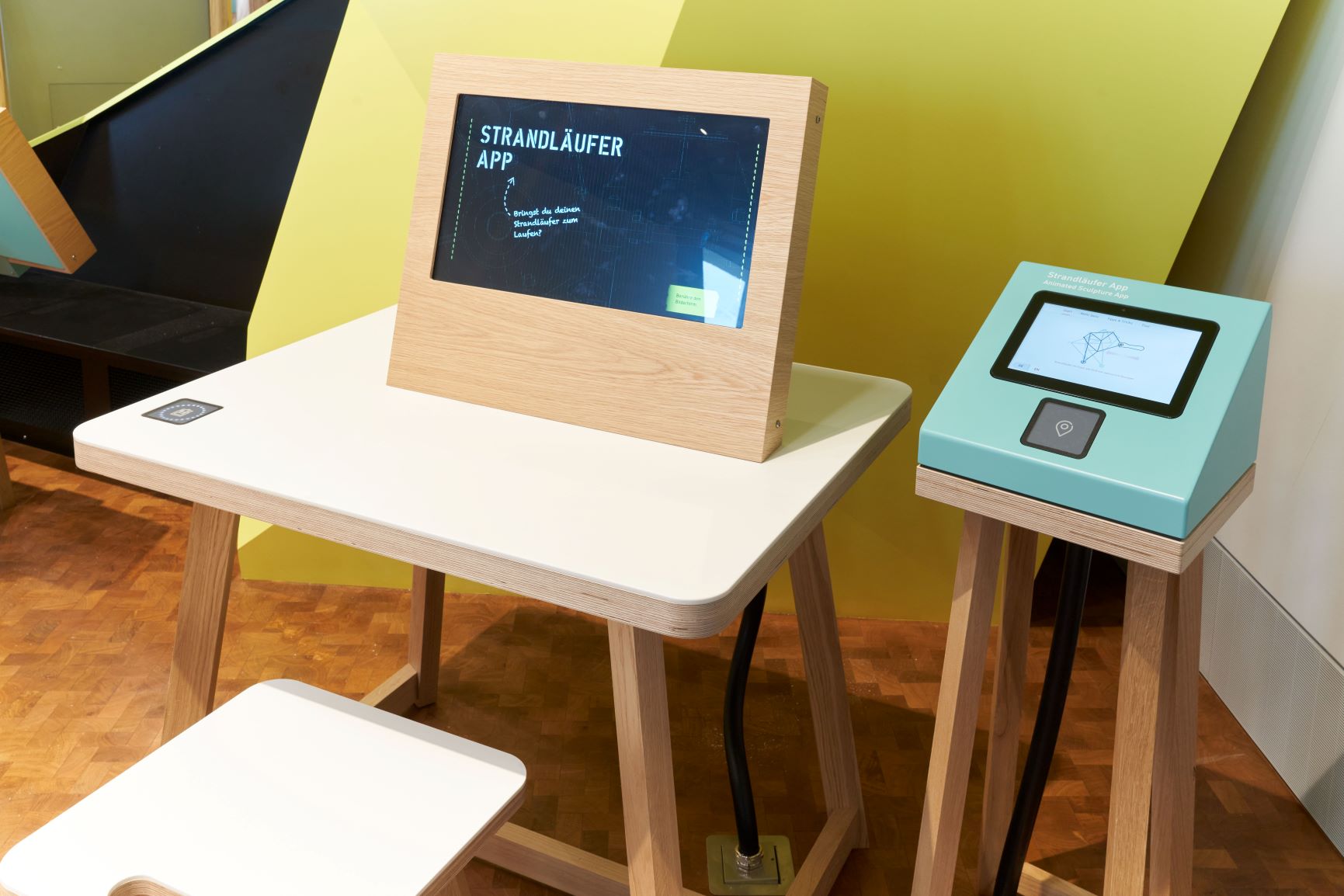
You can the various settings of the animated sculpture's digital design: What should the legs look like? And in what rhythm should the legs move? Then test whether your animated sculpture can walk steadily.

Duration:12 min
Floor:OG 3
Keywords:MotionArt
Animated Sculpture

Animated Sculpture

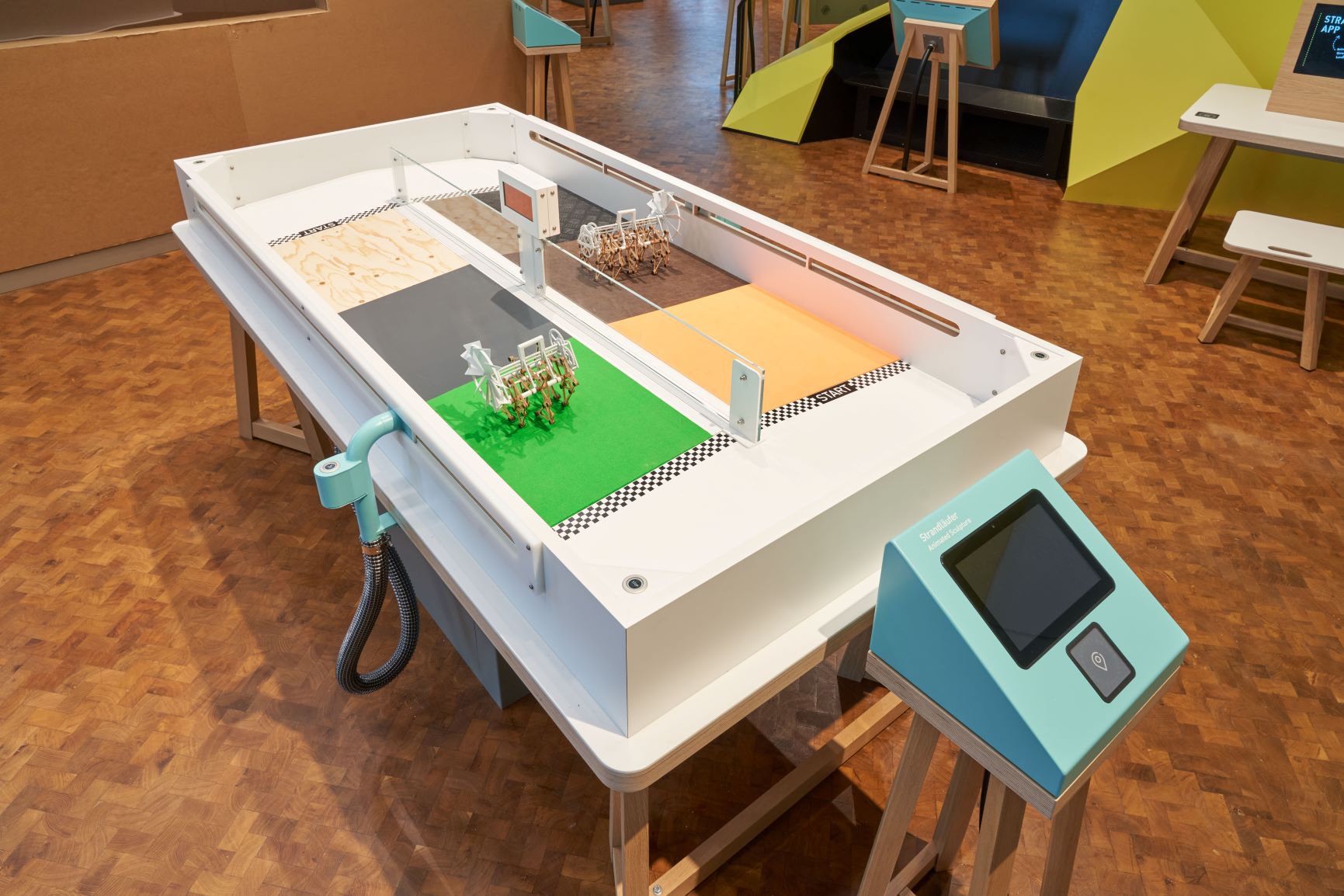
Theo Jansen's "Strandbeests" are animated sculptures and the result of years of tests and trials. Driven by wind and pressurized air, they move along beaches. Use the air jet and get your animated sculpture to walk.

Duration:12 min
Floor:OG 3
Keywords:MotionEnergyCreativity
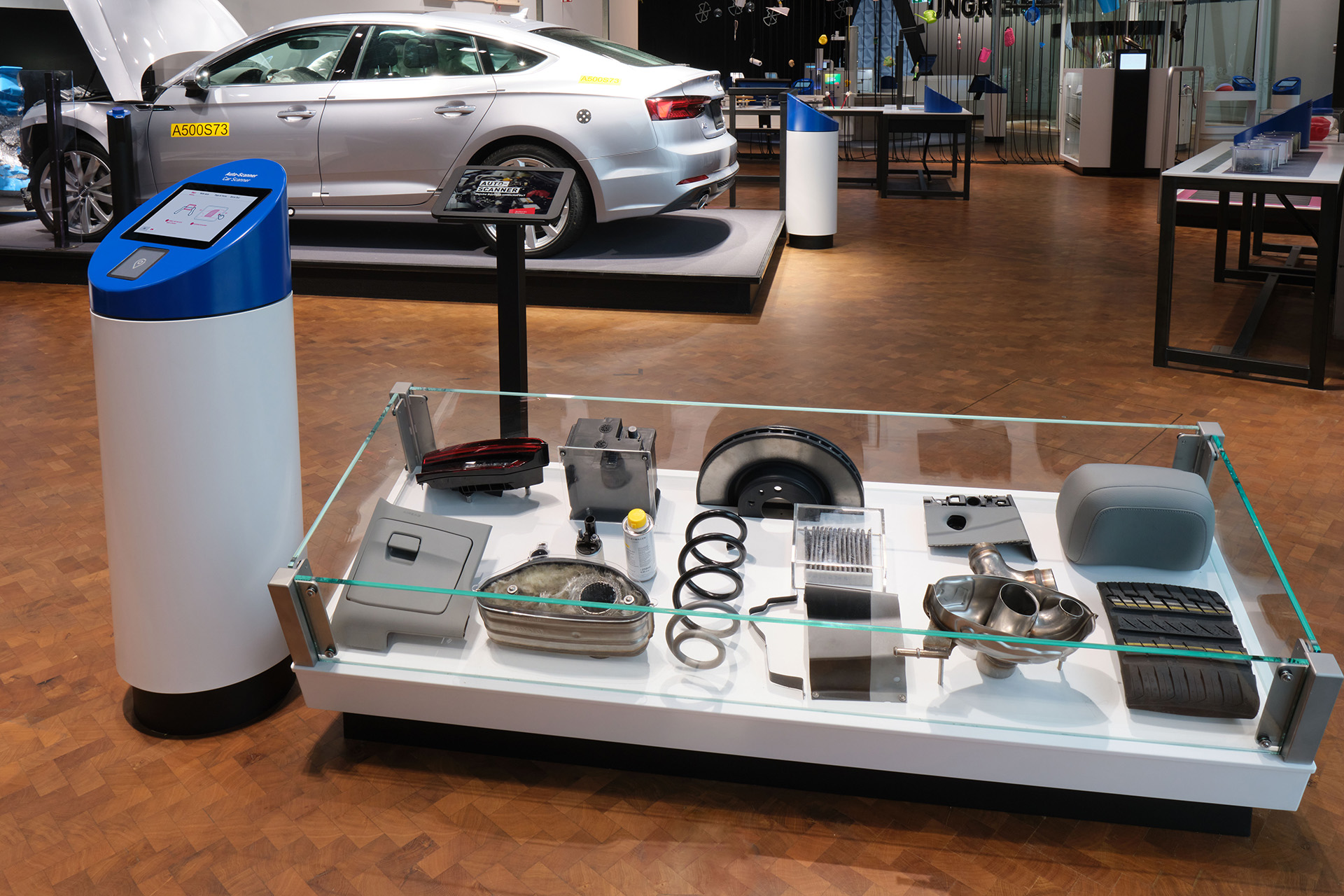
Car Scanner

Car Scanner

There are many different components in the car. With the help of a tablet, you can virtually look inside the car and explore some of the components. Can you find all the parts you are looking for?

Duration:15 min
Floor:OG 1
Keywords:
experimenta

Following our promise “The whole world in one place”, the Science Center experimenta offers a unique world of knowledge and experiences for curious minds aged three to 103. Across 25,000 square metres, everyone can experiment, be amazed, get creative and explore the world with all their senses.

Supported by

Dieter Schwarz Foundation

Contact

Experimenta-Platz

74072 Heilbronn

+49 (0) 7131 88795 – 0

info@experimenta.science

Premium partner

Schwarz

Quick links

Newsletter

Interested in everything about experimenta? Then sign up to receive regular updates from us and never miss out. We’ll deliver them straight to your email inbox — free of charge.

Subscribe to newsletter

Stay in touch

Recognised out-of-school learning venue

experimenta is officially recognised by the Ministry of Education, Youth and Sports of the State of Baden-Württemberg as an out-of-school learning venue and out-of-school research centre.

Baden-Württemberg

© 2023 experimenta gGmbH – The Science Center. All rights reserved.